
Đối với cổng trường học ở Almaty, cổng nhà máy ở Uzbekistan, hoặc cơ sở vận tải ở Đông Nam Á, việc lựa chọn cổng xoay sẽ định hình quy trình kiểm soát ra vào. Đơn đặt hàng sỉ cổng xoay ba chân bao gồm rào chắn, đầu đọc, bộ điều khiển, điều kiện địa điểm, phụ tùng thay thế và kế hoạch nghiệm thu. Hướng dẫn này so sánh các lựa chọn cổng xoay ba chân và cổng xoay toàn chiều cao, sau đó cung cấp cho bạn danh sách kiểm tra yêu cầu báo giá thực tế.
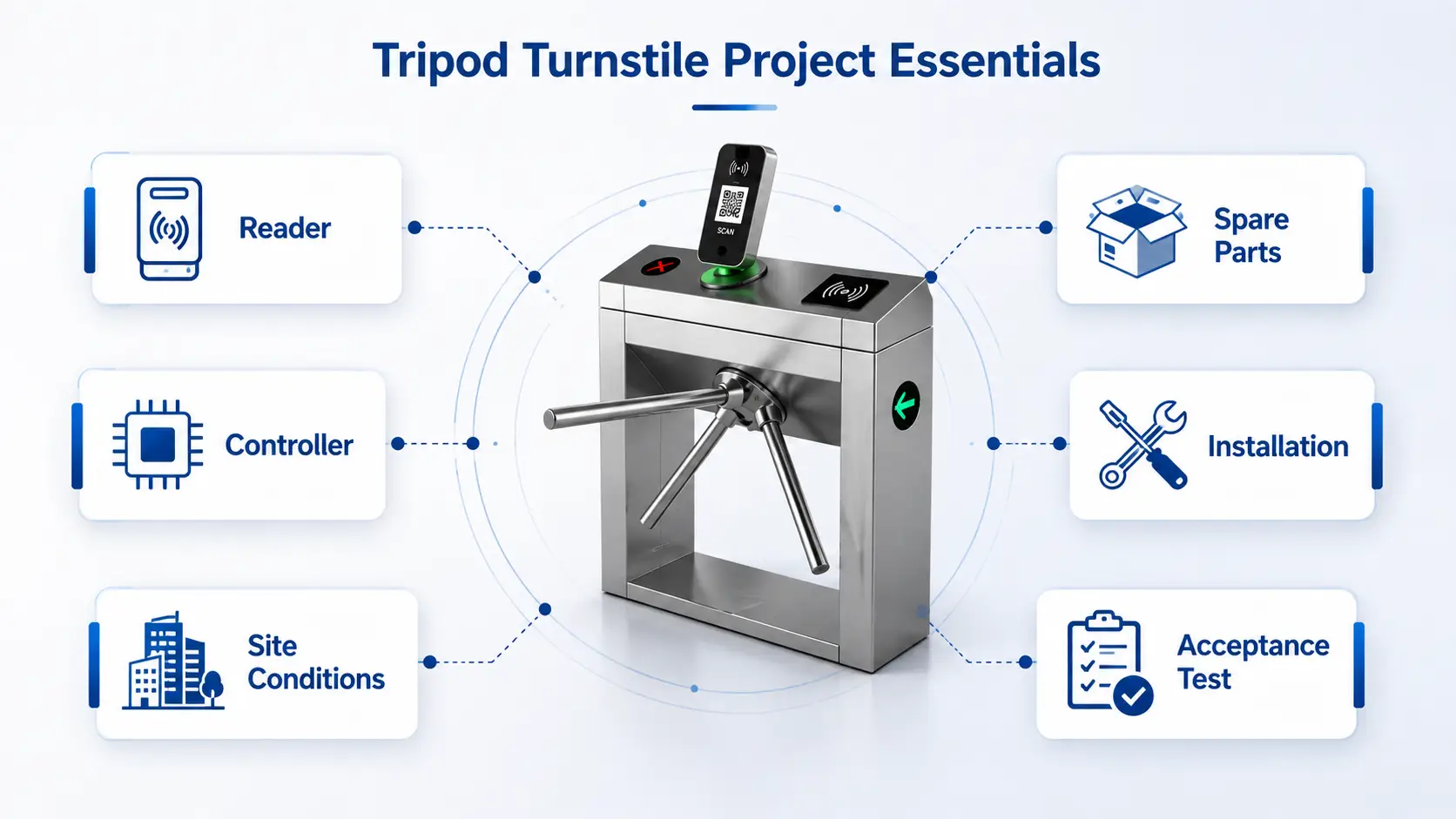
Tại sao các dự án bán buôn cổng xoay ba chân lại phát triển mạnh ở những khu vực này?
Các tòa nhà công cộng, nhà máy, trường học và các địa điểm được kiểm soát cần có lối đi dành cho người đi bộ kết nối khu vực kiểm tra nhận dạng với điểm vào cửa. Các dự án khu vực thường kết hợp làn đường trong nhà và ngoài trời, nhiều loại giấy tờ tùy thân, nhà lắp đặt địa phương và ngày bàn giao cố định. Hãy xác định rõ các yếu tố đầu vào này trước khi sản xuất.
Các loại dự án phổ biến ở Trung Á
Các nhà mua hàng ở Trung Á thường xem xét khả năng tiếp cận dành cho người đi bộ đối với các văn phòng, trường học, khu vực kho bãi, nhà máy công nghiệp, các tòa nhà công cộng và địa điểm thể thao. Bụi bẩn, sự thay đổi nhiệt độ theo mùa, lối đi lộ thiên và các tuyến đường giao hàng dài khiến việc khảo sát địa điểm trở nên quan trọng. Ghi lại xem lối đi đó nằm trong nhà, có mái che hay không.
Các loại dự án phổ biến ở Đông Nam Á
Các dự án ở Đông Nam Á có thể bao gồm nhà máy, tòa nhà thương mại, cơ sở hạ tầng giao thông, trường đại học, điểm tham quan du lịch và khu dân cư. Mưa, độ ẩm, lưu lượng người qua lại và sự thay đổi của khách tham quan ảnh hưởng đến kết cấu bao che, hệ thống thoát nước, vị trí đặt thiết bị đọc thẻ và khả năng tiếp cận để bảo trì.
Những gì người mua sỉ cần từ nhà cung cấp
Gửi bản tóm tắt yêu cầu bao gồm số làn, vị trí, nhóm người dùng, phương thức xác thực, giao diện phần mềm và điểm đến. Yêu cầu tư vấn về mẫu sản phẩm, thông tin đóng gói, phụ tùng thay thế, hướng dẫn lắp đặt và đề xuất kiểm tra nghiệm thu. Đối với các đơn đặt hàng nhiều làn, hãy xác nhận sự phù hợp giữa bộ điều khiển, đầu đọc, đèn báo và logic phần mềm.
Cổng xoay ba chân là gì?
Cổng xoay ba chân sử dụng ba cánh tay xoay để điều khiển một làn đường dành cho người đi bộ ở độ cao ngang thắt lưng. Vỏ máy chứa cơ cấu truyền động, bộ điều khiển, cảm biến và đầu đọc thẻ. Thẻ hợp lệ cho phép đi qua một lần, trong khi hệ thống điều khiển ghi lại sự kiện theo cấu hình đã chọn.
Các thành phần cốt lõi
Dự án cơ bản có thể bao gồm:
- Vật liệu và lớp hoàn thiện tủ được chỉ định
- Ba cánh tay nằm ngang và một trục xoay
- Bộ điều khiển, động cơ hoặc cơ cấu khóa, và logic điều hướng
- Đèn LED báo trạng thái xác thực trên một số mẫu máy nhất định.
- Cảm biến phát hiện sự di chuyển và hỗ trợ logic an toàn trên một số mẫu xe nhất định.
- Đầu đọc thẻ, mã vạch, mã QR, sinh trắc học hoặc nhận diện khuôn mặt, tùy thuộc vào từng kiểu máy.
Hãy xác nhận kích thước, vị trí người đọc, vật liệu và hành vi khẩn cấp trong hồ sơ kỹ thuật của mẫu đã chọn.
Phương thức truy cập và giao diện hệ thống
Các cấu hình được lựa chọn có thể hỗ trợ thẻ tiệm cận, thẻ IC hoặc thẻ ID, đầu đọc mã vạch và mã QR, đầu đọc sinh trắc học hoặc nhận dạng khuôn mặt. Bộ điều khiển có thể trao đổi sự kiện với phần mềm chấm công, bán vé, thanh toán hoặc quản lý khách truy cập. Vui lòng xác định giao thức, mạng, cơ sở dữ liệu và ngôn ngữ cần thiết trước khi báo giá.
Chức năng an toàn và khẩn cấp
Cảm biến có thể hỗ trợ kiểm tra hướng và phát hiện lối đi. Đèn LED hiển thị trạng thái ủy quyền trên một số mẫu nhất định. Xác nhận mất điện, kết nối báo cháy, mở thủ công và lối đi an toàn cho cổng xoay ba chân đã chọn.
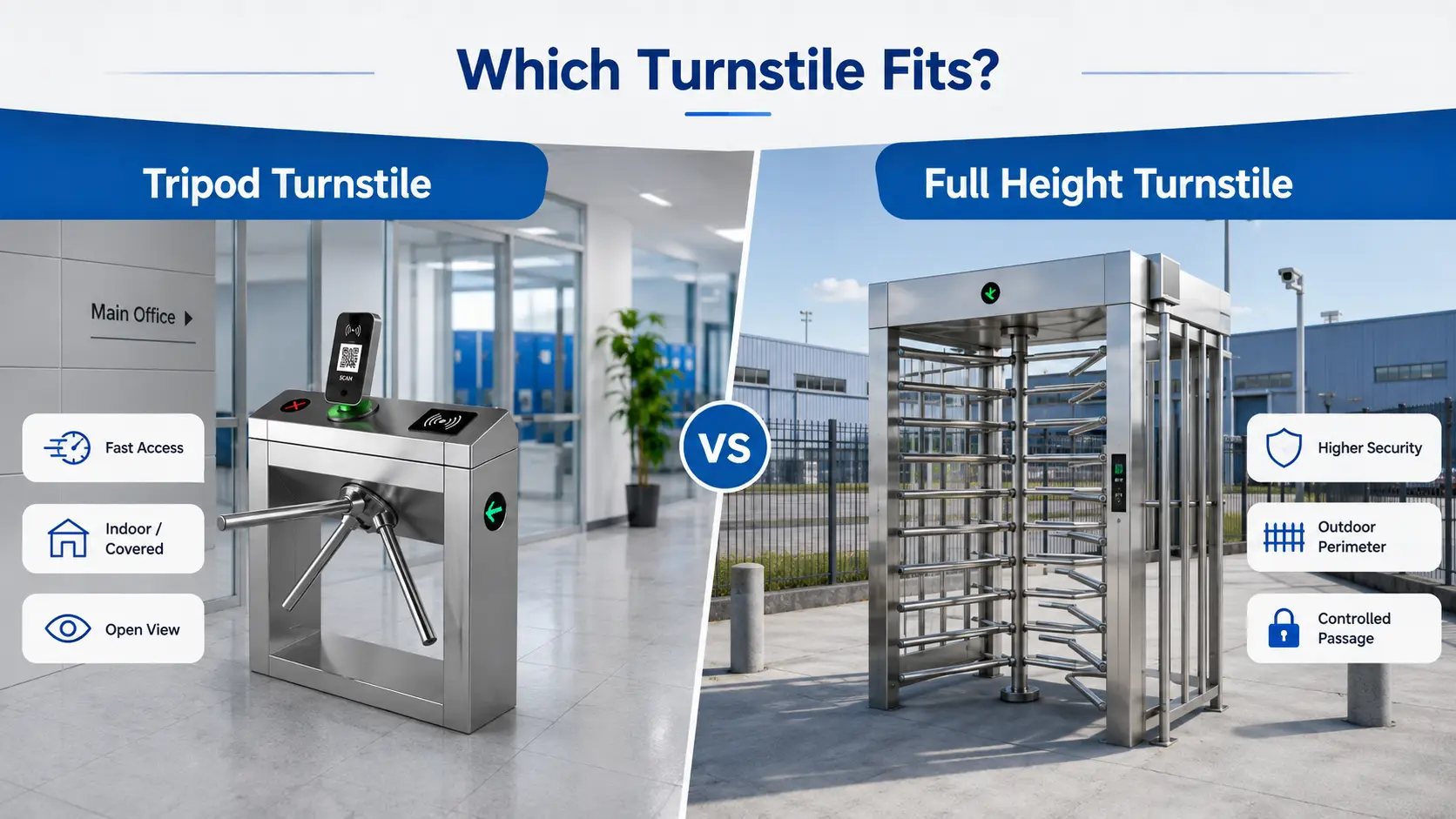
Cổng xoay toàn chiều cao và cổng xoay ba chân có những ưu điểm gì?
Việc lựa chọn phụ thuộc vào ranh giới vật lý, môi trường làn đường và hoạt động khẩn cấp. Sử dụng bảng này như một bộ lọc ban đầu, sau đó xác nhận mô hình và bố cục địa điểm.
| Điều kiện dự án | Tripod Turnstile | Cổng quay chiều cao đầy đủ |
|---|---|---|
| Hình thức vật lý | Cánh tay xoay ngang eo | Lối đi kín cao hơn |
| Thiết lập điển hình | Sảnh, văn phòng, trường học, lối vào dành cho nhân viên | Vành đai, sân vận động, khu công nghiệp |
| Trải nghiệm người dùng | Cách tiếp cận trực quan cởi mở và kiểm tra thông tin xác thực | Vách ngăn khép kín giữa các bên |
| Tiếp xúc tại địa điểm | Khu vực trong nhà hoặc có mái che sau khi xem xét | Các khu vực ngoại vi lộ ra sau khi xem xét |
| Câu hỏi chính của yêu cầu báo giá (RFQ): | Người đọc, luồng xe và giải phóng khẩn cấp | Bao che, móng, khả năng chịu ảnh hưởng của thời tiết và bố trí an ninh |
Khi nào cổng xoay ba chân phù hợp
Cổng xoay ba chân phù hợp với các tòa nhà có nhân viên trực hoặc sảnh được kiểm soát cần một lối đi nhỏ gọn với trạng thái truy cập rõ ràng. Các ứng dụng phổ biến bao gồm điểm danh nhân viên, lối vào trường học, quầy lễ tân văn phòng và kiểm soát khách tham quan.
Khi cổng xoay toàn chiều cao phù hợp
Cổng xoay toàn chiều cao phù hợp với các dự án cần một hàng rào cao hơn giữa khu vực công cộng và khu vực được bảo vệ. Cổng bao quanh, lối vào sân vận động, bãi công nghiệp và lối vào từ xa có thể cần đến cấu trúc này. Cần xem xét kỹ lưỡng nền móng, hệ thống thoát nước, lối thoát hiểm, hệ thống chiếu sáng và vị trí đặt đầu đọc.
Những điều mà phép so sánh không thể tự mình quyết định được.
Chính sách cấp phép, kế hoạch thoát hiểm, chiều rộng làn đường, công tác điện, khả năng kết nối mạng, quyền truy cập bảo trì và bộ điều khiển cũng ảnh hưởng đến thông số kỹ thuật. Cả hai công trình đều cần được khảo sát tại chỗ và có chính sách truy cập rõ ràng.
Bạn nên kiểm tra những gì trước khi đặt hàng từ Trung Á hoặc Đông Nam Á?
Chuyển các điều kiện khu vực thành dữ liệu đầu vào đã được ghi lại. Giữ các câu hỏi về tuân thủ, lắp đặt và nhập khẩu cụ thể của từng quốc gia ở trạng thái mở cho đến khi có xác nhận tại địa phương.
Khí hậu, bụi, mưa và điều kiện lắp đặt
Ghi lại vị trí lắp đặt, độ che phủ mái, hướng mưa, bụi, hệ thống thoát nước, phương pháp vệ sinh và phạm vi nhiệt độ theo mùa. Hỏi về các giới hạn môi trường trước khi sử dụng ngoài trời.
Điều kiện nguồn điện, mạng và giao diện cục bộ
Liệt kê nguồn điện, kế hoạch dự phòng, đường dây cáp, loại mạng, vị trí bộ điều khiển và giao thức đầu đọc. Bao gồm các tùy chọn ngôn ngữ, cơ sở dữ liệu, điểm danh, bán vé hoặc giao diện thanh toán trong yêu cầu báo giá.
Đánh giá an toàn, điện và xây dựng địa phương
Nhà thầu lắp đặt hoặc tư vấn của bạn nên xem xét các quy định về lối thoát hiểm, hệ thống mở cửa khẩn cấp, tiếp đất, móng nhà, khoảng cách an toàn giữa các làn đường, khả năng tiếp cận và các quy tắc về điện. Xác nhận các tài liệu và phê duyệt được cung cấp.
Cổng xoay ba chân có thể hỗ trợ những phương thức truy cập nào?
Việc lựa chọn thông tin xác thực phụ thuộc vào nhóm người dùng và phần mềm của trang web. Nhân viên, khách tham quan và người trả phí có thể cần các thiết bị đọc khác nhau.
RFID, Thẻ IC/ID và Đầu đọc tiệm cận
Thẻ RFID, IC, ID và thẻ tiệm cận phù hợp với người dùng thường xuyên. Xác nhận tần suất sử dụng thẻ, vị trí đầu đọc, đăng ký, trạng thái ngoại tuyến và giao diện cơ sở dữ liệu.
Nhận dạng mã QR, mã vạch và nhận dạng khuôn mặt
Máy đọc mã QR và mã vạch có thể hỗ trợ vé, thẻ khách tham quan và giấy tờ tùy thân tạm thời. Nhận diện khuôn mặt có thể hỗ trợ một số cấu hình nhất định khi các điều kiện về quyền riêng tư, đăng ký, ánh sáng và mạng đáp ứng các quy tắc của dự án. Kiểm soát truy cập bằng nhận diện khuôn mặt Việc xem xét cần bao gồm vị trí đặt camera, sự đồng ý, thông tin đăng nhập dự phòng và việc xử lý dữ liệu.
Quản lý điểm danh, thanh toán và tích hợp phần mềm tùy chỉnh
Sự kiện từ cổng xoay có thể cung cấp dữ liệu cho hệ thống điểm danh, bán vé, thanh toán hoặc quản lý khách tham quan khi bộ điều khiển và giao diện phần mềm hỗ trợ kết nối. Tài liệu của TigerWong mô tả các tích hợp cho trường học, công trường xây dựng, quán cà phê, bán vé và thanh toán. Hãy yêu cầu tài liệu API, các trường sự kiện và trách nhiệm kiểm thử.
Mẫu yêu cầu báo giá bán buôn cổng xoay ba chân cần bao gồm những gì?
Yêu cầu báo giá (RFQ) kèm thông tin địa điểm sẽ giúp bạn đưa ra đề xuất mô hình và báo giá rõ ràng hơn. Hãy bao gồm các mục sau.
Đường đi, Cấu trúc và Vật liệu đầu vào
- Số làn đường và hướng làn đường
- Ưu tiên cổng xoay ba chân hoặc cổng xoay toàn chiều cao.
- vị trí trong nhà, ngoài trời có mái che hoặc ngoài trời không có mái che
- Chất liệu tủ, lớp hoàn thiện, kiểu tay vịn và bề mặt lắp đặt
- Nhóm người dùng hàng ngày và chính sách truy cập
- Yêu cầu về việc giải phóng khẩn cấp và báo cháy
Đầu vào điều khiển, phần mềm và truyền thông
- Thẻ, mã QR, mã vạch, sinh trắc học hoặc nhận diện khuôn mặt
- Vị trí bộ điều khiển và phương thức mạng
- Phần mềm quản lý điểm danh, bán vé, thanh toán hoặc phần mềm dành cho khách tham quan
- API, giao thức, ngôn ngữ và nhu cầu báo cáo
- Nguồn điện, nguồn điện dự phòng và đường đi của cáp
Đóng gói, Phụ tùng thay thế, Lắp đặt và Kiểm tra nghiệm thu
Yêu cầu thông tin về kích thước đóng gói, nhãn vận chuyển, phụ tùng thay thế, sơ đồ đấu dây, hướng dẫn lắp đặt và các bước vận hành. Thêm các bài kiểm tra về đọc thông tin xác thực, logic định hướng, trạng thái đèn LED, chức năng giải phóng khẩn cấp, sự kiện mạng và phục hồi nguồn điện. Xác nhận trách nhiệm giữa nhà cung cấp, đơn vị lắp đặt và nhà thầu điện.
Nhà cung cấp cổng xoay uy tín
Công ty TNHH Công nghệ TigerWong Thâm Quyến sản xuất thiết bị đỗ xe thông minh, kiểm soát ra vào, cổng xoay và nhận diện khuôn mặt. Khả năng được chứng nhận bao gồm tích hợp thẻ từ, sinh trắc học, mã vạch hoặc mã QR và nhận diện khuôn mặt trên một số cấu hình nhất định. Đội ngũ R&D độc lập của công ty có thể sửa đổi phần mềm và sản xuất phần cứng theo yêu cầu của khách hàng. Vui lòng gửi sơ đồ làn đường, điểm đến, vị trí lắp đặt, phương thức xác thực, mạng lưới, nhu cầu phần mềm và kết quả kiểm tra nghiệm thu, sau đó yêu cầu báo giá dự án khu vực Để xem xét mô hình.
Câu hỏi thường gặp
Câu 1: Cổng xoay ba chân và cổng xoay toàn chiều cao có gì khác nhau?
MỘT: Cổng xoay ba chân sử dụng các tay quay ngang tầm eo. Cổng xoay toàn chiều cao tạo ra một lối đi kín cao hơn. Hãy lựa chọn cấu trúc phù hợp dựa trên ranh giới khu đất, hướng tiếp xúc, lối thoát hiểm và chính sách tiếp cận.
Câu 2: Loại cổng xoay nào phù hợp hơn cho các cơ sở ngoài trời ở Trung Á hoặc Đông Nam Á?
MỘT: Mẫu sản phẩm ngoài trời được chọn phải phù hợp với các điều kiện về mưa, bụi, nhiệt độ, thoát nước, nền móng và điện. Hãy xác nhận các giới hạn của sản phẩm và đánh giá xây dựng địa phương trước khi đặt hàng.
Câu 3: Cổng xoay ba chân có thể kết nối với hệ thống RFID, mã QR hoặc nhận diện khuôn mặt không?
MỘT: Có, một số cấu hình hỗ trợ thẻ từ, đầu đọc mã vạch hoặc mã QR, đầu đọc sinh trắc học và nhận diện khuôn mặt. Vui lòng xác nhận khả năng tương thích của đầu đọc, giao thức phần mềm, quy tắc bảo mật và phương thức truy cập dự phòng.
Câu 4: Bạn cần gửi những thông tin gì để nhận báo giá sỉ cổng xoay ba chân?
MỘT: Gửi thông tin về số lượng làn, cấu trúc, vị trí, vật liệu, loại đầu đọc, giao diện phần mềm, nguồn điện, mạng, điểm đến, bao bì, phụ tùng thay thế và các bài kiểm tra nghiệm thu. Bản vẽ bố trí giúp làm rõ khuyến nghị.
Câu 5: Nhà cung cấp có cung cấp dịch vụ lắp đặt và hỗ trợ tuân thủ quy định địa phương không?
MỘT: Trách nhiệm lắp đặt và tuân thủ quy định phụ thuộc vào hợp đồng và địa điểm lắp đặt. Hãy yêu cầu tài liệu về đấu dây, lắp đặt, vận hành thử và kỹ thuật, sau đó xác nhận quy định địa phương và nhiệm vụ của người lắp đặt.