
Smart-city teams need pedestrian access that works with buildings, networks, and operating staff. The right Turnstile Supplier needs a product range for each entrance, testable interfaces, and clear installation documents.
“Best” is a project decision. A transit station, office, school, and outdoor perimeter can need different turnstile types and credentials. This guide shows how to compare suppliers using evidence for a specification, quotation, and acceptance plan.
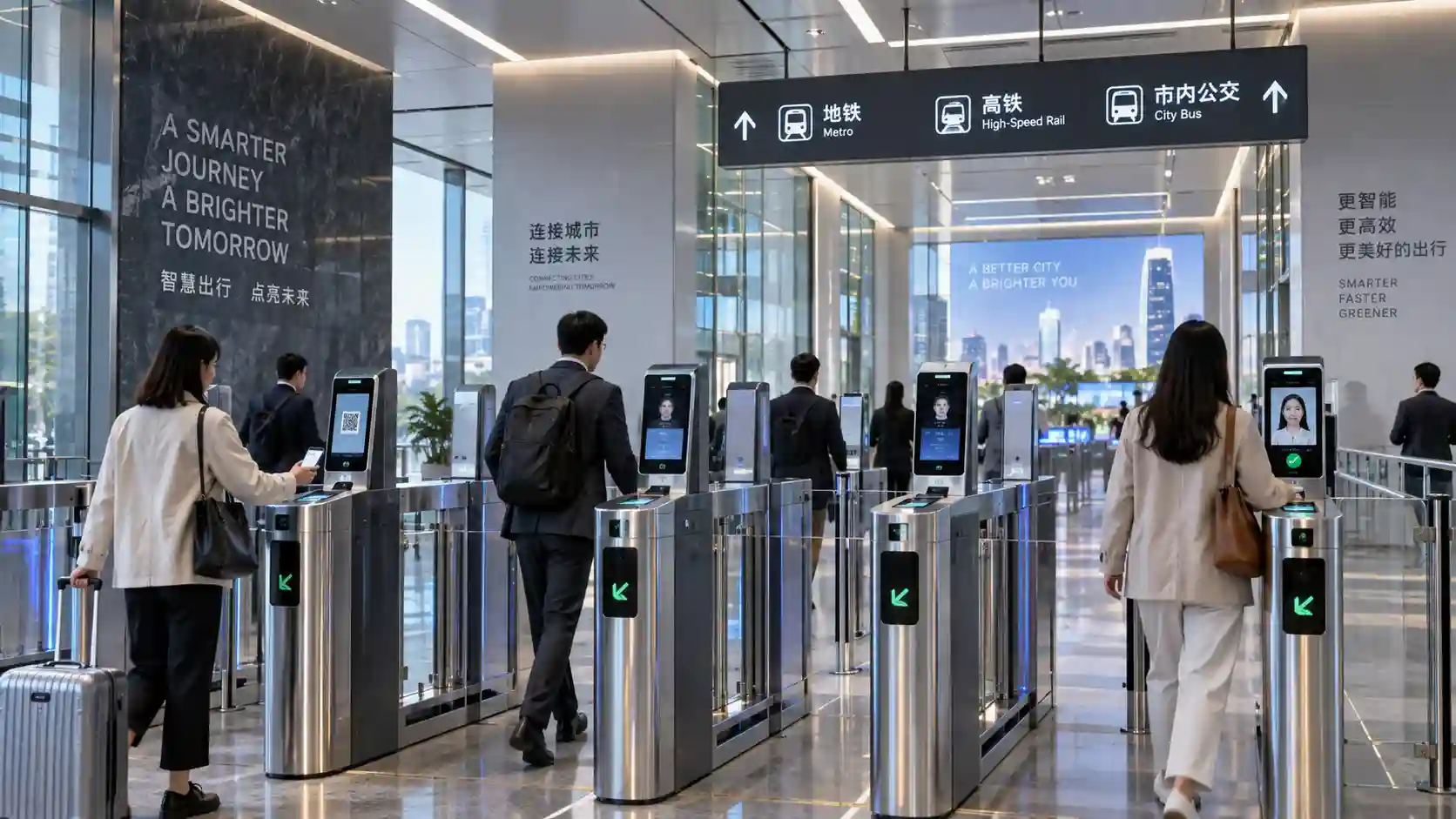
What Makes a Turnstile Supplier Suitable for Smart-City Projects?
A supplier becomes useful when its products and process match how your city manages people, data, and facilities.
Product Range For Different Entrances
Start with the entrance. A tripod turnstile can suit an office, factory, or school. Flap and swing gates support controlled indoor traffic where a wider or accessible lane matters. Sliding and speed gates fit some reception settings. A full-height turnstile creates a taller barrier for a perimeter or restricted outdoor area.
TigerWong materials list tripod, flap, swing, sliding, speed, half-height, and full-height turnstile families. That range lets you compare structure, lane planning, and user flow before you discuss quantity. The selected model still needs a drawing review for dimensions, traffic policy, and local conditions.
Access Control And Data Interfaces
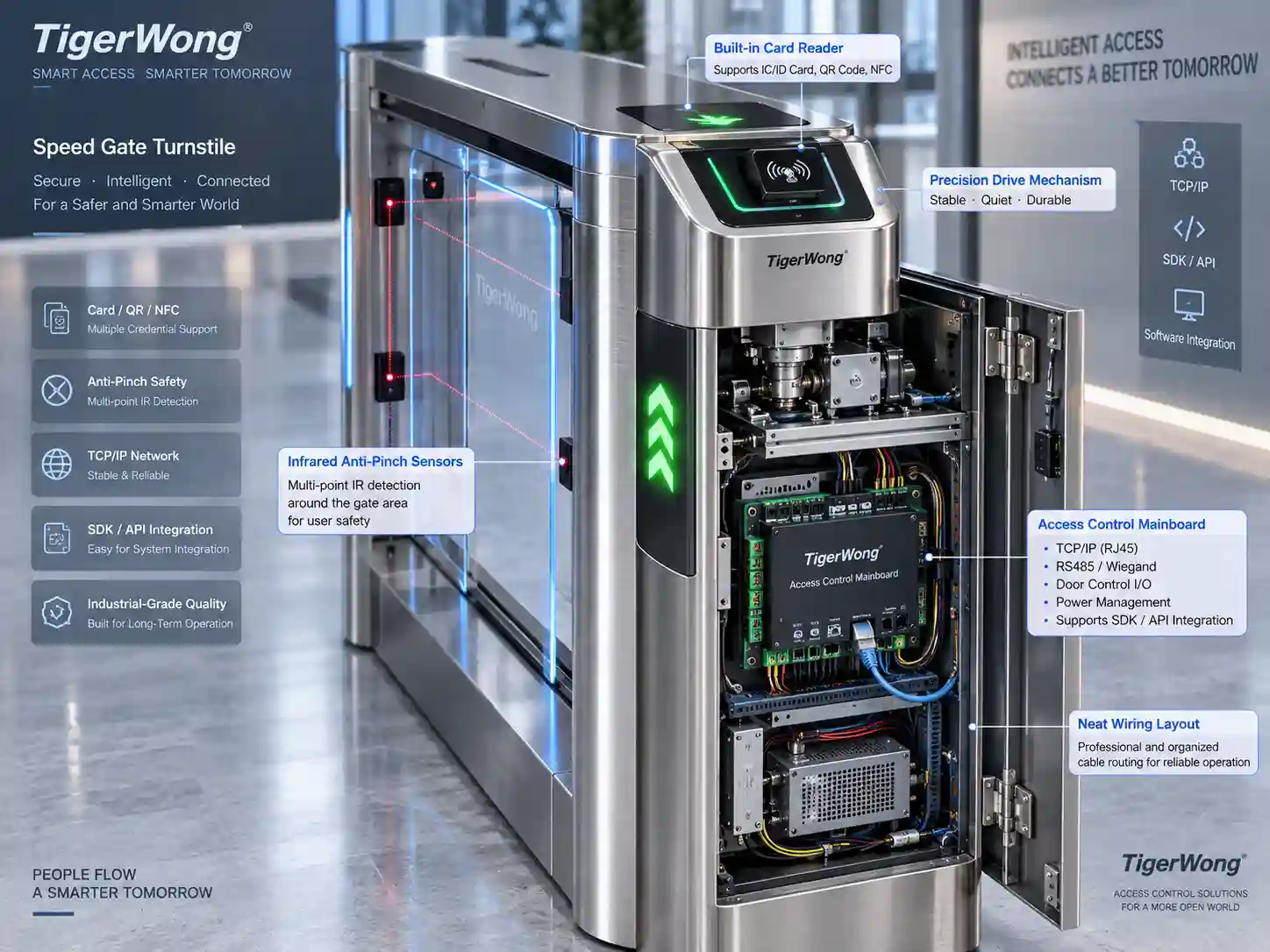
List the credentials already used across your sites. Selected Produkte can work with proximity or IC/ID cards, RFID, biometric readers, barcodes, QR codes, and facial recognition. Ask the supplier to identify the reader, controller input, mounting method, and power requirement for each model.
For connected projects, request the interface list. TigerWong’s technical materials reference TCP/IP, Wiegand, RS485, API, and SDK connections on selected devices, with online or offline operation depending on configuration. A shared protocol name does not prove compatibility. Use a test environment and record the event, permission, and recovery behavior you need.
Engineering And Customized Scope
Smart-city entrances often have constraints that a standard drawing cannot cover. Cabinet length, finish, color, logo, reader position, software behavior, and accessible-lane geometry may need a change. TigerWong states that its R&D team can modify software and manufacture hardware for project requirements. Its materials also mention OEM/ODM and appearance customization.
Put each requested change on the approved drawing or specification sheet. That ties a customized turnstile to a measurable requirement and a written decision.
How Should You Match a Turnstile to a Smart-City Site?
The site determines the balance between throughput, physical separation, accessibility, credentials, and maintenance access. A single city program may need several designs.
Transit Stations And Public Transport
Transit entrances combine peak traffic with strict emergency planning. During design review, check:
- Lane count and passenger flow at the busiest period.
- Reader position for cards, QR tickets, or mobile credentials.
- Accessible passage and an adjacent staffed route.
- Emergency release, power-failure behavior, and evacuation control.
- Space for cleaning, inspection, and replacement work.
Selected TigerWong turnstile descriptions include safety and directional sensors, LED authorization indicators, and emergency release behavior. Confirm the exact function on the model’s technical file and include it in the site acceptance test.
Civic Buildings, Schools, And Offices
These sites often mix employees, visitors, contractors, and deliveries. A supplier should help you map the credential policy to the entrance: card readers for staff, QR codes for visitors, or facial recognition where the project permits it. Indoor exposure, supervision, and accessibility can influence the choice between a tripod, flap, or swing gate.
Ask who configures visitor rules, attendance records, alarms, and operator permissions. The answer may involve the supplier, a local integrator, or your existing software contractor.
Outdoor Perimeters And Multi-Site Projects
Outdoor selection needs more than the phrase “weather resistant.” Confirm rain and dust exposure, temperature range, drainage, foundation details, power quality, network route, and local electrical review. A full-height turnstile may suit a controlled perimeter; a waist-high unit may suit a supervised entrance.
For several sites, define the standard model and the exceptions. Record which parts, readers, and software settings remain common so service teams can work from the same baseline.
What Should You Check in a Turnstile Supplier’s Technical Proposal?
The proposal should give engineering and procurement teams material they can verify and approve.
Mechanical And Safety Details
Request general arrangement drawings, lane width, cabinet dimensions, material, finish, sensor layout, reset or anti-collision behavior where applicable, emergency mode, and acceptance criteria. Ask which items are standard and which require customization.
Avoid universal statements about security or speed. A turnstile manages one passage policy within a larger access-control design. Site layout, credential validation time, staffing, and adjacent doors affect results.
Software And Integration Evidence
Request protocol details, event formats, API or SDK documentation, offline rules, user database behavior, time-zone handling, and a test account. For an existing platform, agree on who supplies drivers, who configures permissions, and who signs the integration test.
Die NIST access control glossary provides a useful common vocabulary for access decisions. It does not certify a specific turnstile connection; that remains a project test.
Installation And Service Handoff
Define the split between factory and local work:
- Foundations, conduits, cabling, and electrical connections.
- Reader installation and software configuration.
- Commissioning, operator instruction, and acceptance records.
- Spare-parts ordering and replacement labor.
- Fault reporting, remote diagnosis, and escalation.
This list also exposes costs that a product-only quotation can hide. Local building, fire, accessibility, and electrical reviews remain part of the project team’s approval process.
How Can a Turnstile Supplier Support Smart-City Expansion?
Expansion works best when each new site follows controlled documents and a repeatable configuration process.
Standardization Across Multiple Locations
Create a baseline that names the approved turnstile, reader, controller, software interface, finish, spare-parts list, and acceptance checks. Allow site-specific exceptions, but record them separately. This helps procurement compare like with like and helps technicians recognize a familiar assembly.
Customized Integration For Existing Systems
When a city already has a parking, ticketing, attendance, or visitor platform, ask the supplier to define the integration boundary. Hardware customization, software modification, OEM/ODM work, and appearance changes should each have an owner, drawing, revision, and test result.
Acceptance And Operations Feedback
Pilot one lane before a wide rollout when the project is complex. Check credential reads, passage logic, emergency release, event records, network recovery, accessibility, and cleaning access. Capture operator comments after real shifts; a small cabinet detail can matter more than a brochure feature.
What Information Should You Send for a Turnstile Supplier Quote?
A complete RFQ gives the supplier enough context to recommend a model and identify work outside the hardware price.
Site And Traffic Inputs
Send the site type, layout, lane count, peak flow, accessible lane, indoor or outdoor exposure, security objective, and emergency egress plan. Add photographs and mark fixed walls, doors, columns, and cable routes.
Credential, Network, And Software Inputs
State the reader type, controller, software platform, protocols, API or SDK needs, offline rules, language, data-retention needs, and test environment. Include any existing access-control or ticketing equipment that must remain.
Commercial And Delivery Inputs
Record destination country, Incoterms, packaging, spare parts, installation split, commissioning, documentation language, acceptance criteria, and service contacts. Ask the supplier to separate standard supply, customized work, local installation, and third-party integration.
How Can TigerWong Fit a Smart-City Turnstile Project?
Supplier selection should follow documented scope. TigerWong Shenzhen TigerWong Technology Co., Ltd supplies smart parking, access-control, turnstile, and facial-recognition equipment. Its listed turnstile families include tripod, flap, swing, sliding, speed, half-height, and full-height structures. The knowledge base also records credential integration, software modification, hardware production for project requirements, OEM/ODM, appearance customization, and technical installation guidance.
Those capabilities give you a starting point for product and integration review. Certification, local installation, warranty, response time, and market ranking require project-specific confirmation. Send layout, lane count, structure, reader, software, destination, environmental conditions, customization, and acceptance requirements to the official project contact. The result can be scoped as a model recommendation, customized integration review, or quotation.
FAQ (häufig gestellte Fragen)
Frage 1: What Should You Look for in a Smart-City Turnstile Supplier?
A: Check product range, drawings, interfaces, customization process, installation boundaries, spare-parts planning, and acceptance support. Each claim should match a model or written project term.
Frage 2: Which Turnstile Type Fits a Transit Station?
A: Tripod, flap, swing, speed, or full-height designs can fit different station zones. Select by passenger flow, accessibility, credential method, emergency plan, and available maintenance space.
Q3: Can a Turnstile Supplier Integrate RFID, QR Code, or Facial Recognition?
A: Selected turnstiles can use RFID or IC/ID cards, QR and barcode readers, biometric devices, or facial recognition. Confirm the reader, controller, protocol, and software behavior for the chosen model.
Q4: What Documents Should a Supplier Provide Before Installation?
A: Request drawings, interface details, wiring information, safety and emergency behavior, installation boundaries, spare-parts data, and acceptance criteria. Local code approval remains a project responsibility.
Frage 5: How Do You Compare Turnstile Suppliers for a Multi-Site Project?
A: Compare an approved baseline, site exceptions, interface tests, delivery scope, service ownership, and total installation work. A consistent checklist makes supplier responses easier to review.