
Mfumo wa kuegesha magari ni seti iliyoratibiwa ya vifaa na programu inayosimamia jinsi magari yanavyoingia, kuegesha, kulipa inapohitajika, na kutoka katika kituo. Inaweza kujumuisha ugunduzi wa magari, utambuzi wa nambari ya leseni, tikiti au hati tambulishi zilizosajiliwa, vizuizi, vifaa vya malipo, mwongozo wa nafasi, na rekodi za waendeshaji. Kila eneo hutumia tabaka linalohitaji.
Neno hili lina maana kadhaa. Mfumo wa usimamizi wa maegesho hudhibiti ufikiaji wa magari na shughuli za maegesho. Gereji otomatiki huhifadhi na kurejesha magari yenye vifaa vya mitambo, huku vipengele vya maegesho ya ndani ya gari vikimsaidia dereva kuweka gari katika nafasi yake. Makala haya yanaangazia usimamizi wa kituo.
Dhana ya Mfumo wa Kuegesha Magari Inamaanisha Nini?
Wazo ni rahisi: unganisha gari, njia ya kuegesha, taarifa za nafasi, na sheria za mwendeshaji katika mtiririko mmoja wa kazi. Kitengo cha kizuizi pekee hudhibiti njia. Mfumo kamili wa kuegesha huongeza kitambulisho, rekodi, hali ya malipo, na mwongozo pale mradi unapohitaji.
Usimamizi wa Maegesho, Maegesho ya Kiotomatiki, na Maegesho ya Ndani ya Gari ni Dhana Tofauti
Mfumo wa usimamizi wa maegesho husimamia nafasi ambazo madereva hutumia wenyewe. Gereji otomatiki hutumia lifti, shuttles, conveyors, au vifaa kama hivyo kuhamisha magari hadi kwenye hifadhi. Maegesho ya ndani ya gari hutumia vitambuzi na programu ndani ya gari. Vifaa vyao na mahitaji ya mradi hutofautiana.
Mfumo wa Maegesho Unaunganisha Vipengele Kadhaa
Katika mlango, kigunduzi au kamera hutambua gari. Mfumo huangalia nambari ya simu, tiketi, kadi, lebo, au akaunti, kisha huamuru kizuizi na kuunda kipindi cha maegesho. Hali ya malipo, uthibitishaji wa kutoka, na data ya nafasi inaweza kusasisha rekodi hiyo hiyo.
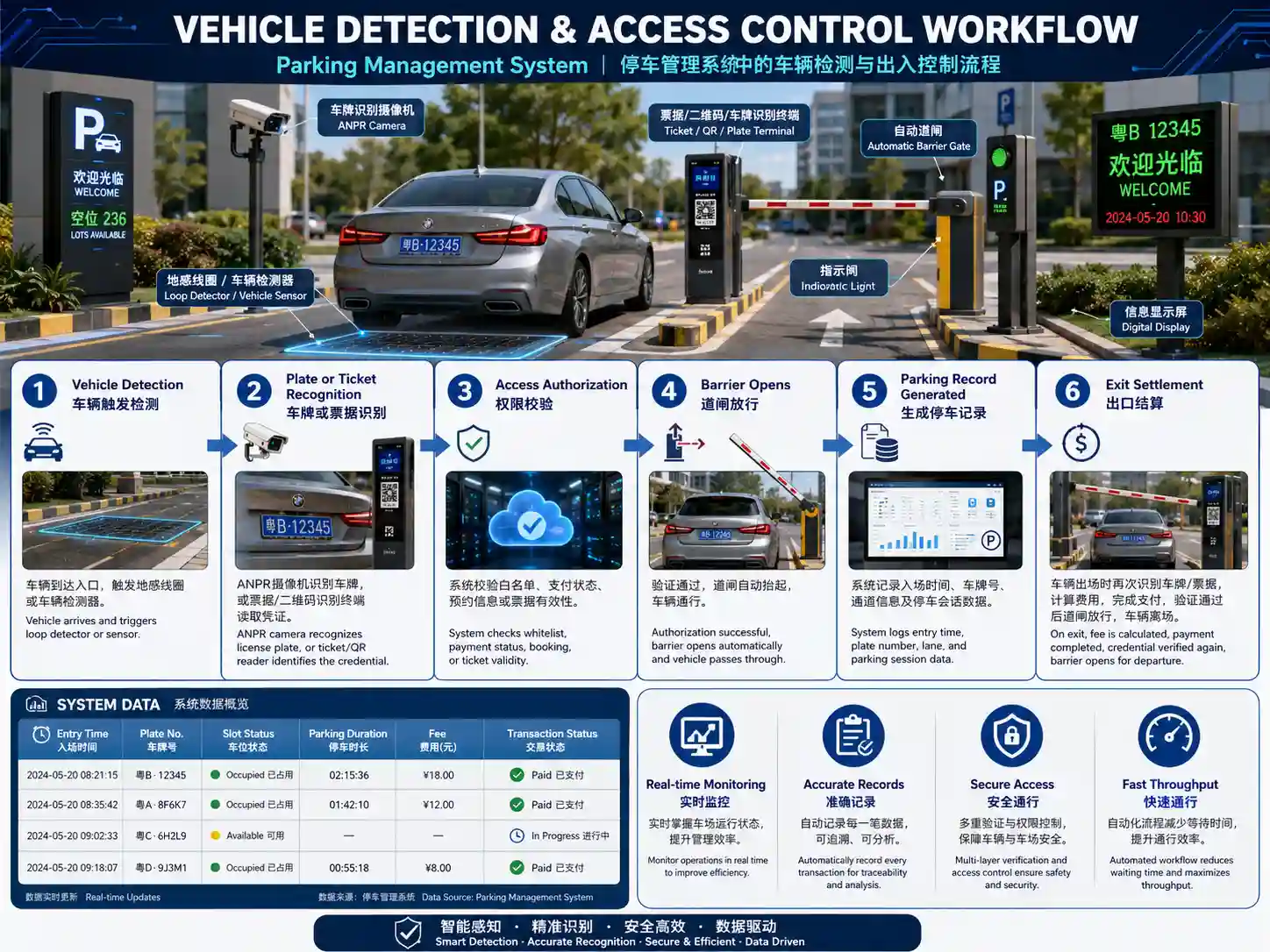
Mfumo wa Kuegesha Gari Unafanyaje Kazi kwa Gari Moja?
Mchakato mmoja wa gari hurahisisha wazo hilo. Mfuatano halisi hubadilika kulingana na mbinu ya ufikiaji na sheria za uendeshaji wa eneo husika.
Ombi la Kugundua na Kuingia kwa Gari
Njia ya kuingilia inahitaji kichocheo. Kigunduzi cha kitanzi, rada, kamera, kitendo cha kitufe cha tiketi, au kisomaji kinaweza kumwambia kidhibiti kwamba gari lipo. Uwekaji wa kigunduzi na nafasi ya kukaribia ni sehemu ya ukaguzi wa muundo.
Uamuzi wa Utambulisho na Ufikiaji
Gari linaweza kutumia nambari ya usajili, tiketi, kadi ya RFID, lebo ya kioo cha mbele cha UHF, au kitambulisho cha Bluetooth. Vifaa vya TigerWong vinaorodhesha utambuzi wa nambari ya usajili wa nchi nyingi kwa kutumia violesura vya API na SDK kwa programu ya ALPR. Violesura vya RFID vilivyoandikwa ni pamoja na RS485, Wiegand 26, Wiegand 34, na udhibiti wa kizuizi cha relay.
Kipindi cha Kufungua Vizuizi na Kuegesha Maegesho
Matokeo yaliyoidhinishwa hutuma ishara ya ufunguzi kwenye kizuizi. Mifumo iliyochaguliwa huorodhesha violesura vya mfumo wa maegesho pamoja na udhibiti wa relay au RS485. Programu inaweza kuunganisha kipindi kwenye tiketi, bamba, hati miliki, au akaunti. Fafanua majibu ya kutolingana, bamba zisizosomeka, na kutolewa kwa mikono.
Malipo, Uthibitishaji wa Kutoka, na Urekebishaji wa Vizuizi
Wakati wa kutoka, mfumo huangalia kipindi dhidi ya sheria iliyochaguliwa. Mfumo wa tiketi huchanganua tiketi, huku mfumo unaotegemea bamba ukilinganisha bamba la kutoka na rekodi. Malipo yanaweza kutokea kwenye kituo, wakati wa kutoka, kupitia mtiririko wa kidijitali, au chini ya sheria ya kibali. Kizuizi kisha huwekwa upya kwa gari linalofuata.
Ni Vipengele Vipi Vinavyounda Mfumo wa Kuegesha Maegesho?
Mfumo una tabaka kadhaa. Tovuti ndogo inaweza kutumia vifaa vya njia na sheria rahisi ya ufikiaji. Kituo kikubwa kinaweza kuongeza malipo, mwongozo wa nafasi, kuripoti, na violesura kwenye programu nyingine.
| Safu ya Mfumo | Vifaa vya Kawaida | Kazi Kuu |
|---|---|---|
| Ufikiaji wa gari | Kamera, kisomaji, kisambaza tikiti, kizuizi, kigunduzi | Tambua gari na udhibiti wa kuingia au kutoka |
| Usimamizi wa maegesho | Kidhibiti, programu, hifadhidata, kiolesura cha opereta | Tumia sheria na taarifa kuhusu vipindi vya maegesho ya duka |
| Malipo | Kituo cha malipo, kichanganuzi cha tikiti, kichapishi cha risiti | Thibitisha kipindi cha malipo kupitia mtiririko uliochaguliwa wa malipo |
| Mwongozo | Kigunduzi cha ultrasonic, kiashiria, kidhibiti, onyesho | Kusanya hali ya nafasi na uonyeshe taarifa za nafasi zilizopo |
Vifaa vya Njia ya Kuingia na Kutoka
Njia za kuingia na kutoka huchanganya vifaa na ishara za udhibiti. Nyenzo za TigerWong zinaelezea kisambaza tiketi za kuingia na kichanganuzi cha tiketi za kutoka. Vizuizi vilivyochaguliwa huorodhesha ingizo la infrared la kuzuia mgomo na ufunguzi wa mwongozo. Mapitio chaguzi za mfumo wa usimamizi wa maegesho kwa mtiririko wa kazi wa njia.
Programu na Violesura vya Usimamizi wa Maegesho
Programu hujiunga na matukio kutoka kwa kamera, wasomaji, vikwazo, vifaa vya malipo, na vitendo vya waendeshaji. Inatumia sheria za ufikiaji na taarifa za vipindi vya maegesho vya maduka. API na SDK huelezea miunganisho ya programu; relay, RS485, Wiegand, CAN, Ethernet, na viungo visivyotumia waya hutumika kwa mipangilio tofauti ya vifaa.
Mwongozo wa Maegesho na Vifaa vya Kukaa
Mwongozo wa maegesho huripoti hali ya nafasi na kuwaelekeza madereva. Vifaa vilivyoandikwa ni pamoja na vigunduzi vya ultrasonic, viashiria, vidhibiti vya nodi, udhibiti wa kati, na maonyesho ya mwongozo. Viungo vinaweza kutumia RS485, CAN, Ethernet, au wireless kwa kutumia sehemu. vifaa vya mfumo wa mwongozo wa maegesho wakati taarifa za umiliki zinahitajika.
Je, Mbinu za Kawaida za Kufikia Maegesho Zinafanya Kazi Vipi?
Kila mbinu hutambua gari au huthibitisha muda wa kuegesha. Ufaa hutegemea nambari za simu za eneo husika, vikundi vya watumiaji, trafiki ya wageni, mtiririko wa malipo, mahitaji ya faragha, na programu iliyopo.
Mifumo ya Kuegesha Maegesho ya Utambuzi wa Bamba la Leseni
Kamera ya ANPR au ALPR hutuma matokeo ya nambari ya simu kwenye programu ya maegesho. Programu huilinganisha na orodha inayoruhusiwa, kipindi kinachoendelea, nafasi, au rekodi ya malipo. Toa sampuli za nambari ya simu za ndani, maelekezo ya kuingia na kutoka, sheria za faragha, na kiolesura. Kagua. Mifumo ya maegesho ya ANPR na ALPR kwa ajili ya ufikiaji unaotegemea sahani.
Mifumo ya Maegesho ya Tiketi
Mbinu ya tiketi hutoa tiketi wakati wa kuingia na kuithibitisha wakati wa kutoka. Sheria za tovuti zinapaswa kufunika tiketi iliyopotea, msimbopau ulioharibika, vighairi vya malipo, na kuingia tena.
Mifumo ya Maegesho ya RFID, UHF, na Bluetooth
Magari yaliyosajiliwa yanaweza kutumia kadi ya RFID, lebo ya kioo cha mbele cha UHF, au kitambulisho cha Bluetooth. Mradi unahitaji mchakato wa uandikishaji, njia ya mgeni, na njia mbadala kwa kitambulisho kilichopotea, kilichopitwa na wakati, au kisichoweza kusomwa.
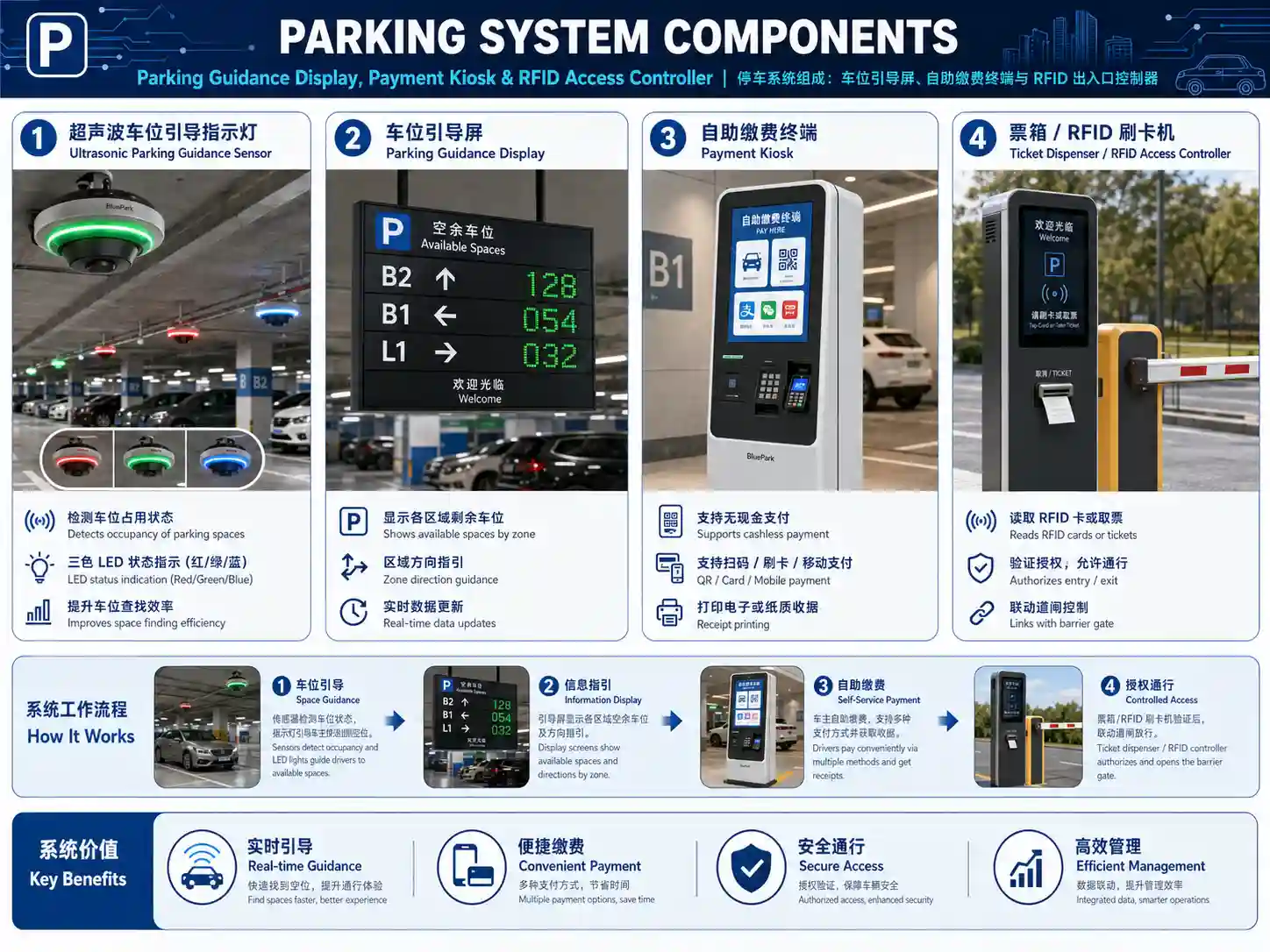
Je, Mwongozo wa Malipo na Maegesho Unaendanaje na Dhana?
Malipo na mwongozo huunga mkono kituo kimoja chenye kazi tofauti. Malipo yanathibitisha sheria ya malipo; mwongozo unaonyesha taarifa za nafasi zinazopatikana. Tovuti inaweza kutumia safu au zote mbili.
Vifaa vya Malipo ya Maegesho
Mashine ya malipo ya kujihudumia ya AP101P huorodhesha kadi ya benki, msimbo wa QR, pesa taslimu, ubadilishaji sarafu, uchapishaji wa risiti, na vitendaji vya IC au kitambulisho kwa ajili ya usanidi unaoungwa mkono. Fafanua sarafu, kodi, marejesho ya pesa, ubatilishaji wa waendeshaji, na ukaguzi wa kutoka katika mtiririko wa kazi ya malipo.
Mwongozo wa Nafasi ya Kuegesha Maegesho
Mwongozo huanza na ugunduzi wa nafasi na hutuma hali kwa viashiria, vidhibiti, na maonyesho. Mpangilio unahitaji uwekaji wa kigunduzi, nafasi za onyesho, njia za mawasiliano, na utaratibu wa kigunduzi au hitilafu ya mtandao.
Unapaswa Kubainisha Nini Kabla ya Kuchagua Mfumo wa Kuegesha Magari?
Wazo hili linakuwa muhimu kama muhtasari wa mradi ulio wazi. Michango mizuri huunganisha usanidi na tovuti.
Tovuti, Njia, na Ingizo la Trafiki
Toa njia za kuingia na kutoka, mwelekeo, idadi ya nafasi, trafiki ya kawaida na ya kilele, aina za magari, hitaji la kizuizi, mfiduo, na hali ya usakinishaji. Jumuisha michoro ya njia na vikundi vya trafiki vilivyoshirikiwa.
Ufikiaji, Malipo, na Ingizo za Programu
Taja mbinu ya ufikiaji, mtiririko wa malipo, sampuli za nambari ya simu, hifadhidata ya sifa, mtandao, sehemu za kuripoti, na violesura. Mifumo iliyopo ya ujenzi, mgeni, tiketi, au malipo huathiri ujumuishaji.
Matukio ya Kukubalika na Ubaguzi
Andika majaribio ya sahani zisizosomeka, tiketi zilizopotea, vipindi visivyolipwa, hitilafu za kigunduzi, upotevu wa umeme, ufunguzi wa mikono, uingizwaji unaorudiwa, na urejeshaji wa rekodi. Kesi hizi huwapa mantiki ya kidhibiti na waendeshaji shabaha ya pamoja.
Mtoa Huduma Anawezaje Kusaidia Kupanga Mfumo wa Maegesho?
TigerWong Shenzhen TigerWong Technology Co., Ltd inarekodi kategoria za mfumo wa maegesho zinazojumuisha ALPR au ANPR, tiketi, kadi za RFID, UHF, Bluetooth, malipo, mwongozo, vizuizi, na programu ya usimamizi. Violesura vilivyoandikwa ni pamoja na API, SDK, relay, RS485, CAN, Ethernet, na Wiegand kwa vipengele.
Tuma mpangilio wa njia, njia ya ufikiaji, mtiririko wa malipo, hesabu ya nafasi, sampuli za sahani, mahitaji ya kizuizi, mtandao, na violesura vya programu. Ingizo hizi huruhusu timu ya mfumo wa maegesho Kagua usanidi na utambue taarifa zinazohitajika kwa ajili ya uteuzi wa modeli.
Maswali ya kawaida
Swali la 1: Dhana ya msingi ya mfumo wa maegesho ni ipi?
A: Mfumo wa kuegesha magari huunganisha ufikiaji wa gari, udhibiti wa njia, rekodi za maegesho, na malipo au mwongozo wa hiari. Unaweza kutumia nambari za simu, tikiti, kadi, lebo, au vitambulisho vingine.
Swali la 2: Je, mfumo wa usimamizi wa maegesho ni sawa na gereji ya maegesho ya kiotomatiki?
A: Mfumo wa usimamizi wa maegesho husimamia nafasi ambazo madereva hutumia wenyewe. Gereji otomatiki huhamisha magari kwenye hifadhi kwa kutumia vifaa vya mitambo. Mahitaji yao ya muundo hutofautiana.
Swali la 3: Je, mfumo wa kuegesha magari unaweza kufanya kazi bila tikiti za karatasi?
A: Ndiyo. Inaweza kutumia utambuzi wa nambari za simu, RFID, UHF, Bluetooth, vibali, au sifa zingine. Mbinu iliyochaguliwa inahitaji njia ya mgeni na mchakato wa kurudi nyuma.
Swali la 4: Mfumo wa maegesho wa utambuzi wa nambari ya leseni hudhibiti vipi kizuizi?
A: Kamera hutuma matokeo ya nambari ya simu inayotambulika kwa programu au kidhibiti cha maegesho. Mfumo huangalia sheria ya ufikiaji au kipindi iliyosanidiwa, kisha hutuma amri ya ufunguzi matokeo yanapoidhinishwa.
Swali la 5: Ni taarifa gani unapaswa kutuma unapoomba pendekezo la mfumo wa maegesho?
A: Tuma mpangilio wa njia, njia ya ufikiaji, mtiririko wa malipo, hesabu ya nafasi, hitaji la kizuizi, sampuli za sahani za ndani, mtandao, violesura vya programu, na majaribio ya kukubalika. Maelezo haya yanafafanua tabaka za mfumo na miunganisho inayohitajika.