
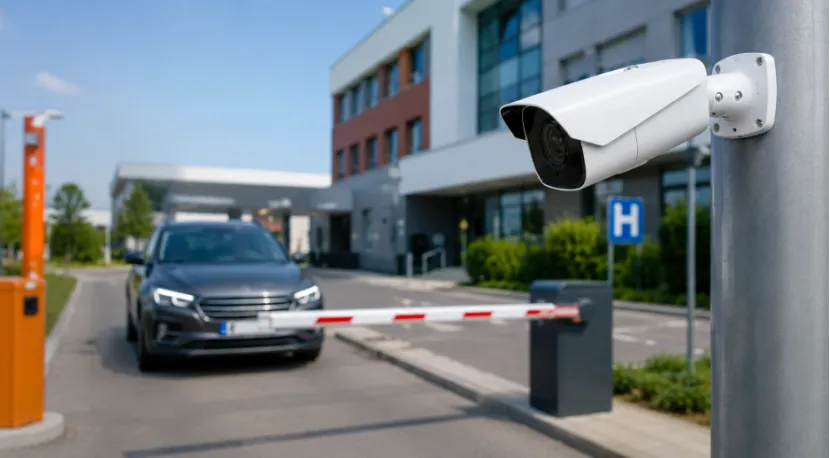
Escolher um câmera de reconhecimento de placas Não se trata apenas de comprar uma câmera com vídeo nítido. Para o controle de acesso a estacionamentos, você precisa de um dispositivo que leia placas rapidamente, funcione à noite, conecte-se a cancelas automáticas e seja estável em condições de chuva, poeira, calor e frio. Uma boa câmera ANPR deve reduzir o tempo de espera, eliminar a necessidade de verificação manual e tornar a entrada diária de veículos mais ágil para motoristas e seguranças.
O que caracteriza uma boa câmera de reconhecimento de placas de veículos?
Antes de comparar modelos, analise o cenário completo. A entrada de um estacionamento tem veículos em movimento, faróis, luz solar, placas sujas, ângulos variados e, às vezes, motoristas impacientes. É por isso que uma câmera de segurança comum pode não ser suficiente.
Precisão de reconhecimento
A primeira preocupação é a captura da placa. Um sistema robusto de reconhecimento de placas precisa de imagens nítidas, controle preciso do obturador e um software de reconhecimento confiável. Para estacionamentos, a resolução 1080p costuma ser prática, pois oferece detalhes suficientes sem sobrecarregar o sistema. A TigerWong TGW-LRA3 utiliza um sensor CMOS de 1/2,8", tamanho de imagem de 1920 × 1080 e resolução 1080p, atendendo aos padrões comuns. entrada do estacionamento precisa.
Velocidade do veículo
Uma câmera de estacionamento deve conseguir ler as placas mesmo quando os veículos não param completamente. Em escolas, fábricas, hospitais e estacionamentos fechados, alguns motoristas reduzem a velocidade, mas continuam em movimento. A TGW-LRA3 consegue reconhecer placas quando a velocidade do veículo está abaixo de 70 km/h, o que oferece margem suficiente para a maioria das entradas de estacionamentos controlados.
Qual a distância ideal para instalar uma câmera ANPR?
A distância é um dos principais fatores que levam ao fracasso em muitos projetos. Você pode comprar o certo Câmera ANPRMas se você a colocar muito longe, muito alto ou em um ângulo ruim, o prato parecerá pequeno ou inclinado, e o resultado ficará instável.
Distança de Reconhecimento
Para a TGW-LRA3, a distância de reconhecimento é de 3 a 10 m, enquanto a distância recomendada entre a câmera e o veículo é de 3 a 6 m. Isso é útil para entradas de via única, portões de fábricas, estacionamentos escolares, estacionamentos de hospitais e pequenos acessos comunitários.
Ângulo da câmera e configuração da faixa
Tente manter a placa próxima ao centro da imagem. Evite ângulos laterais muito acentuados. Uma regra simples ajuda: posicione a câmera onde o carro naturalmente reduz a velocidade, como perto da cancela ou da lombada. Parece básico, mas muitas instalações malfeitas falham porque a câmera monitora a faixa como uma câmera de segurança, e não como um leitor de placas.
Consegue ler placas de carro à noite?
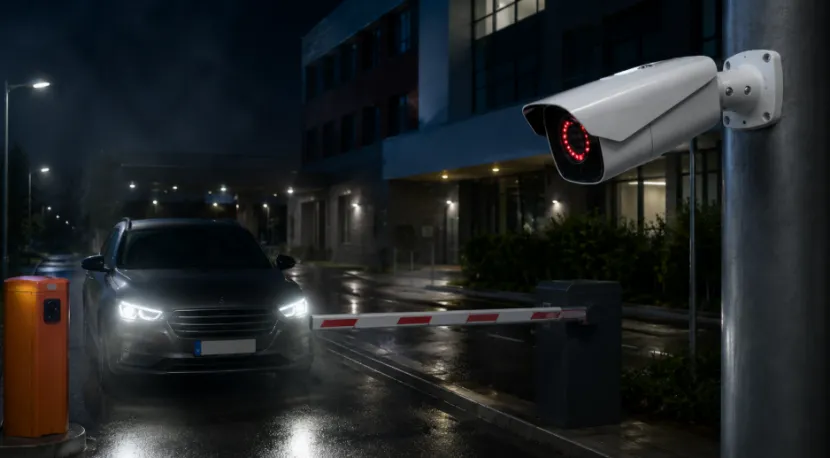
O reconhecimento noturno é um verdadeiro problema. Os faróis ofuscam. As placas refletem. A chuva faz o chão brilhar. Uma câmera de reconhecimento de placas com visão noturna deve ter suporte adequado de infravermelho e uma visão desobstruída da área da placa.
Desempenho IR
A TGW-LRA3 tem um alcance infravermelho de 50 a 70 metros. Isso não significa que você deva instalá-la a 70 metros do veículo. Significa que a câmera possui um bom desempenho em infravermelho em ambientes escuros. A distância real de reconhecimento de placas deve continuar dentro do alcance recomendado. Esse pequeno detalhe pode evitar muito retrabalho posteriormente.
Por que PoE e ONVIF são importantes?
Potência e compatibilidade não são tópicos empolgantes, mas determinam a facilidade de instalação e manutenção do sistema. Em projetos reais de estacionamento, problemas de fiação podem custar mais tempo do que a própria câmera.
Alimentação PoE
Uma câmera ANPR PoE pode receber energia e dados através de um único cabo de rede. Isso facilita a instalação perto de portões, colunas e postes externos. A TGW-LRA3 suporta DC12V e PoE, com PoE IEEE802.3af e consumo de energia inferior a 11W. Isso é ideal para quem busca uma instalação mais organizada. sistema de controle de acesso ao estacionamento Sem fios elétricos emaranhados.
Compatibilidade com ONVIF
Uma câmera de leitura de placas ONVIF pode funcionar mais facilmente com sistemas de vídeo e plataformas de terceiros. A TGW-LRA3 suporta ONVIF, conexão de rede RJ45, RS485, entrada de alarme e saída de alarme. Essas interfaces são importantes quando você precisa de integração com cancelas automáticas, registros de veículos e sinais de controle de acesso em uma única configuração.
Está pronto para estacionamentos ao ar livre?
Estacionar ao ar livre danifica os equipamentos. As câmeras ficam expostas ao sol, poeira, chuva, manhãs frias, tardes quentes e, às vezes, à limpeza pouco cuidadosa da equipe. Por isso, o local onde serão armazenadas é fundamental.
Proteção IP67
A TGW-LRA3 é uma câmera ANPR com classificação IP67, capaz de operar em temperaturas de -30 °C a 60 °C e com umidade inferior a 95%, sem condensação. Isso a torna adequada para diversas aplicações externas. controle de acesso ao estacionamento projetos, incluindo entradas de fábricas abertas e condomínios fechados.
Opções de montagem
O produto permite montagem no teto e na parede. Além disso, seu tamanho compacto permite a instalação em colunas. Para os compradores, isso oferece mais espaço para integrar a câmera a um portão já existente, em vez de reconstruir toda a via.
Qual é o papel da TigerWong nesse tipo de projeto?
Ao escolher uma solução de reconhecimento de placas de veículos para estacionamentos, o fornecedor do hardware também é importante. A TigerWong, sediada em Shenzhen, na China, concentra-se em sistemas inteligentes de gestão de estacionamentos, sistemas ALPR/ANPR, controle de acesso, catracas para pedestres e sistemas de reconhecimento facial.
A empresa possui mais de 25 anos de experiência em sistemas de estacionamento, 120 funcionários, 4.000 metros quadrados de área fabril e atende clientes em mais de 154 países. Para um comprador, essa experiência significa que não se trata apenas de uma câmera de estacionamento, mas de uma linha completa de produtos para controle de acesso a estacionamentos, com opções de software, cancelas, pagamento e gerenciamento de entradas.
Por que o TGW-LRA3 é adequado para estacionamentos comuns?
A TGW-LRA3 pode ser usada de forma independente para veículos autorizados e veículos fixos. Ela também oferece um software baseado na web, permitindo ajustar parâmetros inserindo o endereço IP da câmera, armazenar informações do veículo e gerenciar registros de acesso. É uma solução prática para escolas, fábricas, hospitais e estacionamentos com portão. Você obtém uma câmera compacta de reconhecimento de placas para uso em cancelas, sem tornar a entrada muito complexa.
FAQ
P1: Qual é a melhor câmera de reconhecimento de placas para controle de acesso a estacionamentos?
A: A melhor opção deve ser adequada à distância entre as faixas, às condições de visibilidade noturna, ao sistema de cancelas e às necessidades de software. Procure por qualidade de imagem 1080p, PoE, ONVIF, proteção IP67 e integração estável com cancelas automáticas.
Q2: Qual a distância ideal entre uma câmera ANPR e o veículo?
A: Para o TGW-LRA3, a distância recomendada entre a câmera e o veículo é de 3 a 6 m, enquanto a distância de reconhecimento é de 3 a 10 m.
P3: Uma câmera ANPR pode funcionar sem internet?
A: Sim. O TGW-LRA3 pode funcionar offline para reconhecimento de veículos, o que é útil em locais onde a estabilidade da rede nem sempre é perfeita.
Q4: O PoE é importante para uma câmera de reconhecimento de placas de veículos?
R: Sim. O PoE reduz o trabalho de cabeamento porque a energia e os dados podem ser transmitidos por um único cabo. É útil para portões externos, colunas e projetos de reforma de estacionamentos.
Q5: Onde o TGW-LRA3 pode ser usado?
A: É adequado para escolas, fábricas, hospitais, estacionamentos fechados, condomínios residenciais e entradas de estacionamentos comerciais que necessitam de controle automático de acesso de veículos.