
Un système de stationnement coordonne la détection des véhicules, l'autorisation d'accès, l'historique de stationnement, le paiement et le contrôle des sorties. Un capteur détecte le véhicule, le système lit la plaque d'immatriculation ou le badge, le logiciel vérifie le règlement d'accès et une barrière s'ouvre après autorisation. La session est de nouveau vérifiée à la sortie.
TigerWong fournit les équipements de gestion des voies, les logiciels de gestion de stationnement, les terminaux de paiement et les systèmes de guidage nécessaires. Cet article traite des parkings et garages gérés ; le stockage robotisé de véhicules utilise un processus différent.
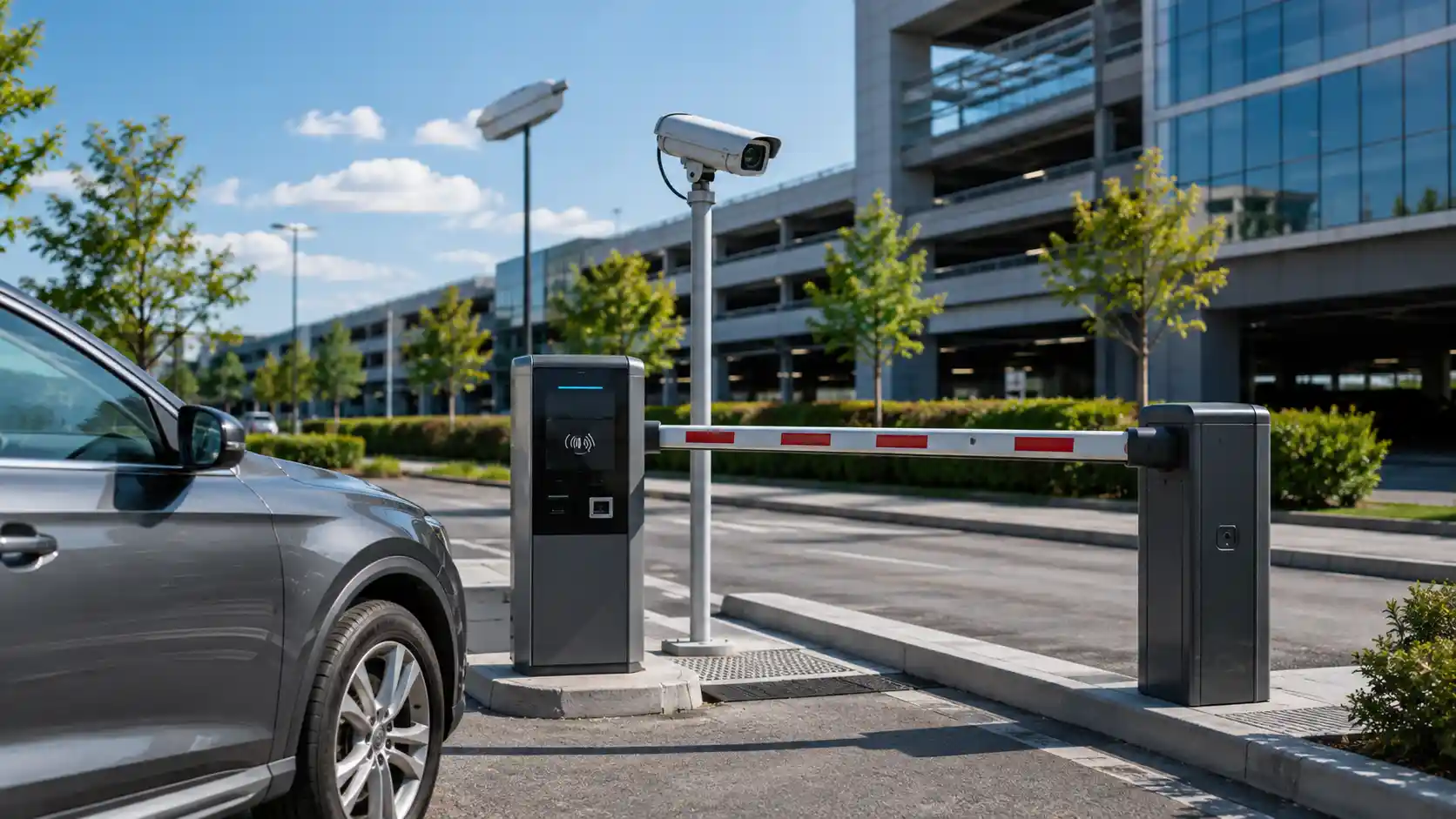
Comment fonctionne un système de stationnement étape par étape ?
Le processus complet relie les équipements physiques de la voie aux décisions logicielles. Chaque étape crée ou vérifie les données nécessaires à l'étape suivante.
| Étape | Action sur l'équipement ou le système | Résultat |
|---|---|---|
| Arrivée | Un détecteur de boucle magnétique, un radar ou un autre capteur de véhicule détecte le véhicule. | Le matériel d'entrée se met en marche |
| Identification | Une caméra, un distributeur de billets, un lecteur RFID, un lecteur UHF ou un appareil Bluetooth obtient un titre d'accès. | Le système crée ou trouve un enregistrement de stationnement |
| Entrée | Le logiciel applique la règle d'accès et envoie un signal d'ouverture | La barrière se lève pour un véhicule homologué |
| Parking | Le système stocke les données de session ; des capteurs de guidage peuvent suivre les espaces occupés | Les opérateurs et les conducteurs reçoivent des informations sur le stationnement |
| Paiement | Un caissier, une borne libre-service ou un canal de paiement connecté confirme les frais | La session reçoit un statut de paiement |
| Sortie | Le système lit les informations d'identification de sortie et vérifie la session. | La barrière s'ouvre puis se referme après le passage du véhicule. |
Étape 1 : Détecter le véhicule qui approche
Un détecteur de voie déclenche la séquence d'entrée. Sa position permet à la caméra, au lecteur, au distributeur de tickets et à la barrière de réagir successivement. Un autre point de détection confirme que le véhicule a franchi le bras.
Étape 2 : Identifier le conducteur ou le véhicule
Une caméra ANPR ou ALPR lit la plaque d'immatriculation, un distributeur délivre un ticket ou un lecteur reçoit une carte RFID, une étiquette UHF ou un signal Bluetooth. Choisissez la méthode la plus adaptée aux utilisateurs, à la politique d'accueil des visiteurs et au processus de paiement.
Étape 3 : Autoriser l'entrée et renforcer la barrière
Le logiciel vérifie l'identifiant par rapport à la règle d'accès. Un abonné valide, une plaque d'immatriculation reconnue, un ticket émis ou une commande autorisée peuvent déclencher la barrière. Certains équipements TigerWong prennent en charge la commande par relais ou RS485.
Étape 4 : Suivre la session de stationnement et l’état de la place
Le logiciel enregistre l'entrée et maintient la session active. Les détecteurs de places libres peuvent également signaler les places occupées ou disponibles. L'historique de la session suit la visite ; les données de guidage suivent l'occupation des places.
Étape 5 : Calculer et confirmer le paiement
Pour le stationnement payant, le système applique le tarif configuré et enregistre le paiement. Le terminal TigerWong AP101P prend en charge les paiements par carte bancaire, QR code, espèces, monnaie, impression de reçus et carte IC/ID.
Étape 6 : Vérifier la sortie et fermer la barrière
À la sortie, le système vérifie à nouveau le titre d'accès. Le logiciel contrôle le paiement ou le statut d'accès, ouvre la barrière et enregistre le départ. Un détecteur confirme le passage avant que le bras ne s'abaisse conformément au dispositif de sécurité configuré.
Quels sont les composants qui permettent le fonctionnement d'un système de stationnement ?
Chaque composant remplit une fonction spécifique. Révision options du système de gestion de stationnement L'analyse des flux de travail vous aide à identifier l'équipement nécessaire pour chaque voie.
Équipement des voies d'entrée et de sortie
L'équipement de voie peut comprendre un détecteur de véhicules, un dispositif de contrôle d'accès, une barrière, un contrôleur, un poste opérateur et un système d'entrée de sécurité. Cette liste varie selon l'utilisateur et le processus de paiement.
Logiciels et interfaces de gestion de parking
Le logiciel centralise les enregistrements d'entrée, les règles d'accès, le statut des paiements, les contrôles de sortie et les rapports. Le logiciel de lecture automatique de plaques d'immatriculation (LAPI) de TigerWong prend en charge la reconnaissance de plaques d'immatriculation dans plusieurs pays et offre une assistance via API et SDK. Définissez le système qui crée l'enregistrement, calcule les frais, autorise l'accès et stocke chaque événement.
Équipements de détection et de guidage spatial
Les équipements de guidage transmettent l'état de l'espace aux indicateurs, contrôleurs et écrans. La documentation TigerWong couvre les détecteurs ultrasoniques sans fil et frontaux, les indicateurs, les contrôleurs de nœuds et les afficheurs d'entrée ou d'intérieur. Les connexions incluent RS485, CAN, Ethernet et la communication sans fil par composant. Voir la documentation équipement du système de guidage de stationnement lors de la planification de cette couche.
Comment fonctionnent les différents modes d'accès au stationnement ?
Les méthodes d'accès diffèrent principalement par l'identifiant saisi à l'entrée et vérifié à la sortie. Les sites mixtes peuvent attribuer une méthode aux abonnés et une autre aux visiteurs.
Systèmes de stationnement par reconnaissance des plaques d'immatriculation
Un système de stationnement ANPR ou ALPR lit une plaque d'immatriculation et envoie le résultat à un logiciel de gestion de stationnement. Ce logiciel l'associe à une liste d'accès ou à une session. Lors de la consultation, Systèmes de stationnement ANPR et ALPR, fournir des échantillons de plaques locales et l'interface requise.
Systèmes de stationnement de billets
Un système de billetterie délivre un ticket à l'entrée et le vérifie à la sortie. TigerWong décrit une configuration avec un distributeur à l'entrée et un lecteur de sortie. Configurez les règles de paiement et de gestion des tickets perdus dans le logiciel et les procédures opérationnelles.
Systèmes de stationnement RFID, UHF et Bluetooth
Les cartes RFID permettent d'identifier les utilisateurs enregistrés. La technologie UHF utilise des étiquettes de pare-brise, tandis que le Bluetooth requiert un appareil et un récepteur compatibles. TigerWong propose des étiquettes RFID compatibles RS485, Wiegand 26, Wiegand 34 et avec commande de barrière par relais. Assurez-vous que l'interface corresponde au contrôleur et au plan de câblage.
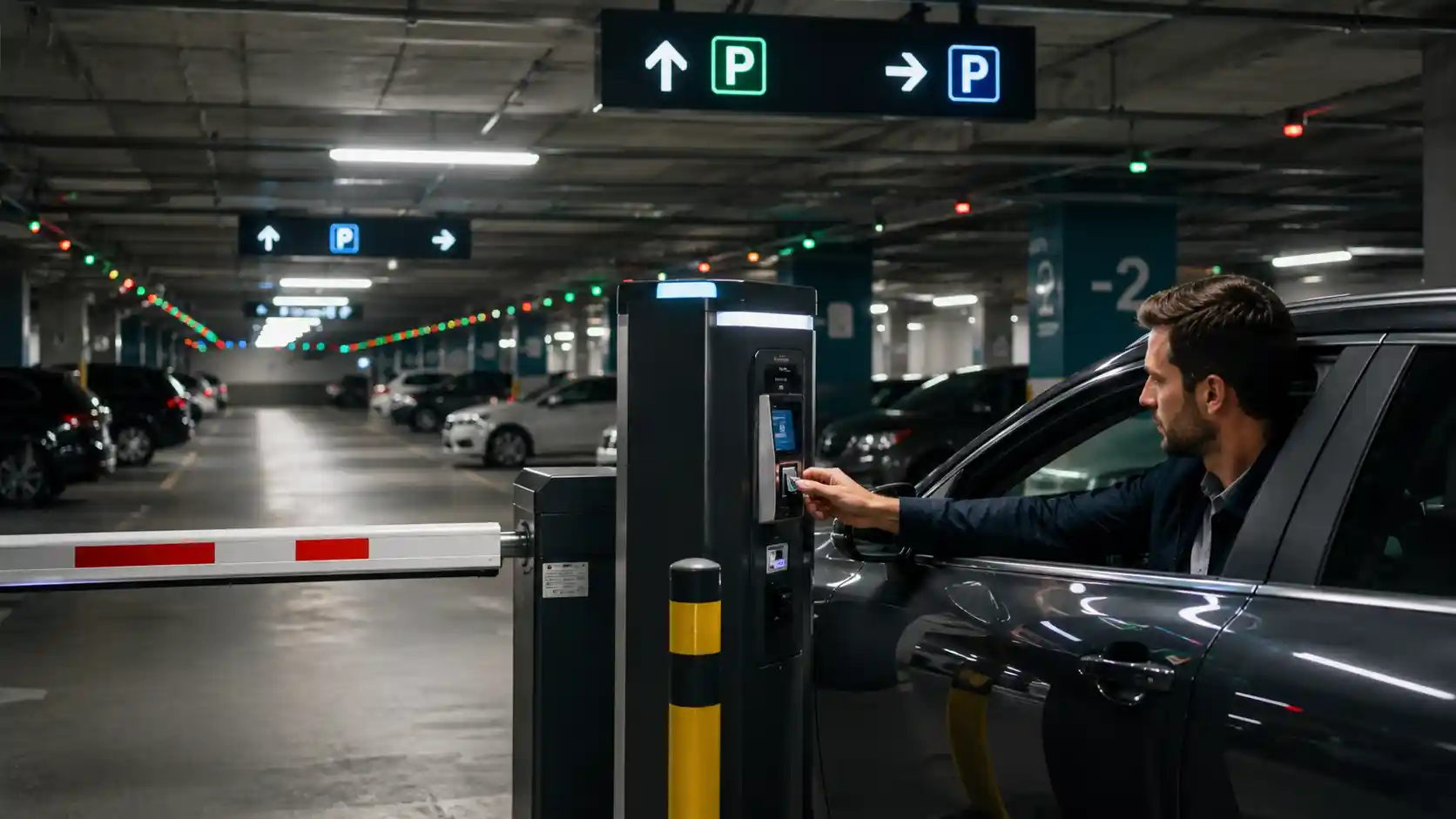
Comment les instructions de paiement et de stationnement s'intègrent-elles au système ?
Le paiement autorise la sortie d'une session payante. Le guidage aide le conducteur à trouver une place de stationnement disponible. Les deux modules partagent les données de stationnement, mais chacun nécessite son propre équipement et ses propres tests de validation.
Flux de travail de paiement du stationnement
Précisez le mode de calcul des frais, les modes de paiement acceptés, les modalités de versement du paiement à la séance et la période de validité. Gérez les documents relatifs aux reçus, aux remboursements, aux litiges et aux pannes de matériel.
Flux de travail de guidage pour les places de stationnement
Un détecteur signale l'occupation de l'espace. Des indicateurs affichent l'état local, des contrôleurs agrègent les données et des panneaux indiquent le nombre de personnes ou la direction. Comparez l'occupation réelle avec l'état du détecteur, les totaux et les affichages.
Que se passe-t-il lorsqu'un système de stationnement ne peut pas mener à bien le processus normal ?
La gestion des exceptions doit être intégrée à la conception du projet. Des instructions claires de l'opérateur permettent d'éviter qu'un identifiant illisible ou un appareil défaillant ne se transforme en procédure improvisée.
Exceptions en matière de reconnaissance, d'accréditation et de paiement
Prévoir des actions à entreprendre en cas de plaques d'immatriculation illisibles, de cartes endommagées, de billets perdus, de séances impayées, de doubles identifiants et de visiteurs non enregistrés. L'écran de l'opérateur doit afficher les données de session requises par la politique du site.
Exceptions liées aux détecteurs, aux barrières, aux réseaux et à l'alimentation
Documentez les réponses aux pannes de détecteurs, aux obstructions, aux interruptions de réseau, aux alarmes et aux coupures de courant. Certains modèles de barrières TigerWong proposent une entrée anti-collision infrarouge, un bras pivotant, une interface RS485 ou une ouverture manuelle. Vérifiez les caractéristiques du modèle proposé et testez le comportement attendu.
Quels critères devez-vous prendre en compte avant d'acheter un système de stationnement ?
Une demande de devis pertinente décrit le site et ses règles d'exploitation. Ces informations permettent au fournisseur d'associer chaque fonction du système de stationnement à un appareil, une interface et un cas de test.
Entrées du site et du trafic
Indiquez le nombre et la largeur des voies, le sens de circulation, les types de véhicules, les périodes de fonctionnement, les exigences en matière de barrières, l'emplacement des équipements, l'alimentation électrique, l'accès au réseau et l'espace de montage.
Accès, paiement et entrées logicielles
Groupes d'utilisateurs d'État, processus d'accueil des visiteurs, accréditation, règles de paiement et de frais, nombre d'espaces, besoins en matière de rapports, échantillons de plaques et interfaces logicielles ou de contrôleur requises.
Scénarios de tests d'acceptation
Tester la validité des identifiants, l'état des paiements, le passage des véhicules, les détecteurs, la libération du véhicule par l'opérateur, les interruptions de réseau et le rétablissement de l'alimentation. Un système de stationnement est opérationnel lorsque les fonctions approuvées réussissent les tests sur site convenus.
À propos de TigerWong Shenzhen TigerWong Technology Co., Ltd
TigerWong conçoit des équipements de stationnement pour le contrôle d'accès, le paiement, le guidage et la gestion des voies. Son offre comprend des systèmes de lecture automatique des plaques d'immatriculation (LAPI/LAPIA), de billetterie, RFID, UHF et Bluetooth, des horodateurs, des dispositifs de guidage, des barrières et des logiciels de gestion. Les interfaces disponibles incluent API, SDK, relais, RS485, CAN, Ethernet et Wiegand, selon les composants.
Veuillez envoyer le plan des voies, le mode d'accès, le flux de paiement, le nombre d'emplacements, des exemples de plaques d'immatriculation, les exigences relatives aux barrières et les interfaces logicielles. Contactez l'équipe du système de stationnement pour une configuration basée sur ces entrées.
FAQ (questions fréquentes)
Q1 : Quelle est la différence entre un système de stationnement et un parking automatisé ?
UN: Un système de gestion de parking contrôle l'accès, les sessions, le paiement, le guidage et la sortie. Un parking automatisé déplace physiquement les véhicules vers et depuis les emplacements de stationnement à l'aide d'équipements mécaniques.
Q2 : Un système de stationnement peut-il fonctionner sans tickets papier ?
UN: Oui. Un système de stationnement sans ticket peut utiliser les plaques d'immatriculation, les cartes RFID, les étiquettes UHF, les identifiants Bluetooth ou tout autre identifiant approuvé. Les dispositifs d'entrée et de sortie doivent utiliser le même enregistrement de session ou une intégration définie.
Q3 : Comment un système de stationnement par reconnaissance de plaques d'immatriculation peut-il lever les obstacles ?
UN: Une caméra lit la plaque d'immatriculation et transmet le résultat au logiciel de gestion du parking. Ce dernier vérifie les règles d'accès ou de paiement applicables, puis envoie une commande d'ouverture via l'interface du contrôleur configurée.
Q4 : Que se passe-t-il si un conducteur perd une contravention de stationnement ?
UN: La politique d'exploitation du site détermine la réponse. L'exploitant peut consulter les registres d'entrée et autres données disponibles sur les véhicules, appliquer le tarif en vigueur et autoriser la sortie après vérification.
Q5 : De quelles informations un fournisseur a-t-il besoin pour configurer un système de stationnement ?
UN: Fournir le nombre de voies, le sens de circulation, le mode d'accès, les règles de paiement, le nombre d'emplacements, les exigences relatives aux barrières, l'état du réseau et de l'alimentation électrique, les interfaces logicielles, des exemples de plaques d'immatriculation locales et la gestion des exceptions requise. Ces données définissent la liste des équipements et les tests de réception.