
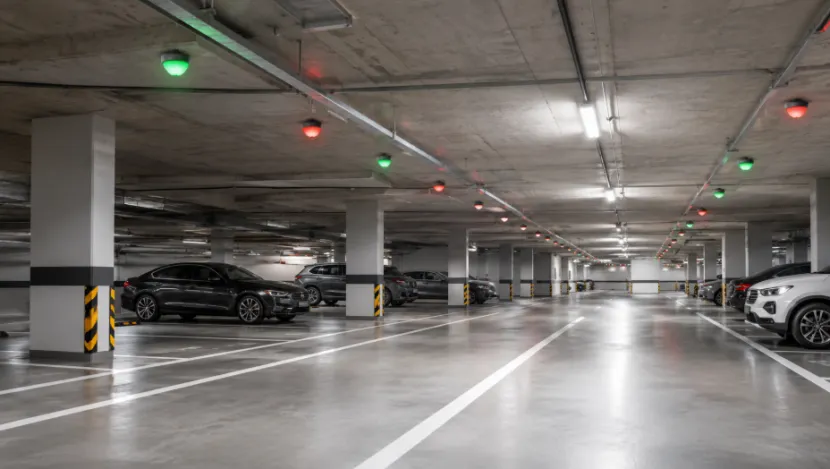
Cuando la gente habla de sistemas de estacionamiento inteligentesSuelen pensar primero en el software. Hablan de datos en la nube, reconocimiento de matrículas y pagos. Sí, esas herramientas son importantes. Pero pensemos en el conductor. Una vez que entra en un aparcamiento, su decisión es muy sencilla. Solo quiere saber: ¿está libre este sitio o no?
Precisamente por eso, los indicadores LED de plazas de aparcamiento siguen siendo importantes hoy en día. Ofrecen una guía visual sencilla e inmediata. El conductor no tiene que abrir una aplicación en el móvil, ni leer un cartel enorme, ni adivinar desde lejos. Rojo significa ocupado, verde significa disponible. Parece algo muy básico, pero en un aparcamiento de un centro comercial abarrotado a las 6 de la tarde, lo básico es lo que mejor funciona.
¿Qué son los indicadores LED de plazas de aparcamiento?
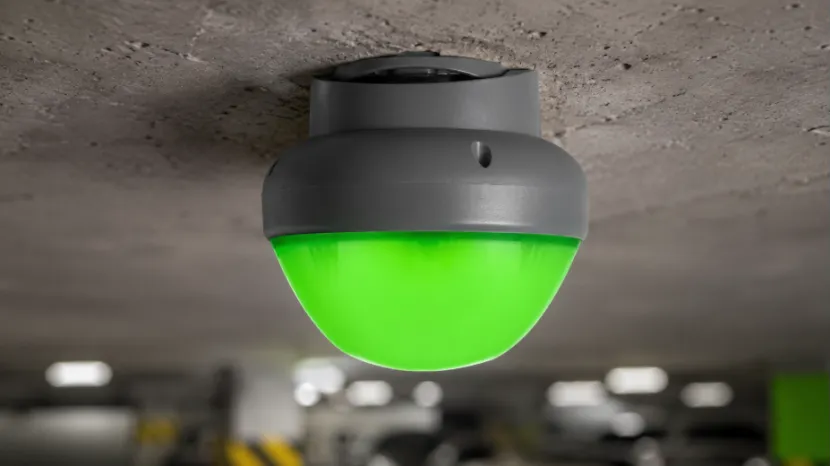
Los indicadores LED de plazas de aparcamiento son luces brillantes que se colocan encima o justo al lado de las plazas. En cualquier buen sistema de guiado de aparcamiento, estas luces se integran con otros componentes. Funcionan con un detector de aparcamiento ultrasónico y un controlador de nodo. También se conectan con un controlador central, pantallas de disponibilidad de plazas interiores y exteriores, y el software principal de guiado de aparcamiento.
El color verde significa que el espacio está disponible.
Si no hay ningún coche en el espacio, el semáforo se pone en verde. Los conductores pueden ver estos espacios libres desde lejos, así que no tienen que ir muy despacio por cada fila para mirar.
El color rojo indica que el espacio está ocupado.
Una vez que un coche se estaciona en la plaza, el detector de aparcamiento ultrasónico lo identifica. Entonces, la luz se pone roja. El sistema también actualiza en tiempo real el número de plazas de aparcamiento en las pantallas grandes. El recuento total cambia al instante.
¿Por qué siguen siendo importantes las señales visuales sencillas?
El software de estacionamiento inteligente es ideal para los administradores. Les permite ver informes, tiempos de estacionamiento y datos. Pero los conductores solo necesitan respuestas rápidas. Una guía visual sencilla les brinda exactamente lo que buscan.
Los conductores deciden en segundos.
Imagínese conduciendo por un carril estrecho en un estacionamiento cubierto. Solo tiene un par de segundos para decidir. ¿Reduce la velocidad, gira o continúa? Las señales de ocupación rojas y verdes lo hacen fácil. Nadie tiene que aprender cómo funcionan. No hay que adivinar nada. Nunca tendrá que pensar: "Quizás ese lugar esté libre".
El bajo costo de aprendizaje beneficia a todos los visitantes.
Un bajo costo de aprendizaje es una gran ventaja. Piense en los nuevos visitantes o en los conductores mayores. Piense en los repartidores o en las familias con niños llorando en el asiento trasero. Todos pueden mirar hacia arriba y leer las luces rojas y verdes de los estacionamientos. No necesitan aprender un sistema nuevo y complicado.
¿Cómo mejoran los indicadores LED la velocidad de decisión del conductor?
La rapidez con la que el conductor decide puede cambiar por completo la experiencia de estacionar. Si alguien se detiene demasiado tiempo para revisar una fila, todos los que vienen detrás se quedan atascados. Unos pocos segundos perdidos pueden generar una cola enorme cerca de la rampa.
Menos paradas y menos desvíos
Los indicadores LED de plazas de aparcamiento permiten a los conductores saltarse filas enteras. Simplemente pueden dirigirse hacia las plazas verdes brillantes. Bien. guía de plazas de aparcamiento Reduce las paradas bruscas y las maniobras de marcha atrás extrañas. Esto es especialmente cierto en los grandes aparcamientos subterráneos donde gruesos pilares ocultan los coches.
Menos congestión en los estacionamientos
Gran parte de la congestión en los estacionamientos se debe simplemente a la búsqueda de lugares. No siempre se debe a que el estacionamiento esté completamente lleno. A menudo, los conductores dan vueltas buscando espacios libres, bloqueando los carriles principales y provocando grandes atascos. Un sistema visual claro y eficaz ayuda a que los vehículos circulen con fluidez.
¿Por qué son útiles los indicadores LED incluso con software de estacionamiento inteligente?
El software es muy útil en segundo plano. Guarda datos y registra el uso. Ayuda al equipo de construcción a gestionar todo correctamente. Pero el software por sí solo no puede comunicarse con un conductor que se mueve a gran velocidad.
El software gestiona los datos, las luces guían a las personas.
Un sistema de estacionamiento inteligente integral debe conectar ambos lados. El detector registra el estado del estacionamiento. A continuación, el controlador procesa los datos. La pantalla grande muestra la cantidad de plazas libres. Finalmente, el indicador LED muestra al conductor la plaza libre exacta. Este último paso puede parecer insignificante, pero es lo principal en lo que se fijan los conductores.
TigerWong La empresa lleva trabajando intensamente en la gestión inteligente de aparcamientos desde 2001. Su sede se encuentra en Shenzhen. Desarrolla sistemas de gestión de aparcamientos, sistemas de reconocimiento automático de matrículas (ALPR y ANPR), control de acceso y torniquetes. También crea el software para estos sistemas. Cuenta con más de 25 años de experiencia en sistemas de aparcamiento y 15 años en soluciones de torniquetes.
Cuentan con 120 empleados y una fábrica de 4000 metros cuadrados. Venden a clientes en más de 154 países. ¿Por qué es importante? Porque un proyecto de estacionamiento es complejo. No se trata solo de comprar una pieza. Se necesita un diseño de sistema claro, hardware compatible, pasos de configuración sencillos y una buena asistencia posventa.
¿Qué deben comprobar los compradores antes de elegir indicadores LED para plazas de aparcamiento?
Antes de elegir Indicadores LED de plazas de aparcamiento en sistemas de aparcamiento inteligentesComprueba algunos aspectos. Debes verificar la visibilidad y la precisión de detección. Además, revisa el cableado, la altura óptima de instalación y su durabilidad. Las luces baratas pueden verse muy bien el primer día, pero un garaje es un lugar exigente.
Precisión y estabilidad de la detección
El modelo TGW-T01Q ofrece una precisión de detección superior al 99,9 %. Incorpora comunicación RS485 y funciona con una tensión de 10 a 28 V CC. Su rango de temperatura de funcionamiento abarca desde -20 °C hasta +65 °C. Además, utiliza un código inteligente para evitar interferencias de señal, lo que impide la interferencia de señales del carril contiguo, el bloqueo por vehículos con sidecar y el ruido de radio durante la detección ultrasónica.
Detalles de instalación y mantenimiento
La altura de instalación óptima es de entre 2 y 3 metros. Muchos opinan que 2,5 metros es la altura ideal. Su diseño inteligente integra el detector ultrasónico y la luz indicadora en una sola pieza, lo que ahorra mucho tiempo de montaje. Además, evita el engorroso cableado adicional en cada bahía. Puede parecer un detalle insignificante, pero en un proyecto de esta envergadura, los trabajadores lo valoran enormemente.
¿Por qué esto sigue siendo importante para su estacionamiento?
Los indicadores LED de plazas de aparcamiento no son piezas viejas e inútiles. Son la cara visible de los sistemas de aparcamiento inteligentes. Transforman datos aburridos en información útil. Ayudan a los conductores a encontrar plazas rápidamente. Reducen el consumo de combustible al evitar dar vueltas sin rumbo. Además, evitan la necesidad de contratar a demasiados vigilantes de aparcamiento. Y, por si fuera poco, dan una imagen limpia y armoniosa a su edificio.
Esto se nota en centros comerciales, grandes hospitales, edificios de oficinas, hoteles de lujo, aeropuertos o zonas residenciales. A los conductores no les importa el controlador central ni la red RS485. Solo recuerdan si aparcar fue rápido o muy complicado. Por eso, la señalización luminosa y visible de las plazas de aparcamiento sigue siendo tan importante.
Preguntas frecuentes
P1: ¿Los indicadores LED de plazas de aparcamiento funcionan con el software de guiado de aparcamiento?
A: Sí, así es. Los indicadores LED de plazas de aparcamiento funcionan en conjunto con sensores, controladores, pantallas y software de guiado de aparcamiento. El software se encarga de los datos. Al mismo tiempo, las luces muestran a los conductores exactamente adónde deben dirigirse.
P2: ¿Por qué se utilizan señales de ocupación rojas y verdes en los estacionamientos?
A: Las señales de ocupación rojas y verdes son muy fáciles de ver. Verde significa que un lugar está totalmente libre. Rojo significa que ya hay un coche en él.
P3: ¿Cuál es la diferencia entre una pantalla de guía de estacionamiento y los indicadores LED de plazas de aparcamiento?
A: Un panel de información de estacionamiento te muestra las plazas libres en toda una planta o zona. Pero los indicadores LED de plazas de estacionamiento muestran el estado real de una plaza individual.
P4: ¿Son útiles los indicadores LED de plazas de aparcamiento para un interior? sistema de guía de estacionamiento?
R: Sí. Dentro de un sistema de guiado de estacionamiento cubierto, estas luces brillantes son fáciles de ver desde lejos. Ayudan a las personas a elegir rápidamente en pasillos largos y oscuros.
P5: ¿Qué debo comprobar antes de comprar un indicador de ocupación de plazas de aparcamiento?
A: Debes comprobar la precisión de detección y el ángulo de visión. Además, verifica la altura de instalación, cómo se comunica con otros componentes, la temperatura de funcionamiento segura, el consumo de energía y si se integra con todo el sistema de gestión de estacionamiento.