
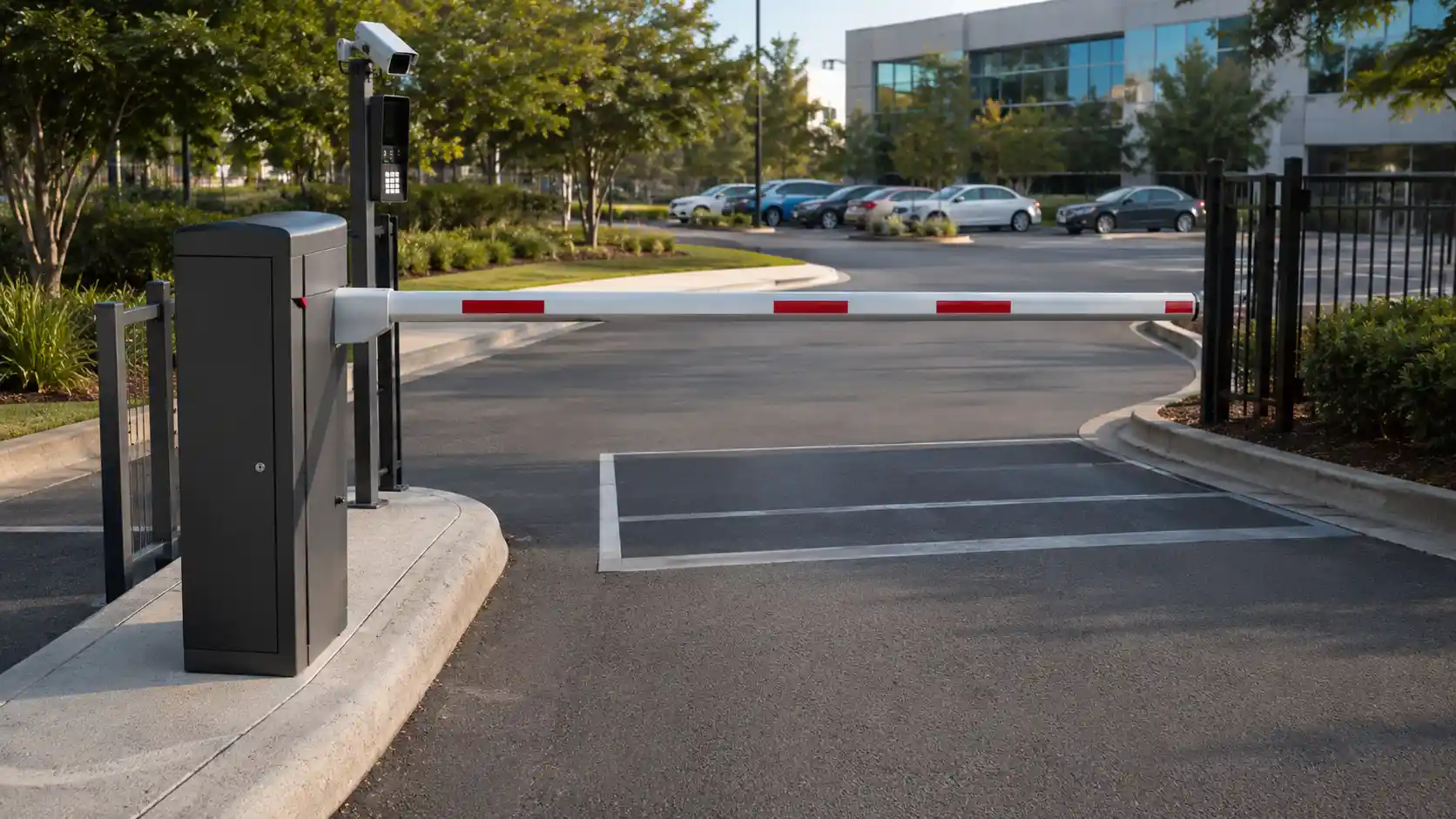
In vehicle access and parking projects, the moving arm on barrier gates is usually called a boom arm. You may also see barrier gate arm, barrier arm, parking barrier arm, or gate arm in drawings and quotations. The complete machine is usually called a barrier gate, barrier boom, boom gate, or boom barrier.
If you ask for “a gate arm,” a supplier may think of a swing gate part or a pedestrian turnstile component. For parking lots, garages, communities, or truck lanes, “barrier gates with boom arms” gives the right context from the first email.
What Is a Barrier Gate Arm Called?
For parking lanes, the clearest term is boom arm. It rises after a valid access signal and lowers after the vehicle passes.
Common Names Buyers Use
Different teams use different wording.
| Term | What It Usually Means | Best Use |
| Boom arm | The moving arm attached to the cabinet | Drawings and replacement parts |
| Barrier gate arm | Plain name for the same part | RFQs and buyer emails |
| Parking barrier arm | Boom arm used in a parking lane | Parking garage projects |
| Barrier gate | Complete unit with cabinet, motor, controller, and arm | Product selection |
| Boom barrier | Common name for the complete vehicle barrier unit | Supplier communication |
The arm is the visible traffic control part. The cabinet, motor, controller, detector, and software shape lane behavior. A useful quote request should describe the barrier gate configuration and boom arm type.
Which Types of Boom Arms Are Used on Barrier Gates?
The right arm type depends on lane width, ceiling height, vehicle type, site appearance, and detector layout. Outdoor lanes often use straight arms. Basement garages may need folding arms.
Straight Arm Barrier Gates
A straight arm fits many outdoor lanes with open overhead space and simple future replacement.
TigerWong lists PB910S as a straight arm barrier gate with an aluminum arm, DC24V power supply, IP54 protection grade, and a maximum boom length of 6 m. Its open and close speed is listed as 1.2s to 6s depending on arm length. A shorter arm can usually move faster than a longer one in the same product family. You can review the listed model on the Barrier Boom – Tiger-PB910S page.
Folding Arm Barrier Gates
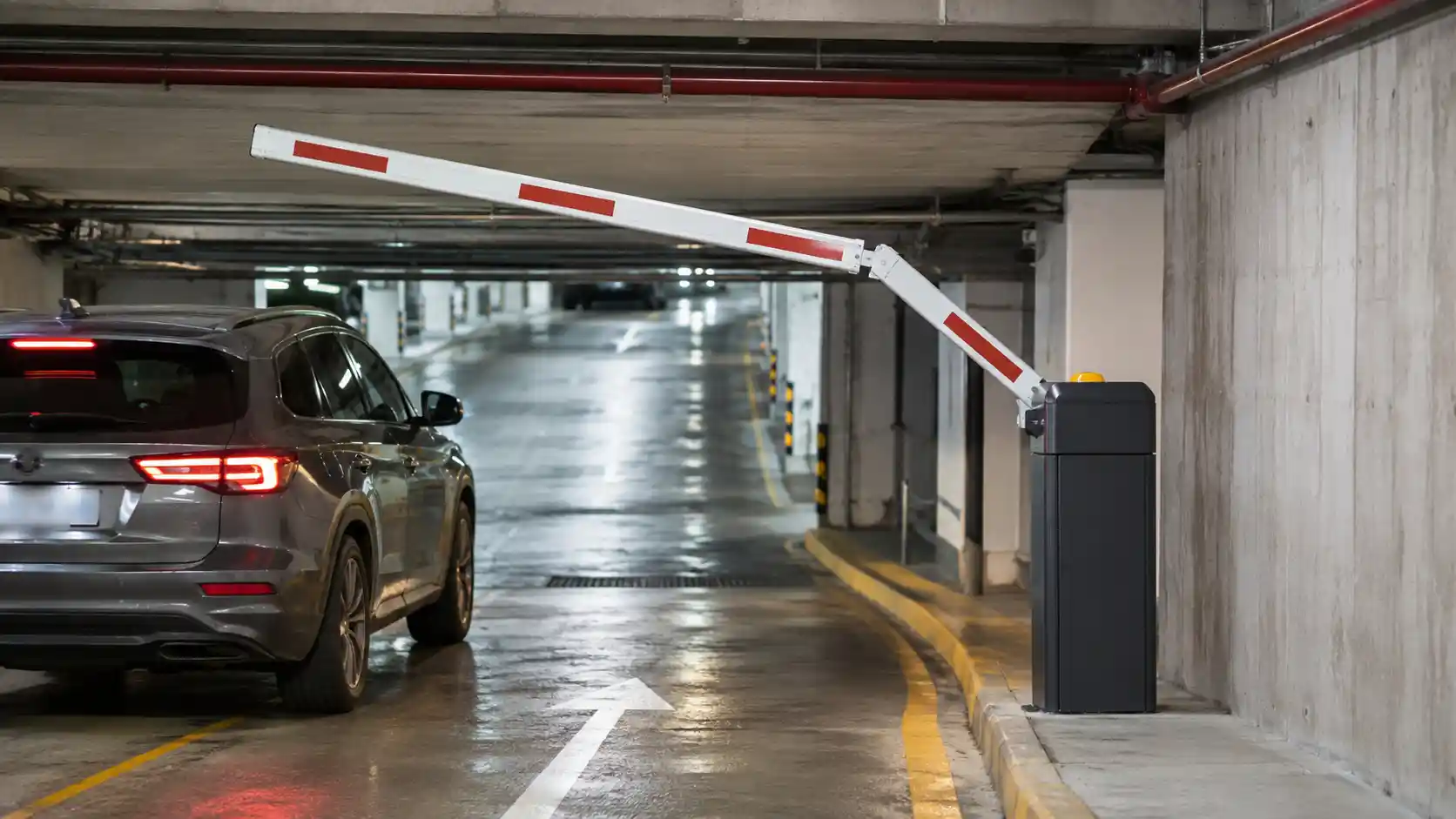
A folding arm bends as it rises. It suits garages and indoor entrances where a full vertical arm swing may meet ceilings, pipes, lights, or signs.
For a basement garage, measure from the floor to the lowest obstruction and share a photo from the driver’s approach angle. Simple and genuinely useful.
Fence Arm and Double Fence Arm Barrier Gates
Fence arm barrier gates add a lower rail or fence-like section to the boom. They create a stronger visual boundary.
They may fit commercial entrances, industrial yards, motorcycle-heavy sites, and managed exits. TigerWong materials list straight arm, folding arm, fencing arm, and double fencing arm barrier gate options. For fence arm styles, confirm model-specific length and speed because the added structure changes weight.
Telescopic Boom Arm Barrier Gates
A telescopic boom arm can adjust to a lane’s final width. TigerWong’s knowledge base identifies PB900SR as a DC brushless barrier gate with a telescopic boom arm and a maximum boom length of 6 m.
This type can help when lanes have different widths. Ask how the arm locks and how adjusted length affects speed.
How Do You Choose the Right Boom Arm for Barrier Gates?
Start with the lane, then choose the model. Lane width, vehicle type, control signal, detector plan, and preferred arm style give the supplier useful context.
Match Arm Length to Lane Width
Arm length is the first specification to settle.
Check these details:
- Clear lane width.
- Cabinet position beside the lane.
- Vehicle type.
- Required arm coverage.
- Outdoor exposure and overhead clearance.
For PB910S, the published maximum boom length is 6 m. For folding, fence, double fence, and telescopic arms, confirm the model-specific limit because weight differs by arm type.
Choose Speed With the Arm Length in Mind
The right speed depends on arm length, vehicle flow, recognition time, and detector placement.
The PB910S page lists 1.2s to 6s open and close speed depending on arm length. A busy employee lane with a short arm may use a faster setting. A truck lane with a longer arm may need steadier movement. Discuss speed with recognition time, detector position, tailgating policy, pedestrian separation, and power outage response.
Confirm Detection and Control Interfaces
Barrier gates usually connect to a parking management system, payment system, access control reader, or ALPR/ANPR camera.
TigerWong’s barrier gate materials mention remote control, ground sensor, license plate recognition, IC/ID card swipe, and parking software interfaces. The PB910S page also lists API, RS485, and Ethernet options, with radar trigger solutions available.
For buyers comparing parking management system options, it helps to define whether the gate opens by plate, card, ticket, Bluetooth, UHF, remote control, or software command. Relay output, RS485, API, and Ethernet are different paths, so name the required path in the RFQ.
What Should You Ask Before Ordering a Replacement Barrier Arm?
Replacement arms look simple online, yet small mismatches create downtime. Identify the cabinet model, arm length, arm shape, mounting style, and accessories.
Measure and Photograph the Existing Arm
Share these details:
Send:
- Barrier gate model or cabinet photo.
- Arm type: straight, folding, fence, double fence, or telescopic.
- Total arm length.
- Mounting photo.
- LED strip, rubber edge, reflective strip, support fork, or warning sign.
Keep the mounting end and hardware until the replacement is confirmed. A photo can answer questions that a long email misses.
Check the Operator Capacity
A barrier gate operator is built for a certain arm weight and length. A fence arm or long arm with accessories can change the motor load.
Ask the supplier to confirm maximum arm length, approved arm type, speed setting, balance steps, and detector checks. Plan the service window before removing the old arm.
What Terms Should You Use in an RFQ for Barrier Gates?
A good RFQ uses plain words and enough site detail.
Recommended RFQ Wording
Use a short request like this:
“Please quote vehicle barrier gates with boom arms for a parking entrance. Lane width is __ ft. Preferred arm type is straight/folding/fence/telescopic. Opening signal will come from ALPR/card reader/remote/parking software. Vehicle detection will use loop detector or radar. Please confirm arm length, speed range, control interface, and power supply.”
For product browsing, the barrier boom category is the most direct starting point.
About TigerWong Shenzhen TigerWong Technology Co., Ltd
TigerWong Shenzhen TigerWong Technology Co., Ltd supplies parking management and access control products, including barrier boom units, ALPR/ANPR parking systems, RFID card parking systems, ticket parking systems, UHF and Bluetooth parking systems, payment systems, turnstile gates, access control products, and software. For barrier gate projects, the practical value sits in the lane package: boom arm hardware, vehicle detection, access signals, software connection, and parking workflow. Public product information lists straight arm, folding arm, fence arm, double fence arm, and telescopic boom arm options. For a new site or replacement project, send lane width, arm type, control method, detector choice, and integration requirement through the contact page for model confirmation.
FAQ
Q1: What Is the Arm on Barrier Gates Called?
A: It is commonly called a boom arm. Barrier gate arm, barrier arm, and parking barrier arm are also used in RFQs and replacement part requests.
Q2: Is a Boom Arm the Same as a Barrier Gate?
A: The boom arm is the moving arm. The barrier gate is the complete unit, including the cabinet, motor, controller, and arm.
Q3: Which Barrier Gate Arm Type Is Best for a Parking Garage?
A: A folding arm is often used when ceiling height is limited. A straight arm suits many open outdoor lanes, while fence and telescopic arms fit more specific lane needs.
Q4: Does a Longer Barrier Arm Open More Slowly?
A: Often, yes. For PB910S, the published open and close speed range is 1.2s to 6s depending on arm length, so arm length should be confirmed before choosing a speed target.
Q5: Can Barrier Gates Connect With License Plate Recognition Systems?
A: Yes, many vehicle barrier gates connect with ALPR or ANPR systems. Confirm the actual interface, such as relay, RS485, API, or Ethernet, before ordering.