
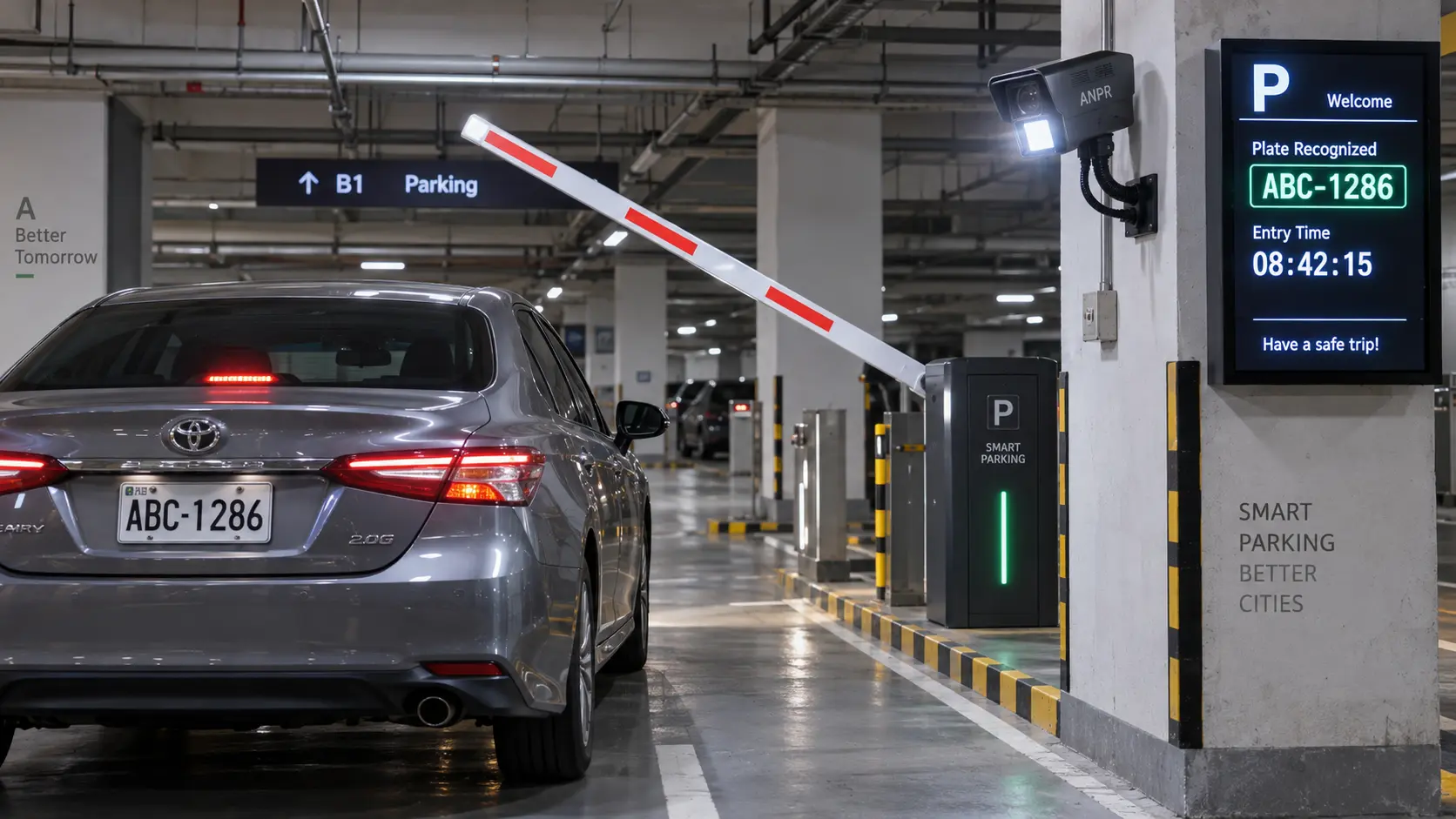
Automatic Number Plate Recognition converts a vehicle plate image into text that software can search and use. In parking, the result can identify a vehicle, start a session, connect a payment, or release a barrier.
The system captures an image, finds the plate, reads the characters, validates the result, and sends it to another platform.
What Is ANPR?
ANPR is a camera-based vehicle identification technology. It produces machine-readable plate characters and can attach them to an event containing the time, location, lane, image, and recognition confidence.
ANPR, ALPR, and LPR
ANPR stands for Automatic Number Plate Recognition. ALPR means Automatic License Plate Recognition, while LPR means License Plate Recognition. The terms usually describe the same core technology. ANPR is common in markets that use “number plate.” ALPR is widely used in North America, where “license plate” is the usual term.
What ANPR Identifies
ANPR identifies the visible registration mark assigned to a vehicle. A record may include the text, images, timestamp, and camera ID.
The plate can function as a vehicle credential, but it does not confirm the driver’s identity. Sites requiring personal authorization should connect it with a permitted account and set rules for changed, shared, cloned, or incorrectly entered plates.
How Does ANPR Work Step by Step?
An ANPR system moves visual information through a recognition pipeline and then applies business rules to the resulting text. Implementations vary, but most contain the following stages.
Step 1 Capture the Vehicle Image
A vehicle enters the camera’s recognition area. A ground loop, radar sensor, video trigger, or continuous analysis can initiate capture. The camera records one or more frames containing the vehicle and plate.
The image must preserve enough character detail. Resolution, lens choice, shutter settings, plate size, vehicle speed, and light all affect it. Infrared or visible illumination can support nighttime capture.
Step 2 Detect and Localize the Plate
Software searches the full frame for an area that resembles a registration plate. It estimates the plate’s location, dimensions, orientation, and boundaries, separating it from the vehicle body, road, signs, and nearby traffic.
Obstruction or too few plate pixels makes localization harder. A controlled lane creates a more consistent camera view.
Step 3 Prepare the Plate Image
The plate image may receive perspective correction, rotation, brightness adjustment, noise reduction, or contrast enhancement. Processing cannot recreate missing detail, so installation quality remains central to ANPR performance.
Step 4 Read the Characters With OCR
Optical Character Recognition converts character shapes into letters and numbers. Some systems divide the image into characters first; other engines read the complete plate region.
Software may use rules for local fonts, colors, permitted characters, and single-line or double-line layouts. These rules help distinguish similar shapes such as O and 0 or B and 8.
Step 5 Validate the Result
The engine assigns confidence to the proposed number. Software can check a local plate pattern, combine several frames, and normalize separators. A low-confidence result may trigger another capture or operator review.
The project specification should define a confidence threshold and the action for uncertain reads.
Step 6 Query a Database and Trigger an Action
The validated plate is sent to a database or management platform. The system may check a permit list, parking session, reservation, payment record, alert list, or vehicle account.
The action can open a barrier, change a parking session, update occupancy, or generate an alert.
What Components Does an ANPR System Need?
A working deployment combines image capture, processing, data storage, networking, and equipment that acts on the result.
Camera and Illumination
The camera, lens, mounting position, and lighting must suit the lane. Outdoor systems need stable mounting, environmental protection, and reliable power. The model’s distance and speed range should match the approach.
Processing and Software
Recognition may run in the camera, on an edge computer, a local server, or a cloud service. This affects response time, offline behavior, data location, and maintenance.
Integration Equipment
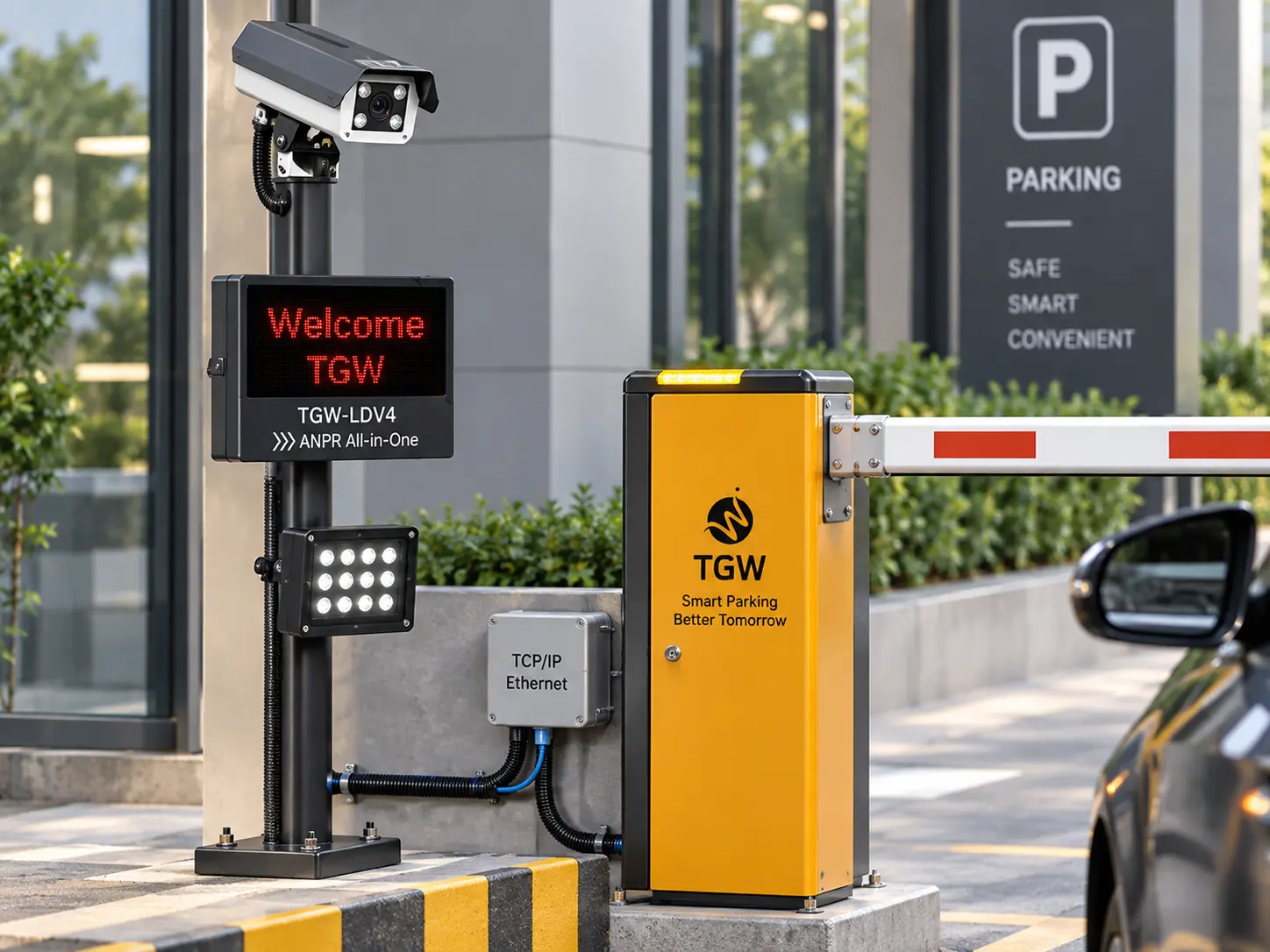
Parking deployments connect ANPR with barriers, vehicle detectors, displays, intercoms, payment machines, and a central ระบบการจัดการที่จอดรถ. Interfaces may include TCP/IP, RS485, digital input and output, or an API. Compatibility must be confirmed for every selected model.
อะไรส่งผลต่อความแม่นยำของ ANPR?
Recognition performance reflects the complete capture and processing chain. A percentage is useful only when the test conditions, plate population, and calculation method are available.
Camera Position and Vehicle Speed
The plate should occupy enough pixels for its characters to remain distinct. Long distance, steep angles, vibration, and motion blur reduce usable detail. The camera should view the expected path and keep the plate inside its recognition zone.
A parking entrance usually provides a slow approach. Road monitoring requires equipment designed and tested for higher speeds.
Lighting, Weather, and Plate Condition
Sunlight, headlights, deep shadow, rain, snow, fog, and wet reflective surfaces change a plate’s appearance. Dirt, damage, covers, unusual spacing, and obstruction may hide characters. Regular lens cleaning and seasonal checks help preserve capture quality.
An intercom, alternate credential, or manual entry provides a recovery path for uncertain reads.
Country Coverage and Test Conditions
Plate dimensions, fonts, colors, scripts, and layouts vary by country. A global project should confirm regional support and test representative local plates.
TigerWong documentation states that its software supports plates from more than 130 countries and regions. Individual equipment still requires project review. The TGW-LDV4 ANPR unit lists a motorized 2.8-12 mm lens, a 3-10 m recognition range, TCP/IP and RS485, and a model-specific recognition rate of at least 98 percent under its stated conditions.
How Does ANPR Work in a Parking System?
In parking, each plate read becomes an entry, payment, access, or exit event. The management platform applies rates and permissions, stores transactions, and handles exceptions.
Vehicle Entry
At the entrance, the vehicle triggers the camera and software receives the recognized plate. Registered plates can be checked against permit lists, while transient plates can create sessions with an entry time and lane.
After approval, the software signals the barrier controller and records the event. Lane logic should also define barrier closing, repeat reads, and manual release.
Payment and Exit
During the stay, ซอฟต์แวร์จัดการที่จอดรถ connects the plate with time, rates, validations, and payment. A pay-by-plate terminal can retrieve the session, while supported fuzzy search can help with an incorrectly entered character.
The exit camera reads the plate again and matches it with the entry record. The software checks payment or permission, sends a release command when the rules approve the vehicle, and records the departure.
Where Is ANPR Used?
The recognition pipeline supports several vehicle workflows.
Parking and Vehicle Access
Parking and access sites use ANPR for ticketless entry, permit checks, session timing, payment matching, and barrier control. It can work with RFID, UHF, QR codes, or tickets.
Traffic, Security, Tolling, and Logistics
Road systems can compare passing plates with authorized databases. Tolling links events with vehicle accounts, while logistics sites record arrivals and controlled-area access.
How Should ANPR Data Be Managed?
ANPR records can show when and where a vehicle appeared. The project owner should define the purpose, access rules, storage location, retention period, and deletion process before operation begins.
Set Purpose and Retention Rules
Assign retention periods to access, payment, security, and reporting records. Global deployments require local review of privacy, signage, payment, and cross-border data rules.
Control Access and Corrections
Limit access by role and record administrative actions. Define procedures for corrections, changed or cloned plates, and data requests. Protect cameras, networks, databases, reports, and backups.
How TigerWong Supports ANPR Parking Projects
TigerWong supplies ANPR parking systems, barriers, payment equipment, displays, and parking software. Its project services include third-party data connections, software customization, factory testing, installation guidance, remote assistance, and arranged on-site support. A project inquiry should include the target country, lane drawings, expected vehicle speed, lighting, payment rules, interfaces, and sample local plates.
คำถามที่พบบ่อย
Q1: What Is the Difference Between ANPR, ALPR, and LPR?
A: They usually describe the same technology. ANPR uses “number plate,” ALPR uses “license plate,” and LPR is the shorter term. Regional usage determines the abbreviation.
Q2: Does ANPR Use OCR?
A: Yes. OCR converts character shapes into text. ANPR also captures the image, locates the plate, validates the result, and sends it to another system.
Q3: How Accurate Is ANPR?
A: Accuracy depends on the camera, lens, plate size, angle, speed, lighting, weather, plate condition, regional model, and test method. Compare published figures only when their conditions and calculation methods are stated.
Q4: Does ANPR Work at Night or in Bad Weather?
A: Purpose-built cameras use controlled illumination and exposure settings in low light. Rain, snow, glare, fog, and dirt may affect the image, so the site needs testing and an exception procedure.
Q5: How Does ANPR Open a Parking Barrier?
A: The camera sends recognized plate data to parking software. The software checks access rights or payment status and sends an opening signal to the barrier controller when the configured rules approve the vehicle.