
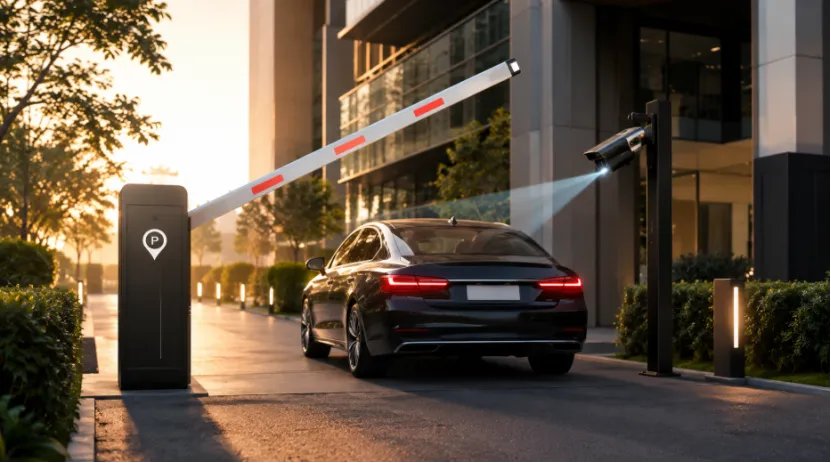
Les longues files d'attente pour se garer sont rarement dues uniquement à un trop grand nombre de voitures. Dans de nombreux centres commerciaux, immeubles de bureaux, complexes résidentiels et parkings d'hôpitaux, le véritable problème réside dans la lenteur des contrôles de véhicules, une mauvaise planification des voies, des retards de paiement et des barrières de parking incapables de gérer le trafic aux heures de pointe. Lorsqu'une voiture s'arrête trop longtemps à l'entrée, les cinq suivantes en subissent les conséquences. À la sortie, ce même retard peut se traduire par une file d'automobilistes exaspérés qui consultent leur montre.
Un moderne système de contrôle d'accès au parking Ce système considère la barrière levante comme faisant partie intégrante du processus de circulation, et non comme un simple bras métallique. Il relie la détection des véhicules, la reconnaissance des plaques d'immatriculation, le statut des paiements, les capteurs de sécurité et les données du système de gestion, afin que chaque véhicule puisse circuler avec un minimum d'interruptions.
Pourquoi les entrées et sorties des parkings sont-elles encombrées aux heures de pointe ?
Les embouteillages aux heures de pointe dans les parkings commencent souvent par de petits retards. Un agent de sécurité contrôle un visiteur. Un conducteur cherche son ticket. Un paiement par QR code échoue. Une barrière s'ouvre lentement. Pris individuellement, ces incidents peuvent paraître anodins, mais aux heures de pointe du matin, lorsque les bureaux se rendent au travail ou que les hôpitaux sont ouverts aux visites, chaque seconde compte.
La vérification manuelle ralentit chaque véhicule
La lenteur des contrôles manuels est l'une des causes les plus fréquentes d'encombrement aux entrées des parkings. Si chaque véhicule nécessite un contrôle de carte, l'émission d'un ticket ou l'approbation d'un agent de sécurité, la fluidité du trafic est constamment perturbée. Les abonnés et les véhicules immatriculés ne devraient pas avoir à patienter derrière les nouveaux visiteurs si le parking est suffisamment fréquenté.
Les retards de paiement à la sortie allongent les files d'attente.
Les embouteillages à la sortie des parkings sont souvent plus importants qu'à l'entrée, car le paiement s'y effectue. Les véhicules temporaires peuvent nécessiter un paiement par code-barres, la vérification du tarif ou un système de péage manuel. Un simple problème au point de paiement peut bloquer toute la voie de sortie. C'est pourquoi l'accès sans ticket et les systèmes de prépaiement sont essentiels dans les parkings à forte fréquentation.
Comment les barrières de parking peuvent-elles améliorer la fluidité du trafic ?
barrières de parking Réduisez le temps d'attente des véhicules en rendant la phase de libération finale plus rapide et plus prévisible. Le portillon doit réagir rapidement après l'autorisation, mais il doit également se refermer en toute sécurité une fois le véhicule passé. La rapidité est utile. La sécurité et la répétabilité sont préférables.
Ouverture rapide réduisant le temps d'inactivité
Une barrière à ouverture rapide contribue à fluidifier la circulation dans un parking. La barrière PARK-401DS s'ouvre et se ferme en 1,2 à 6 secondes selon la longueur du bras, pour une longueur maximale de 6 mètres. Elle est équipée d'un moteur CC sans balais, conçu pour une faible consommation, un rendement élevé, une large plage de vitesses et un fonctionnement stable même en cas d'utilisation intensive.
Le déclenchement automatique réduit les interruptions humaines
Avec un barrière automatiqueLe système vérifie les droits de passage du véhicule ou le statut du paiement avant de lever la barrière. Au passage du véhicule, le capteur au sol confirme que la voie est libre, puis la barrière s'abaisse et se réinitialise. Cette séquence simple contribue à fluidifier la circulation aux entrées et sorties les plus fréquentées. Son fonctionnement est parfaitement naturel, et c'est précisément le but recherché.
Pourquoi l'intégration de la lecture automatique des plaques d'immatriculation (LAPI) est-elle importante pour la gestion des files d'attente de stationnement ?
Un système de stationnement LPR (lecture automatique des plaques d'immatriculation) simplifie considérablement la circulation. Au lieu de prendre un ticket papier ou d'attendre un contrôle manuel, la caméra lit la plaque et transmet l'information à la plateforme de gestion du stationnement.
La reconnaissance des plaques d'immatriculation accélère l'entrée
Dans un système de barrière à reconnaissance de plaques d'immatriculation, la caméra ANPR capture la plaque lorsqu'un véhicule atteint la voie d'entrée. Le système enregistre les données d'entrée et de sortie du véhicule, notamment les informations de la plaque et l'heure. Pour les véhicules immatriculés, barrière levante peut s'ouvrir automatiquement après reconnaissance.
Pour les véhicules temporaires, le système peut associer la plaque d'immatriculation à la durée de stationnement et au paiement ultérieur. La base de connaissances de TigerWong indique que les systèmes de stationnement ANPR/ALPR peuvent suivre les heures d'entrée et de sortie, l'occupation des places de stationnement et les règles de stationnement grâce à la reconnaissance par caméra et à la gestion logicielle.
La reconnaissance des sorties permet d'éviter les goulots d'étranglement au niveau des paiements.
À la sortie, la caméra de lecture automatique des plaques d'immatriculation (LAPI) scanne à nouveau le véhicule. Si le péage a été acquitté ou si le véhicule est autorisé, la barrière s'ouvre. Dans le cas contraire, le système bloque la voie et avertit l'opérateur. Ce système est bien plus simple que de demander systématiquement un ticket à chaque conducteur. Il permet également de réduire les coûts de gestion du stationnement, notamment lorsqu'un seul opérateur gère plusieurs voies.
Comment les capteurs et la conception des voies permettent-ils de fluidifier le trafic ?
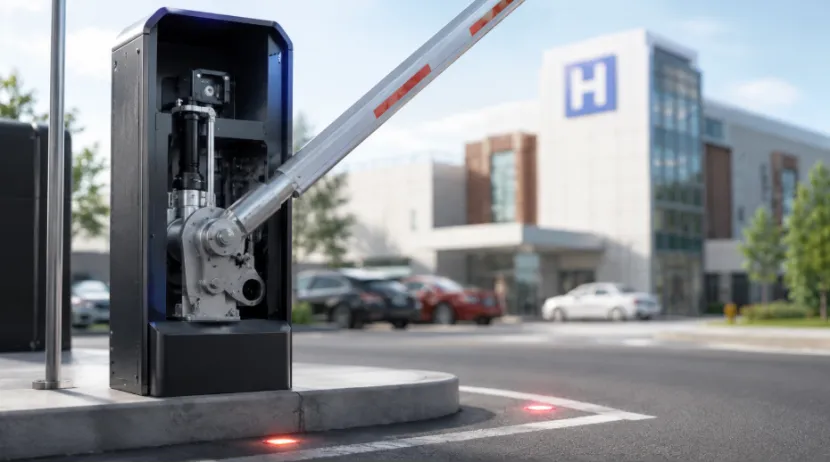
Le matériel seul ne peut pas corriger une entrée mal conçue. Il faut des voies dégagées, un espace de sécurité suffisant et des dispositifs de sécurité permettant aux conducteurs de circuler sans craindre de heurter la barrière.
Protection contre les détecteurs de boucle et les capteurs infrarouges
Un détecteur de boucle ou un capteur infrarouge empêche la chute du bras pendant le passage d'un véhicule. Le processus de fonctionnement du PARK-401DS comprend également la détection de l'arrivée du véhicule, la vérification du système, le levage automatique, la détection du passage complet du véhicule et la réinitialisation automatique. La FAQ indique que le système est doté d'une fonction anti-écrasement, tandis que la fiche produit mentionne une protection IP54 et un fonctionnement stable de -40 °C à 60 °C.
Les voies séparées réduisent les problèmes de circulation mixte.
Les parkings des centres commerciaux, des immeubles de bureaux, des résidences et des hôpitaux présentent tous des habitudes de circulation différentes. Un bon aménagement permet de séparer les abonnés, les visiteurs, les véhicules du personnel et les véhicules de livraison.
Dans un parking privé, un système de stationnement RFID longue portée ou un contrôle d'accès RFID UHF peut faciliter le passage des usagers réguliers en réduisant les arrêts. Dans un hôpital, les voies visiteurs et les voies réservées au personnel ne devraient pas se disputer l'accès à la même entrée étroite.
Pourquoi choisir une solution d'accès au parking intelligent et fiable ?
Choisir une barrière de parking, c'est choisir la façon dont votre entrée réagira en cas d'affluence. Prenez en compte la vitesse d'ouverture de la barrière et du bras articulé, le type de moteur, les capteurs de sécurité, la connectivité logicielle et le service après-vente local.
TigerWong Cette entreprise basée à Shenzhen est spécialisée dans les systèmes de stationnement intelligents, les systèmes de lecture automatique de plaques d'immatriculation (LAPI), les systèmes de lecture automatique de plaques d'immatriculation (LAPI-AN), les barrières levantes, les tourniquets et les solutions de contrôle d'accès. Présente dans le secteur de la gestion de parkings depuis 2001, elle a étendu ses activités à la reconnaissance de plaques d'immatriculation et au contrôle d'accès en 2007, puis a développé des solutions de stationnement et de paiement dans le cloud. Ses systèmes sont utilisés par des clients dans plus de 150 pays, et elle possède une solide expérience en conception de systèmes de contrôle d'accès pour parkings, en intégration logicielle et en support après-vente.
Pour les sites confrontés à des retards d'entrée et de sortie, la valeur ajoutée ne réside pas seulement dans une barrière levante TigerWong, mais dans une solution complète de contrôle d'accès des véhicules qui intègre la reconnaissance, le paiement, la sécurité et le reporting des données.
FAQ (questions fréquentes)
Q1 : Comment les barrières de parking réduisent-elles les risques ? Congestion routière?
A: Les barrières de parking réduisent les embouteillages en accélérant la vérification des véhicules : elles s’ouvrent rapidement après autorisation et ne se referment qu’une fois le véhicule passé en toute sécurité.
Q2 : Un système de stationnement LPR est-il meilleur qu’un système de contraventions ?
A : Pour les sites très fréquentés, un système de stationnement avec lecture automatique des plaques d'immatriculation (LAPI) est généralement plus rapide car les conducteurs n'ont pas besoin de s'arrêter pour prendre des tickets papier. Les systèmes de tickets classiques peuvent également convenir aux sites plus petits ou à faible trafic.
Q3 : Qu'est-ce qui provoque les embouteillages à la sortie du parking ?
A : Les embouteillages à la sortie des parkings sont souvent causés par des paiements lents, des tickets manquants, des contrôles manuels des frais, une mauvaise conception des voies ou une réponse lente des barrières.
Q4 : Où faut-il utiliser une barrière à ouverture rapide ?
A: Il convient aux entrées de parkings commerciaux, aux parkings d'immeubles de bureaux, aux parkings d'hôpitaux, aux parkings résidentiels et à d'autres entrées de parkings à fort volume.
Q5 : Que devez-vous vérifier avant de choisir une barrière de parking ?
A : Vérifiez la vitesse d'ouverture, la longueur de la flèche, le moteur CC sans balais, le détecteur de boucle, le capteur infrarouge, la conception de la barrière anti-écrasement, l'interface logicielle et les besoins de maintenance à long terme.