
A turnstile gate is a pedestrian passage device that controls when a person may enter or leave an area. It often works with a card reader, QR code reader, biometric terminal, facial recognition unit, or another credential device. The gate controls the physical lane. A controller and software apply access rules and may record each event.
What Is a Turnstile Gate?
A turnstile creates a controlled pedestrian lane. Depending on its design, the barrier may rotate, swing, retract, slide, or drop. Many configurations permit one person to pass after an approved request, then reset the lane for the next user.
The Physical Gate and Its Main Parts
The visible structure includes a cabinet or frame and a moving barrier. Tripod units use three rotating arms. Flap barriers retract panels into the cabinet, while swing and speed gates move panels across the lane. Full-height units use a rotating structure across most of the entrance height.
Internal parts vary by model. Common elements include a movement or locking mechanism, control board, sensors, status lights, reader positions, and power connections. Selected TigerWong models use red and green LEDs to show passage status after card authorisation.
A Turnstile Gate and an Access Control System Serve Different Roles
The turnstile controls the lane opening. The access control system checks the credential and sends an approval or rejection signal. Connected software may store a name, card number, time, direction, image, or visitor record when the selected configuration supports those fields.
How Does a Turnstile Gate Work?
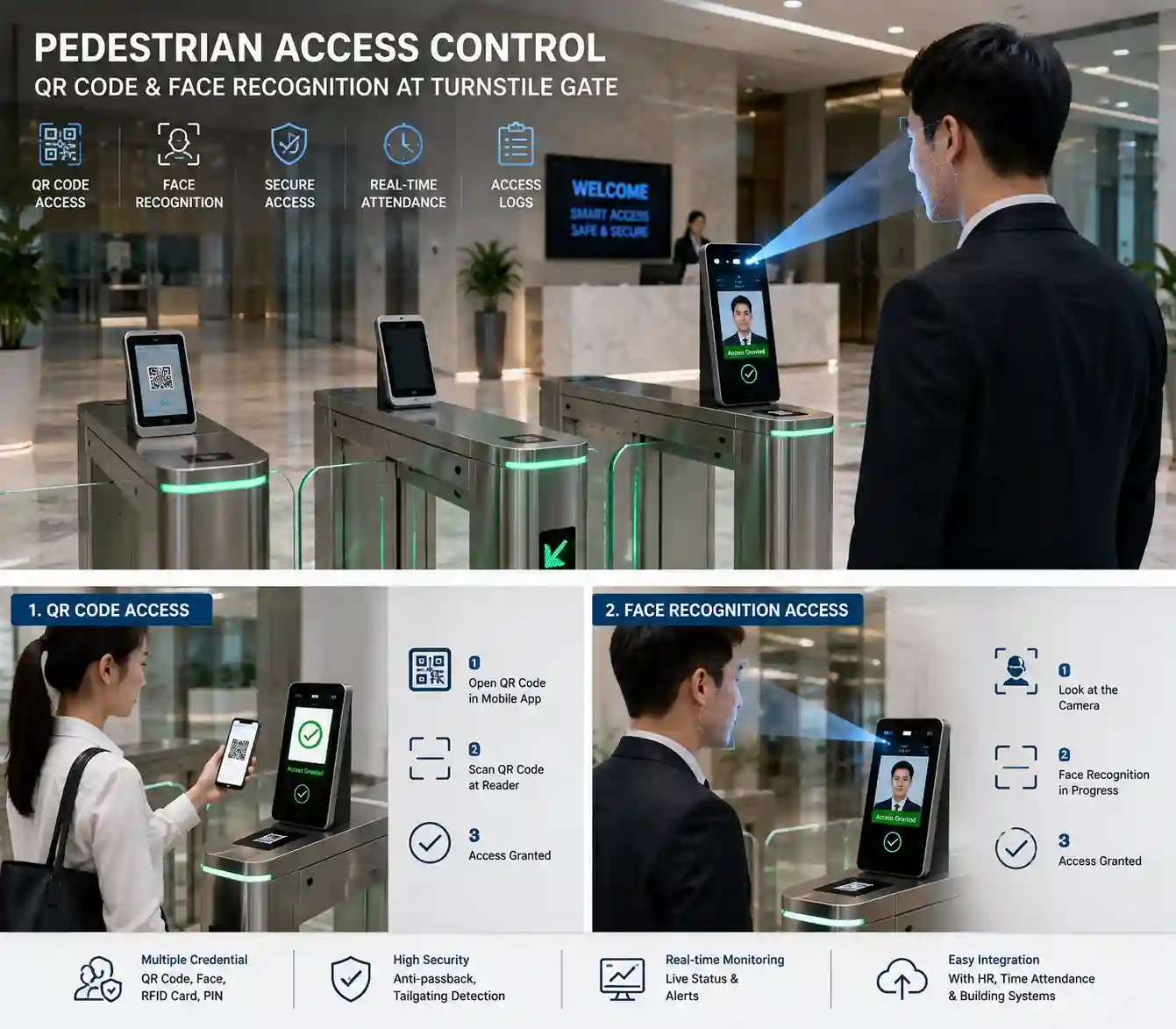
A typical entry event follows five linked actions. Exact timing and available records depend on the reader, controller, network, software, gate model, and site configuration.
Step 1: A Person Presents a Credential
The person taps a card, scans a QR or barcode, or uses a biometric device. Selected TigerWong configurations support proximity cards, biometric readers, barcode or QR readers, and facial recognition. Each method needs suitable enrollment, privacy, lighting, network, and fallback arrangements.
Step 2: The Controller Approves or Rejects the Request
The reader sends credential data to a controller or connected system. The controller applies rules such as user permission, time schedule, ticket status, or visitor validity. An approved request releases the lane. A rejected request keeps the barrier controlled and may trigger a status indication.
Step 3: The Barrier Opens, Rotates, Retracts, or Drops
The physical response follows the turnstile type. A tripod arm rotates, a flap retracts, and a swing or speed-gate panel moves aside. The lane may operate for entry, exit, or both directions according to the controller setting and entrance plan.
Step 4: Sensors Track Passage and Reset the Lane
Sensors can support directional logic and passage detection on selected models. They help the controller identify lane entry, completed passage, or movement in an unexpected direction. The gate then resets. Anti-pinch, alarm, and anti-tailgating functions require model-level confirmation and acceptance testing.
Step 5: The System Records the Event
Connected software may record the credential, time, direction, and result. Define the required fields before selection because a movement signal alone does not create a complete attendance, visitor, or ticketing record.
What Are the Main Types of Turnstile Gates?
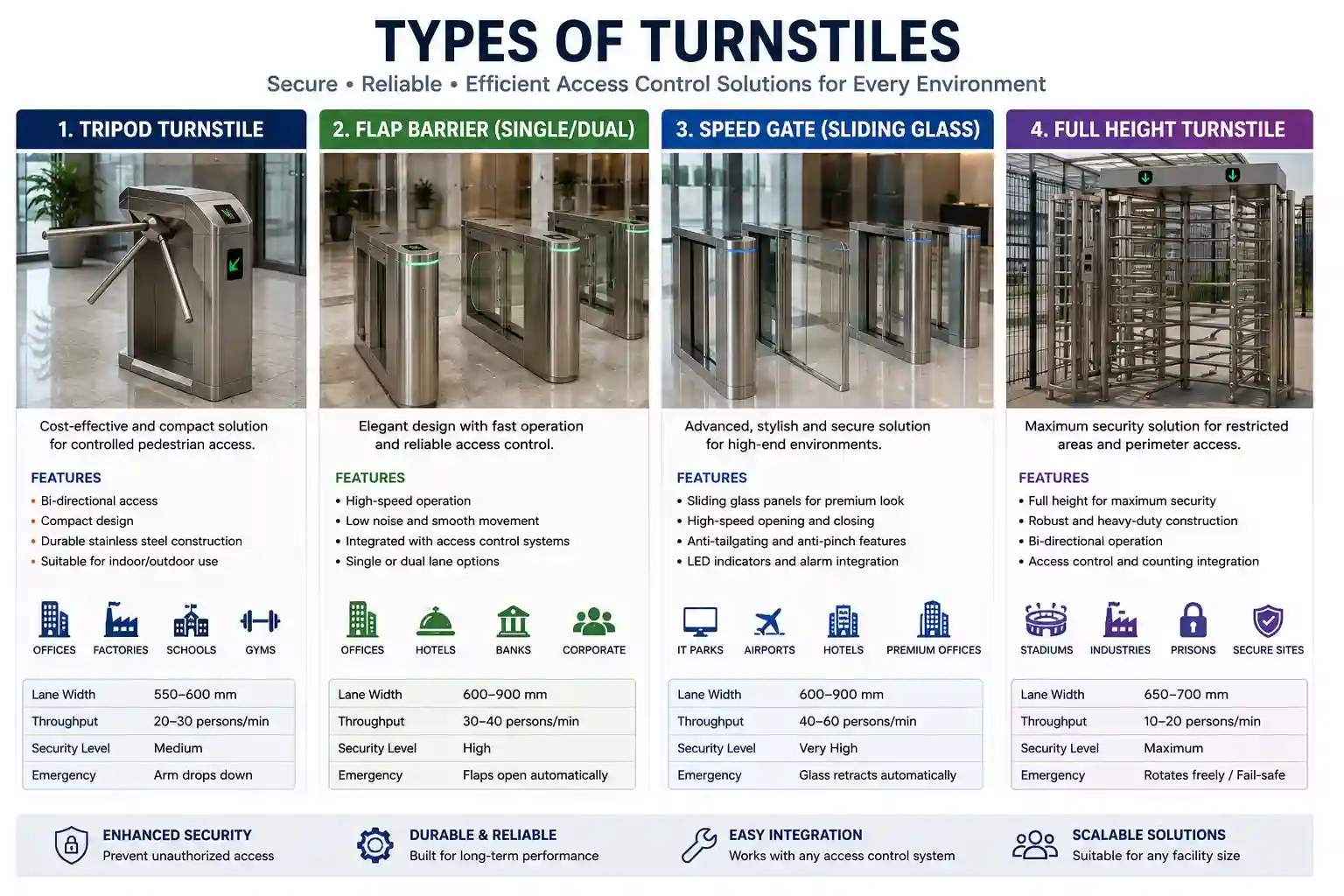
Barrier structure and passage style separate the main types. Review the documented turnstile gate product range while comparing lane form, credential method, traffic pattern, and emergency response.
| Type | Passage Form | Project Fit and Checks |
|---|---|---|
| Tripod | Three waist-high rotating arms | Confirm arm drop, supervision, and an accessible route |
| Flap barrier | Retracting panels | Confirm width, sensor logic, and emergency opening |
| Swing or speed gate | Swinging panels | Confirm wide-lane needs, luggage movement, and reader position |
| Full-height | Full-height rotating barrier | Confirm egress, accessibility, weather protection, and supervision |
Tripod Turnstile Gates
A tripod turnstile gate creates a compact waist-high lane. Selected models use solenoid locking and drop the arm automatically for emergency passage. TGW-TT028 and TGW-TT014 materials list 25 to 35 people per minute, excluding card-validation time. TGW-TT020 lists 30 to 40 under the same condition.
Browse tripod turnstile gate options when the project needs a three-arm format and supervised pedestrian flow.
Flap Barrier Turnstile Gates
Flap barriers use retracting panels for controlled indoor traffic. TGW-WT007 materials list a 550 to 600 mm passage width and 30 to 40 people per minute, excluding card validation. Documented access options include proximity cards, biometric readers, barcode or QR readers, and facial recognition.
Swing and Speed Turnstile Gates
Swing and speed gates use moving panels and can include wide-lane layouts on selected models. TGW-SG005 documentation lists a 600 mm standard lane and a 900 mm wide lane, plus 30 to 40 people per minute excluding validation time. The documented configuration also includes sensor-based directional logic and emergency opening.
Review the TGW-SG005 speed turnstile gate model when comparing reader placement and lane width.
Full-Height Turnstile Gates
A full-height turnstile forms a rotating barrier across most of the pedestrian opening. The site plan must define an accessible route, emergency exit, fire-alarm behaviour, manual release, weather exposure, and staff response under local rules.
Where Are Turnstile Gates Used?
The correct arrangement comes from the user groups, access rules, peak traffic, supervision, and required records at each entrance.
Offices, Factories, and Controlled Worksites
Office entrances often combine staff credentials with visitor registration. Factories add shift peaks, contractor access, and attendance records. Define visitor release, rejected credentials, and emergency opening.
Transport Hubs, Venues, and Public Facilities
Airports, railway stations, ports, museums, theatres, and theme parks can use turnstiles for ticketed pedestrian flow. QR and barcode readers may connect tickets to a passage request. Reader validation time affects real lane capacity.
Hotels, Hospitals, Schools, and Mixed-Access Buildings
These buildings serve staff, visitors, patients, students, luggage, and mobility devices. The plan may need an accessible lane, temporary credentials, escorted entry, privacy rules, and a staffed fallback route.
What Should You Check Before Choosing a Turnstile Gate?
Selection starts with the entrance workflow. A product photo identifies the barrier form, while the project inputs determine how the complete lane will operate.
Traffic, Passage Width, and User Groups
Record normal and peak traffic, credential method, and user groups, including wheelchairs, trolleys, luggage, deliveries, and escorted visitors. Include validation time and user behaviour in the capacity estimate.
Credential and Software Integration
Name the reader, controller signal, network, user database, visitor process, and event fields. For QR tickets, define entry count, time limits, and re-entry. For cards or facial recognition, define enrollment and fallback handling.
Security Level, Supervision, and Emergency Behaviour
State the required physical boundary and staffing. Confirm power-loss state, fire-alarm input, manual release, alarm output, and evacuation route. Local fire, building, and accessibility requirements control the arrangement.
Installation Environment and Acceptance Tests
Provide the lane drawing, floor condition, cable route, power, exposure, traffic direction, and reader position. Test credentials, reverse movement, emergency release, power recovery, and software records. Reader height affects daily passage.
How Can a Supplier Support a Turnstile Gate Project?
A supplier review connects the turnstile gate model to the entrance workflow. TigerWong Shenzhen TigerWong Technology Co., Ltd develops turnstile, access-control, facial-recognition, and parking-system equipment. Its materials cover several turnstile formats and credential methods. Its R&D team develops software and manufactures hardware for project requirements.
Send the lane layout, destination country, installation environment, credential type, expected traffic, network and software needs, emergency logic, and acceptance tests. Use these inputs to submit turnstile project requirements for configuration review and model confirmation.
FAQ
Q1: What is the main purpose of a turnstile gate?
A: A turnstile gate controls pedestrian passage through a defined lane. A connected access system can release it after approving a supported credential.
Q2: What is the difference between a turnstile gate and a normal gate?
A: A turnstile is designed for repeated pedestrian access events. Its configuration can connect barrier movement, credential validation, direction logic, and entry records.
Q3: Can a turnstile gate work with cards, QR codes, or facial recognition?
A: Selected configurations support proximity cards, barcode or QR readers, biometric readers, and facial recognition. Confirm the reader, controller, software interface, enrollment process, and fallback method.
Q4: Which turnstile gate type works for a wide or accessible lane?
A: Swing and speed-gate families can include wide-lane options. The documented TGW-SG005 configuration lists a 900 mm wide lane. Accessibility also depends on the complete site design and local requirements.
Q5: What happens to a turnstile gate during a power failure or emergency?
A: Behaviour depends on the model and configuration. Selected tripod models document automatic arm drop, while selected flap, swing, and speed gates document emergency opening. Confirm power-loss state, fire-alarm input, manual release, backup power, and recovery tests.