
Consider a shift change at an electronics factory. One employee finishes the ESD test but pauses beside the station; the colleague behind them offers a badge to the lane reader. The purchase specification needs to explain whose permission is waiting at that reader.
For an ESD turnstile gate system, identity association is a purchasing issue. The tester, access software and lane controller may come from different suppliers. Between them, they need to keep the result attached to the person who took the test. A green indicator on a tester does not, by itself, establish that chain.
At TigerWong은, we discuss the pedestrian gate as part of the proposed entrance arrangement. Bring the tester model, access controller and facility procedure into that discussion. They give the suppliers a specific entrance sequence to demonstrate.
Who decides whether an ESD result permits entry?
The facility’s ESD programme owner supplies the test policy. Procurement needs that policy before comparing quotations: which employees it covers, the required test, the lifetime of a result and the response to failure. Without it, two suppliers could price quite different entrances.
Measurement questions belong with the tester supplier. Its documentation should identify the procedure, settings and verification requirements, together with the outputs available to the controller. Do not let a turnstile quotation quietly become the specification for electrical test limits.
Badge-first testing and a separate test station present different questions. In the first arrangement, what ends the current user’s session? In the second, how does the entrance retrieve that user’s result? Put the proposed sequence on the drawing and follow it through with two people.
A useful normal-entry rule covers area permission, an acceptable current result and an available lane. Beside each condition, name the device that checks it. This is where an unexplained assumption between the access installer and tester supplier becomes visible.
Visitors, contractors and staff who change work areas need named procedures too. An exception cannot simply mean that anyone at reception may press an unrestricted opening button. Record who can approve it, the permitted destination and what evidence remains afterward.
Keep emergency egress under the site’s separately approved safety arrangements. The ESD screening procedure needs to fit those arrangements. Emergency design remains a separate site approval.
What must pass from the tester to the access controller?
Follow a result from the moment testing starts until its permission ends. A supplier drawing may show an arrow marked ‘open’, yet omit the user association or expiry rule. Those missing details need an answer before the drawing is approved.
There is a practical difference between a contact that changes state and a message containing a badge identifier. The former may offer no measurement details at all. For a software connection, request a sample message and its field definitions; a network socket alone tells you very little.
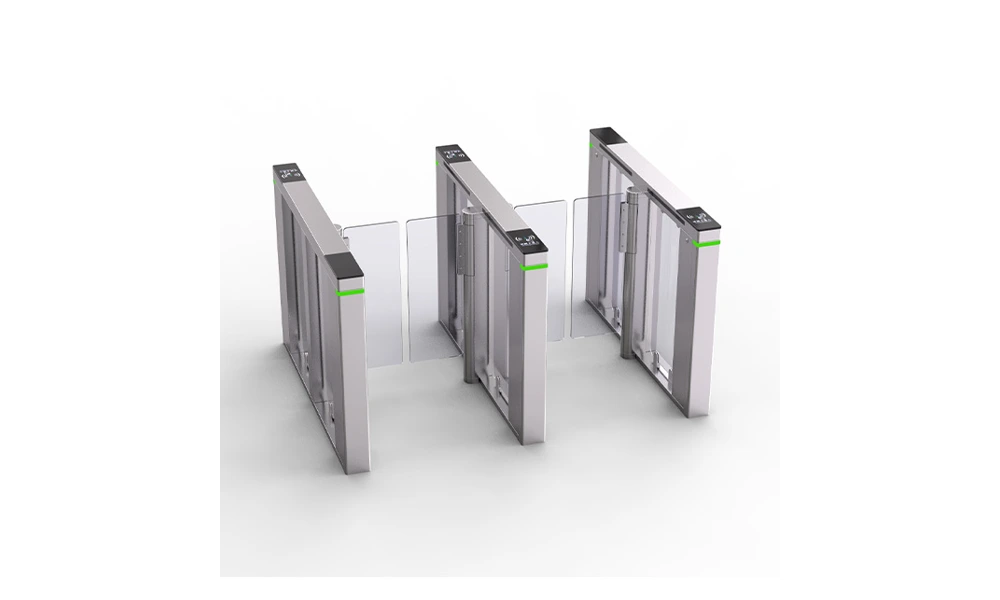
우리의 TGW-SG001 speed gate is one pedestrian gate option to discuss during equipment selection. Confirm the exact controller, reader, firmware and proposed tester interface in the offer. The selected configuration needs its own compatibility demonstration.
How long can an approval wait? The facility might require expiry after a stated interval or cancellation after an abandoned attempt. A completed entry may consume it. These choices need to be settled explicitly, including what the next person at the station will see.
Also distinguish an opening command from evidence that someone passed. If passage feedback is required, identify its source and how the access record uses it. A commanded opening followed by a timeout should remain distinguishable from completed entry.
A delayed message is another useful trial. Let the original attempt end before delivering its result, using the supplier’s test method. The response should match the agreed expiry rule.
Where should testing happen before the lane opens?
Put the proposed test position and waiting area on the entrance drawing. Show where a person places belongings, presents identification, completes the test and waits for a result. Then trace the route into the assigned lane.
A separate test station needs a clear way to associate its result with the next entry request. For multiple stations, repeat the trial at adjacent lanes. Track the original user’s result while a second person starts testing.
A person who needs another test will need somewhere to stand. A nearby retest or assistance position can be part of the proposal. Its layout should keep staff instructions visible and avoid sending people back through an approaching queue.
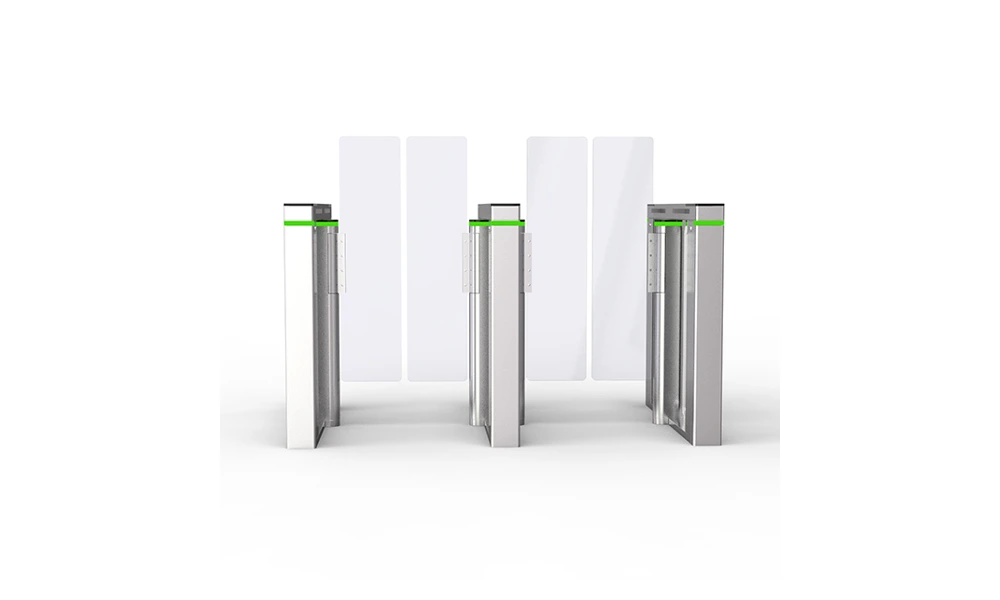
The available swing turnstile options offer other layouts to examine with the site team. Use the chosen model’s drawing to assess dimensions and the site’s accessibility requirements. A photograph cannot establish usable clear width.
Time a complete trial with representative users. Include presenting a credential, taking the test, reading the result and walking through. A gate’s movement speed says little about the queue created by the preceding test procedure.
Record the point at which delay occurs. Moving a reader, changing an instruction or separating an assistance queue may address that delay more directly than choosing a faster gate mechanism.
Which failed tests and missing signals must stop normal entry?
A failed measurement, an absent result and an expired result are different events. An operator needs to know which one occurred. ‘No result received’ calls for a different investigation from ‘test failed’; otherwise staff may repeatedly send someone back to a working tester when the connection is at fault.
Put the proposed normal-entry responses into an acceptance table. The examples below are questions for the project team to resolve; they do not describe a default configuration.
| Trial condition | Decision to confirm | Evidence to inspect |
| Valid badge, failed required test | Normal entry remains refused | Failure reason and retest instruction |
| Acceptable result, different badge | Result does not authorize the second person | Identity association record |
| Result arrives after expiry | Old approval is rejected | Result time and expiry decision |
| Tester connection is lost | Agreed fault procedure takes effect | Fault indication and operator action |
| Opening granted, no passage | Permission ends as specified | Timeout and unused-entry record |
The tester supplier needs to provide the simulation method for these trials. Keep calibrated equipment within its approved procedure; the entrance demonstration is no reason to improvise electrical testing.
A supervised release creates an exception record. Specify the authorized role and the reason field before enabling that action. Staff also need to see where that release appears when they review the shift’s entries. Avoid recording a manual release as a successful ESD measurement.
What should the purchase acceptance demonstration include?
Have the tester, access-control and gate suppliers demonstrate one complete proposed lane together. Use the specified equipment and software versions. A demonstration assembled from different devices may answer the wrong compatibility question.
Include two people taking turns, a person abandoning a test, a retest after failure and a lost connection followed by recovery. Repeat the identity-association trial across adjacent lanes if the installation uses a shared result service.
During each trial, compare the tester indication, controller decision, physical gate response and stored record. Assign an owner to any mismatch. That comparison locates the disputed step instead of leaving all three suppliers to investigate the entire chain.
At handover, keep a copy of the approved settings and name the people responsible for operation and maintenance. Tester verification records still belong with the tester’s responsible owner. Inspecting the gate does not verify the measurement equipment.
Retain the agreed sequence with the quotation. If a replacement tester or software update changes it, revisit the affected trials before copying the arrangement to another entrance.
한 사람을 위해 ESD integration review, send us the entrance drawing, proposed tester and controller models, required identity sequence and exception procedure. We can review the gate arrangement against that defined scope and identify which interface details need joint confirmation before purchase.