
يربط نظام مواقف السيارات بين دخول المركبات، والدفع، والسجلات، والتحكم في الخروج. وتشمل أنواع المواقف الأربعة: المواقف المتوازية، والمواقف العمودية، والمواقف المائلة، والمواقف الآلية أو الميكانيكية. ولا تزال مسألة تصميم الموقف مهمة لأن شكل الموقف يؤثر على عرض المسار، وطريقة الدخول، ونظام التوجيه، وآلية الدفع.
بالنسبة لموقف السيارات على جانب الطريق، أو مرآب المستشفى، أو موقف سيارات التجزئة، أو موقع المدينة المكتظ بمواقف السيارات المتعددة الطوابق، فإنك تقوم بمطابقة نوع موقف السيارات مع نمط حركة المرور، ثم تختار النظام المحيط به.
ما هي أنواع مواقف السيارات الأربعة؟
قد تشير هذه العبارة إلى تصميم أو نوع منشأة أو نموذج تشغيل. ويأتي تحديد التصميم أولاً لأنه يحدد قرار نظام مواقف السيارات.
ركن السيارة بالتوازي
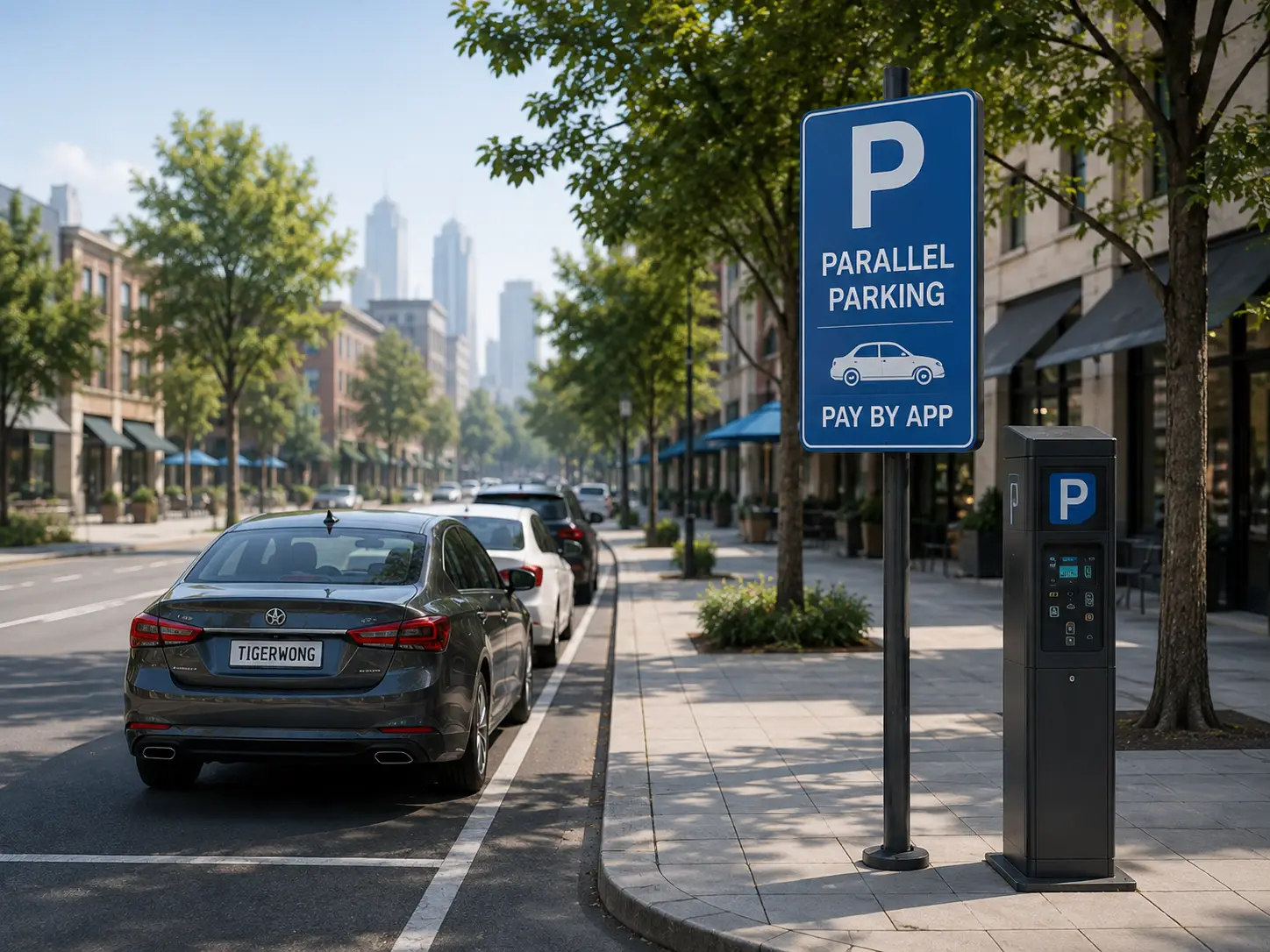
يُتيح نظام الركن الموازي ركن المركبات على طول الرصيف أو حافة المسار. وهو مناسب للشوارع الضيقة، ومواقف السيارات على جانب الطريق، والمساحات الحضرية المزدحمة. ويتطلب هذا النظام قواعد دخول واضحة، ودفعًا بسيطًا، وفحصًا سريعًا للتصاريح.
موقف سيارات عمودي
يُتيح نظام الركن العمودي وضع المركبات بزاوية قائمة على المسار. ويُستخدم هذا النظام في مواقف السيارات السطحية والعديد من مواقف السيارات متعددة الطوابق، لأنه يستغل المساحة بشكل شبكي منتظم. وعادةً ما يتضمن نظام الركن المصمم وفقًا لهذا التخطيط أنظمة للتحكم في المسارات، وتحصيل الرسوم، وفحص المخارج.
موقف سيارات بزاوية
تُصمّم مواقف السيارات المائلة بحيث يكون كل موقف على شكل قطري. يستخدمها المشغلون في المواقف المزدحمة ذات الحركة المتكررة، لأنها تُسهّل دخول وخروج السائقين. يتطلب هذا النظام توجيهًا واضحًا للمسارات، ولوحات إرشادية، ونقاط دفع.
مواقف السيارات الآلية أو الميكانيكية
تُخزّن مواقف السيارات الآلية أو الميكانيكية المركبات باستخدام المصاعد أو المنصات المتحركة. وهي مناسبة للمواقع الحضرية المكتظة حيث تكون مساحة الأرضية محدودة. ويتولى نظام مواقف السيارات مسؤولية الدخول، والتحقق من المستخدم، وسجلات الجلسات، والدفع.
كيف تؤثر أنواع مواقف السيارات على تصميم نظام مواقف السيارات؟
يؤدي نوع موقف السيارات إلى تغيير تجهيزات المسار ومنطق البرمجيات. إذا كنت تقارن خيارات نظام إدارة مواقف السياراتابدأ بطريقة الوصول وقاعدة الدفع.
مواقف السيارات على جانب الطريق وعلى جانب الطريق
تعتمد مواقف السيارات على الطرق عادةً على نظام تحكم بسيط، ودفع محلي، وقواعد لفترات قصيرة. وقد يعتمد النظام على التعرف على لوحات السيارات، أو نظام التذاكر، أو تطبيق الدفع، وذلك حسب سياسة الموقع.
مواقف السيارات السطحية
تستوعب مواقف السيارات السطحية عادةً عددًا أكبر من المركبات وأنواعًا أكثر من المستخدمين. وتُعدّ البوابات الحاجزة وأجهزة الدفع وبيانات الإشغال عناصر بالغة الأهمية هنا. غالبًا ما يجمع نظام مواقف السيارات بين التحكم في الدخول ولوحات الإرشاد.
مواقف السيارات متعددة الطوابق أو تحت الأرض
تتطلب مواقف السيارات المنظمة وتحت الأرض توجيهًا بصريًا أفضل للمسارات. يتحرك السائقون عبر مساحات مغلقة، لذا فإن اللافتات وأجهزة الكشف وفحوصات الخروج مهمة. كما تحتاج هذه المواقع إلى آلية سلسة للانتقال بين التحكم في الدخول وحساب الرسوم والمغادرة.
ما هو نظام مواقف السيارات المناسب لكل نوع من أنواع مواقف السيارات؟
بمجرد تحديد نوع موقف السيارات، قم بمطابقة نموذج الوصول وطريقة الدفع ومعدات التحكم. إذا كان المشروع يعتمد على نظام الوصول باستخدام لوحات السيارات، فراجع ذلك. أنظمة التعرف التلقائي على لوحات المركبات (ANPR) والتعرف الآلي على لوحات المركبات (ALPR) في مواقف السيارات وتأكد من قواعد لوحات السيارات المحلية.
| نوع موقف السيارات | نمط الموقع الشائع | تركيب أنظمة مواقف السيارات |
| موازي | على جانب الطريق أو في الخلجان الضيقة | نظام تحكم بسيط في الوصول، أو إصدار التذاكر، أو الدخول باستخدام لوحات السيارات |
| عمودي | مواقف السيارات السطحية والمرائب | التحكم في بوابات الحواجز، ونظام التعرف التلقائي على لوحات المركبات، وتدفق التذاكر، ومعالجة المدفوعات. |
| بزاوية | مواقف سيارات مزدحمة ذات معدل دوران متكرر | توجيه واضح للمسار، نظام الدفع، لافتات إرشادية |
| آلي أو ميكانيكي | المواقع الحضرية الكثيفة | التحكم في الوصول، وسجلات الجلسات، وبرامج المشغل |
أنظمة مواقف السيارات بالتذاكر للتحكم في الدخول والخروج
نظام تذاكر مواقف السيارات مناسب للمواقع التي تتطلب سجلًا ورقيًا أو سجلًا برمز شريطي للجلسات. يوثق TigerWong جهاز توزيع تذاكر الدخول وماسح تذاكر الخروج. هذا النظام مناسب لتدفق الزوار المختلط وسجلات الدخول والخروج البسيطة.
أنظمة التعرف التلقائي على لوحات المركبات (ANPR) أو أنظمة التعرف على لوحات المركبات (LPR) لمواقف السيارات التي تعتمد على لوحات المركبات
يقرأ نظام التعرف التلقائي على لوحات المركبات (ANPR) أو نظام التعرف على لوحات المركبات (LPR) لوحة المركبة، ثم يربطها بقاعدة الوصول أو سجل الجلسة. تشير مواد برنامج TigerWong ALPR إلى إمكانية التعرف على لوحات المركبات في عدة دول، بالإضافة إلى واجهات برمجة التطبيقات (API) ومجموعات تطوير البرامج (SDK). للاستخدام العالمي، تختلف تنسيقات اللوحات ومتطلبات التكامل باختلاف الموقع.
أنظمة مواقف السيارات بتقنيات RFID و UHF و Bluetooth للمستخدمين المسجلين
تُناسب أنظمة مواقف السيارات بتقنية RFID المستخدمين المسجلين مثل الموظفين والمستأجرين والمقيمين. تتضمن قائمة مواد علامات RFID للزجاج الأمامي من TigerWong تقنيات RS485 وWiegand 26 وWiegand 34 والتحكم في الحواجز باستخدام المرحلات. كما تُناسب تقنيات UHF وBluetooth المستخدمين المتكررين وأساطيل المركبات الخاضعة للتحكم.
أنظمة مواقف السيارات الهجينة لمجموعات المستخدمين المختلطة
تحتاج العديد من المواقع إلى أكثر من طريقة وصول واحدة. قد يستخدم المستشفى أو المطار تقنية التعرف على لوحات السيارات للزوار، وتقنية تحديد الهوية بموجات الراديو (RFID) أو البلوتوث للموظفين. تضمن السياسة المختلطة بقاء هذه القواعد ضمن طبقة برمجية واحدة.
ما هي المعدات التي تجعل نظام مواقف السيارات يعمل؟
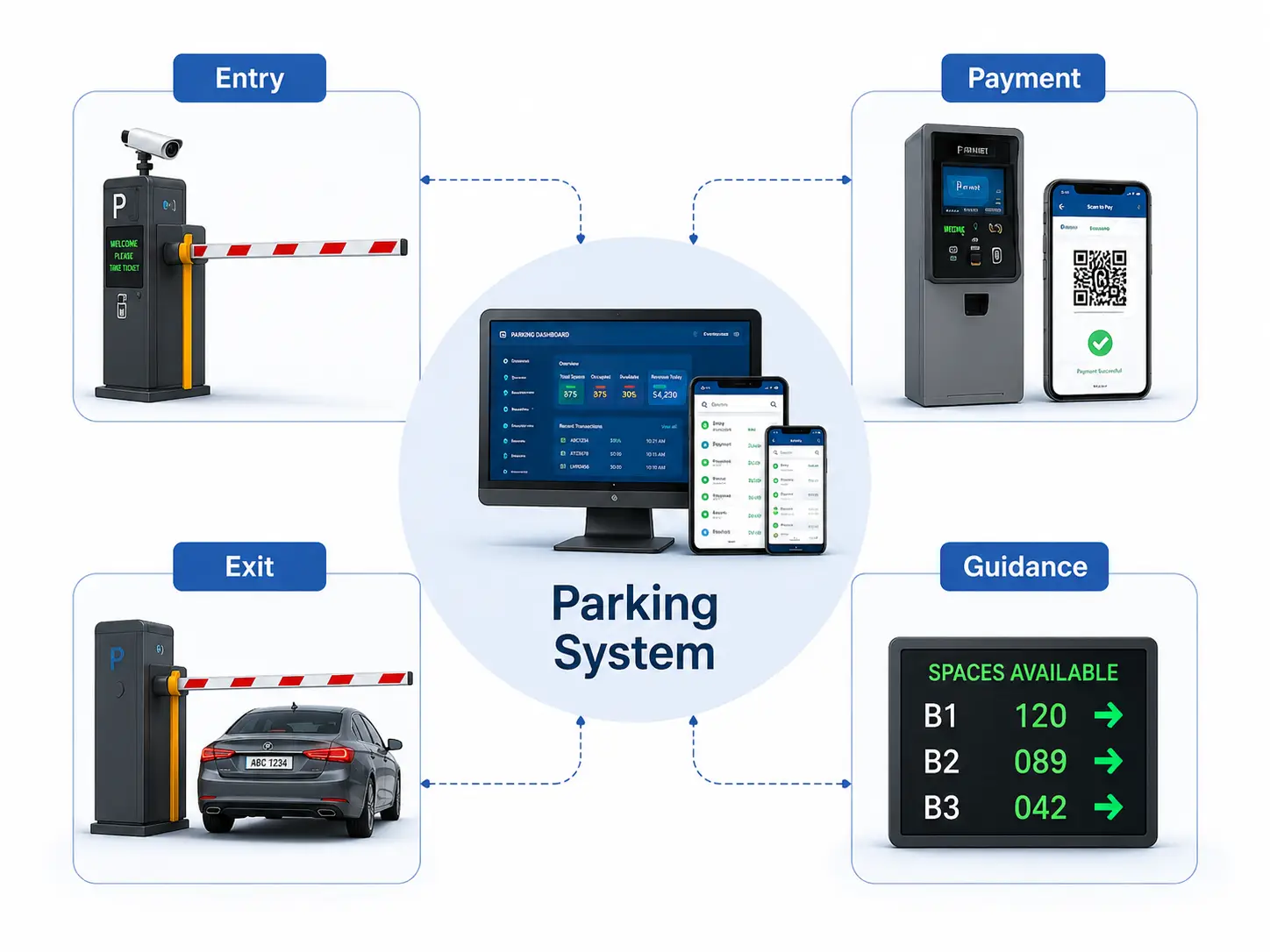
نظام مواقف السيارات عبارة عن مجموعة من الأجهزة المتصلة. الدخول والدفع والتوجيه والخروج، كل منها يحتاج إلى دوره الخاص.
أجهزة الدخول والخروج
يمكن استخدام كاميرا أو جهاز توزيع تذاكر أو قارئ RFID أو قارئ UHF أو جهاز بلوتوث في مسارات الدخول والخروج. يعتمد الجهاز على مجموعة المستخدمين وقواعد الجلسة. تتطلب مسارات الزوار والمشتركين المختلطة واجهات متطابقة.
بوابات حاجزية ونظام كشف المركبات
تُفتح بوابات الحاجز بعد أن يتحقق النظام من الجلسة أو بيانات الاعتماد. تتضمن بعض طرازات حواجز TigerWong واجهة نظام مواقف السيارات، وتحكمًا عبر المرحل أو RS485، ومدخلًا للأشعة تحت الحمراء مضادًا للصدمات، وذراعًا قابلة للدوران للخارج، وفتحًا يدويًا، وذلك حسب الطراز. تأكد من الوظائف حسب الطراز المُختار.
أجهزة الدفع وبرامج إدارة مواقف السيارات
تُعدّ عملية الدفع جزءًا أساسيًا من نظام مواقف السيارات. يدعم جهاز الدفع الذاتي AP101P من TigerWong الدفع ببطاقات الائتمان، ورموز الاستجابة السريعة (QR)، والنقد، وصرف العملات المعدنية، وطباعة الإيصالات، وبطاقات الهوية/البطاقات الذكية (IC/ID) ضمن التكوين المدعوم. ويحتفظ البرنامج بسجل الجلسة، وقاعدة السعر، وحالة الخروج.
شاشات توجيه مواقف السيارات وأجهزة استشعار المساحات
تساعد أنظمة توجيه مواقف السيارات السائقين في العثور على أماكن شاغرة. تغطي مواد التوجيه من TigerWong أجهزة الكشف فوق الصوتية، والمؤشرات، ووحدات التحكم في العقد، والتحكم المركزي، وشاشات التوجيه. تشمل الاتصالات RS485 وCAN وEthernet والوصلات اللاسلكية حسب المكون. راجع معدات نظام توجيه مواقف السيارات عندما يحتاج الموقع إلى تلك الطبقة.
كيف ينبغي للمشترين العالميين اختيار نظام مواقف السيارات؟
عادةً ما يطرح المشترون العالميون أربعة أسئلة: كيفية دخول السيارات، وكيفية دفع المستخدمين، وكيفية عرض المساحات، وكيفية تعامل الموقع مع الحالات الاستثنائية. يُجيب طلب عرض الأسعار الواضح على هذه الأسئلة قبل تقديم عرض الأسعار.
تصميم الموقع ومدخلات حركة المرور
حدد عدد المسارات، وشكل الموقف، واتجاه حركة المرور، وأنواع المركبات، وساعات العمل، ومصدر الطاقة، وإمكانية الوصول إلى الشبكة، ومساحة التركيب. بالنسبة للمواقف المغطاة، صف حركة الأرضية. أما بالنسبة للمواقف السطحية، فاذكر المداخل والمخارج.
مدخلات الوصول والدفع والتكامل
حدد مجموعات المستخدمين، وإجراءات الزوار، ونوع بيانات الاعتماد، وقاعدة الدفع، ونموذج اللوحة، وواجهة البرنامج. إذا كنت تستخدم بالفعل برنامج تخطيط موارد المؤسسات (ERP) أو برنامج الحضور أو برنامج إدارة المستأجرين، فحدد متطلبات الاتصال.
الصيانة، وقطع الغيار، واختبارات القبول
اطلب مخططات الأسلاك، وقطع الغيار، وخطوات التشغيل، واختبارات التحقق من صحة الدخول، وصعوبة الدخول، وحالة الدفع، وحركة الحاجز، وأعطال الكاشف، واستعادة الطاقة. يكون النظام جاهزًا عند اجتياز الوظائف المعتمدة لاختبار الموقع.
كيف يمكن للمورد دعم اختيار نظام مواقف السيارات؟
تُطوّر شركة TigerWong معدات مواقف السيارات للتحكم في الوصول والدفع والتوجيه وإدارة المسارات. يشمل نطاق عملها الموثق أنظمة التعرف التلقائي على لوحات المركبات (ANPR/ALPR)، وأنظمة التذاكر، وأنظمة تحديد الهوية بموجات الراديو (RFID)، وأنظمة UHF وBluetooth، وأجهزة الدفع، ومكونات التوجيه، والحواجز، وبرامج الإدارة. تتضمن واجهات البرمجة واجهة برمجة التطبيقات (API)، ومجموعة تطوير البرامج (SDK)، والمرحلات، وRS485، وCAN، وEthernet، وWiegand لكل مكون. للحصول على عرض سعر للمشروع، يُرجى إرسال مخطط المسار، وطريقة الوصول، وآلية الدفع، وعدد المواقف، ونماذج لوحات المركبات، ومتطلبات الحواجز، وواجهات البرامج. اتصل بفريق نظام المواقف.
أسئلة متكررة
س1: ما هي الأنواع الأربعة الرئيسية لمواقف السيارات؟
أ: تتضمن الأنواع العملية الأربعة للمواقف: المواقف المتوازية، والمواقف العمودية، والمواقف المائلة، والمواقف الآلية أو الميكانيكية. وتختلف هذه الأنواع في شكل الموقف، وحركة السائق، وإعدادات النظام.
Q2: أي نوع من أنواع مواقف السيارات يحتاج إلى نظام مواقف؟
أ: أي موقع يتحكم في الدخول، أو يفرض رسومًا، أو يتتبع الإشغال، يستفيد من نظام مواقف السيارات. وتزداد الحاجة إلى هذا النظام مع ازدياد عدد المستخدمين، أو تنوع فئات المستخدمين، أو كثرة تغييرهم.
س3: هل نظام التعرف التلقائي على لوحات المركبات أفضل من نظام تذاكر مواقف السيارات؟
أ: تُطبّق هذه الأنظمة قواعد مختلفة على المواقع. نظام التعرف التلقائي على لوحات المركبات (ANPR) يُناسب الدخول باستخدام اللوحات والزيارات المتكررة. أما نظام مواقف السيارات بالتذاكر فيُناسب المواقع ذات الكثافة العالية من الزوار وسجلات الدخول البسيطة.
الربع الرابع: ما هو أفضل نظام لمواقف السيارات في مركز تجاري أو مستشفى؟
أ: عادةً ما يكون النظام الهجين مناسباً لأن هذه المواقع تتعامل مع الزوار والموظفين والموردين ومركبات التوصيل. ويمكن دمج أنظمة التعرف على لوحات المركبات، وإصدار التذاكر، وتقنية تحديد الهوية بموجات الراديو (RFID)، وأجهزة الدفع، والإرشادات في خطة تشغيل واحدة.
س5: ما المعلومات التي يجب عليك إرسالها قبل طلب عرض سعر لنظام مواقف السيارات؟
أ: أرسل مخطط الموقع، واتجاه حركة المرور، وطريقة الوصول، وقواعد الدفع، وعدد المساحات، وعينات اللوحات، وتفاصيل الشبكة والطاقة، وواجهة البرنامج المطلوبة. هذه المدخلات تُحدد قائمة المعدات.