
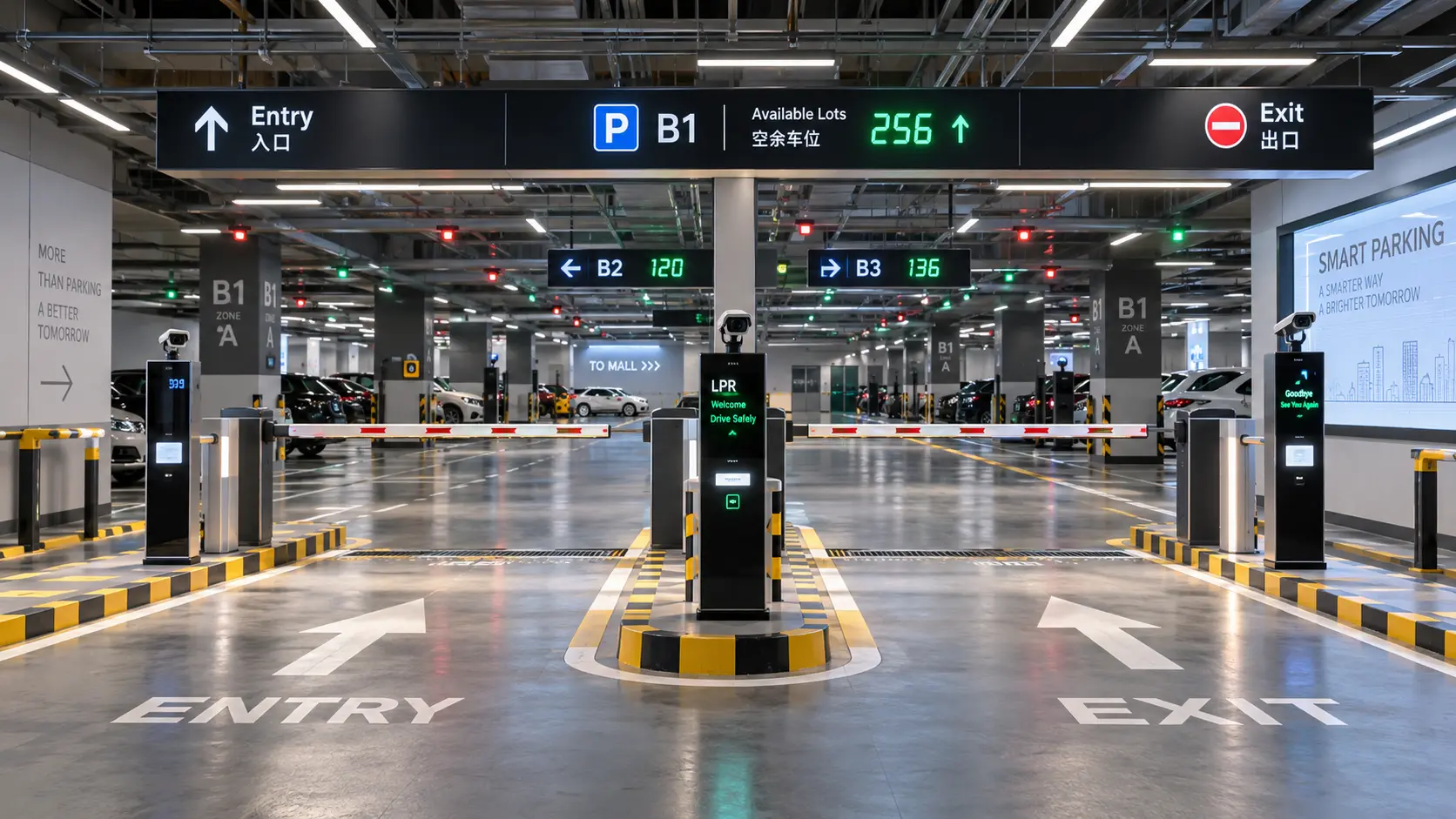
A custom parking system begins with the way a site actually operates. A hospital may need rapid visitor entry, validated rates, and dependable access for staff. A residential complex may prioritize registered vehicles and controlled guest access. An airport or commercial garage may need multiple payment channels, live occupancy data, and high-capacity exit lanes.
These differences shape every part of the design. The project team must connect vehicle identification, lane control, payment, parking guidance, software, and operating procedures. The following process covers the initial brief through commissioning and maintenance.
Start With the Operating Brief
The operating brief turns business needs into technical requirements. It gives the property owner, operator, installer, and system supplier one reference for design decisions and acceptance testing.
Identify Users and Parking Rules
List every user group that will enter the facility. Common groups include transient visitors, employees, residents, monthly permit holders, contractors, VIPs, and service vehicles. Each group may need a different credential, rate, schedule, or parking zone.
Map the complete visit for each group: entry, identification, permitted zone, fees or validations, and exit authorization. Include paths for an unreadable plate, lost ticket, expired permit, or failed payment.
Set Measurable Requirements
Define normal and peak traffic volumes, lane counts, target queue conditions, operating hours, reporting needs, and acceptable levels of manual assistance. Multi-site operators should specify central account management and site-by-site reporting.
The output of this stage is a requirements matrix. It should connect every user group and operating rule with a system function, responsible party, and acceptance test.
Map the Site and Vehicle Flow
Site conditions determine where equipment can be installed and how reliably it will work. A drawing should cover the full vehicle route from the road entrance to the parking space and back to the exit.
Audit Lanes, Power, Network, and Environment
Measure lane width, approach distance, turning radius, island dimensions, barrier arm clearance, and the driver’s reach to ticket or card equipment. Check the camera view of approaching vehicles, including the likely plate angle and the effect of headlights, shadows, rain, and direct sunlight.
Mark power and network points for cameras, barriers, payment terminals, controllers, and guidance displays. Document drainage, equipment foundations, temperature, dust, moisture, and vehicle-impact risks. Vehicle detection may use a ground loop or radar trigger according to the pavement and site layout.
Model Peak Traffic and Exceptions
Trace arrival and departure flows during the busiest periods. Separate permit traffic from transient traffic when their processing times or operating rules differ. Place payment equipment where a transaction will not block a critical exit lane during a peak departure.
The site plan should show pedestrian crossings, signs, intercoms, manual overrides, and safe assistance areas. This stage produces an equipment layout and vehicle-flow diagram.
Build the Parking System Architecture
The architecture connects field devices with local controllers, management software, payment services, and external platforms. Reviewing the available ជម្រើសប្រព័ន្ធគ្រប់គ្រងកន្លែងចតរថយន្ត helps the project team match each function with suitable equipment.
Choose the Vehicle Identifier
ANPR or ALPR uses the license plate as the credential. A camera captures the plate and links it to an access rule or parking session. Camera position, lighting, vehicle speed, and local plate formats affect performance. TigerWong documentation lists support for plates from more than 130 countries and regions, so the specification should name the countries required.
RFID cards and UHF tags suit employees, residents, and permit holders. UHF reading distance depends on the tag, antenna, and environment. Tickets and QR codes serve transient users and reservations. A mixed system can assign a method and fallback to each group.
Connect Access, Payment, and Guidance
After the software verifies a plate, credential, or payment, it sends an opening command to the barrier controller. The lane design must define the closing trigger, vehicle detection, manual release, and behavior during power or communication failure.
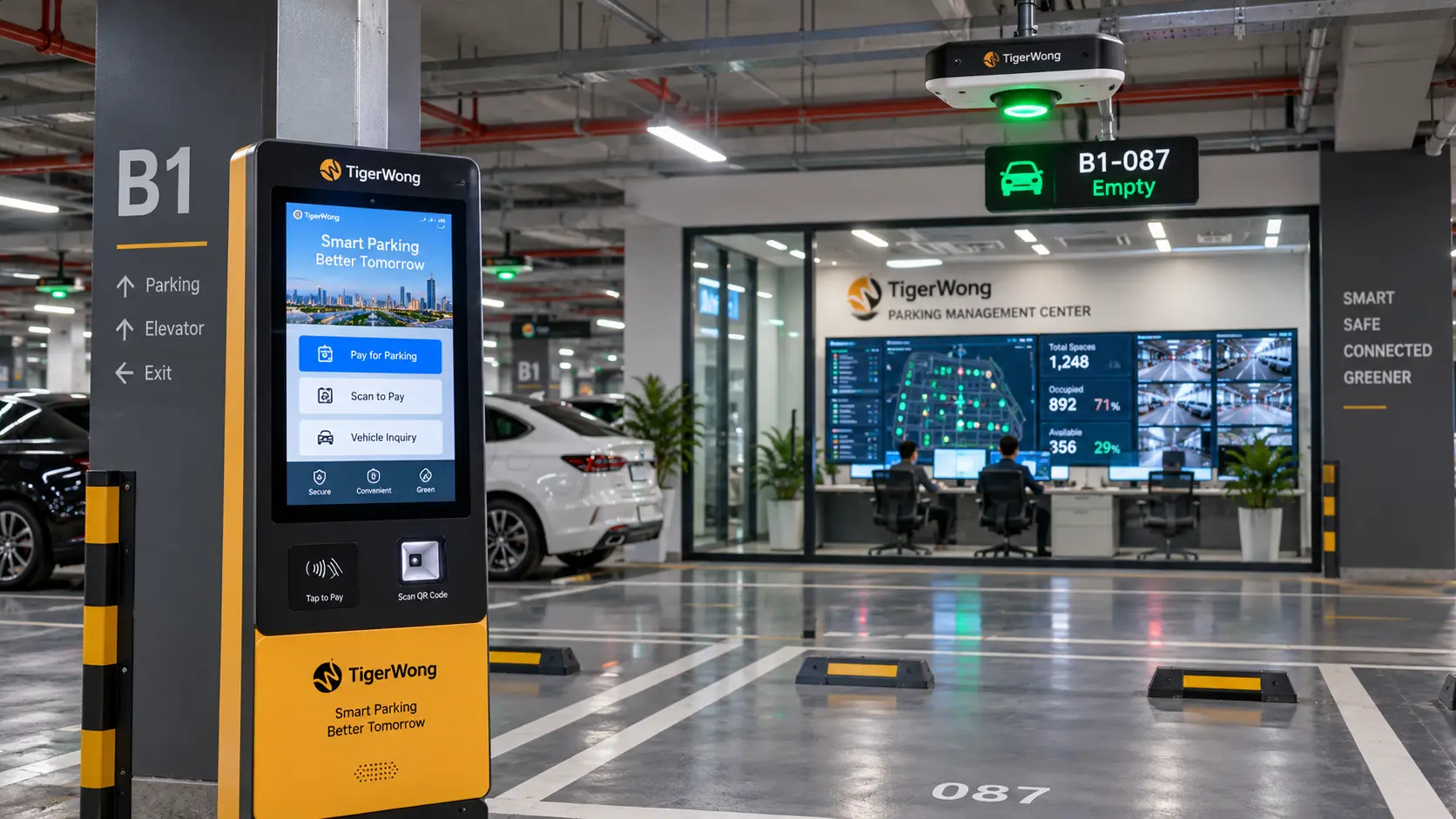
Payment may occur at a staffed point, self-service machine, exit terminal, or digital channel. Rate rules cover time bands, validations, grace periods, lost credentials, and user groups. TigerWong self-payment equipment can retrieve an amount by plate, including fuzzy search on supported configurations. Selected parking payment equipment should match local payment, climate, and interface requirements.
Parking guidance adds occupancy detectors, controllers, signs, and car-search terminals. Displays belong at entrances, junctions, and elevator areas. Multi-level sites need clear zone names and consistent counts across displays and software.
Define Data and Integration Paths
Create an interface list for every device and external platform. TigerWong parking equipment supports combinations of API, RS485, Ethernet, TCP/IP, and other product-specific interfaces. The final protocol depends on the selected model.
Document which system owns vehicle records, rates, payments, permits, occupancy, and logs. Define data exchange with property, reservation, membership, accounting, or access platforms. Where supported, local processing and queued transactions can preserve essential lane functions during a network interruption.
Customize Hardware, Software, and Localization
Customization converts the approved architecture into a specification for the actual site. Every variation should have a clear operating reason, drawing, owner, and test method.
Configure Hardware for the Site
Specify camera mounting, barrier arm length, cabinet arrangement, screen placement, controller capacity, and cable routes. Enclosure color, logos, and selected dimensions may also be adapted. Confirm these items during drawing review.
Choose integrated ultrasonic, split ultrasonic, video, or wireless guidance according to ceiling conditions, cable access, indicators, and expansion plans. TigerWong’s ប្រព័ន្ធណែនាំកន្លែងចតរថយន្ត range supports several layouts. Detectors should face the intended space and remain clear of obstructions.
Localize the User and Operator Experience
Specify language, currency, date format, rate labels, ticket content, voice prompts, and receipts. Collect representative local plate samples for testing.
Operator screens should reflect local roles and approval limits. The project team also needs to confirm privacy, payment, accessibility, fire, electrical, and traffic requirements with qualified local parties. Record these requirements in the configuration specification and acceptance plan.
Prototype, Test, and Commission the System
Testing proves that the components apply the approved rules as a connected parking system. It should cover routine transactions, peak conditions, and recoverable failures.
Run Integration and Factory Tests
Test plate capture, card or tag validation, ticket issue, fee calculation, payment confirmation, barrier commands, occupancy updates, and report records. Use representative vehicles and credentials. Include unclear plates, duplicate credentials, expired access, unpaid sessions, communication loss, device restart, and operator override.
Third-party interfaces need test records showing the request, response, timestamp, and expected database update. Factory testing can identify configuration and wiring issues before equipment reaches the site.
Commission the Site in Stages
Activate equipment by lane or zone when the site must remain open. Use non-peak work windows and repeat the complete entry, parking, payment, and exit sequence during daytime and nighttime conditions.
Train administrators and lane staff with the same exception cases used during testing. Final acceptance should include approved drawings, configuration files, interface documents, test results, user accounts, manuals, and a signed list of open items.
Plan Maintenance and Future Changes
The handover package should tell the operator how to keep the system accurate, available, and ready for expansion.
Assign Routine Maintenance
Set schedules for cleaning camera lenses, checking barrier mechanisms, inspecting cables and detectors, replenishing ticket supplies, and reviewing guidance displays. Back up configuration and transaction data according to the site’s recovery policy. Software updates should follow a controlled test and approval process.
Keep the System Expandable
Maintain an equipment register, interface list, configuration history, spare-parts list, and network diagram. Capacity planning should cover controller limits, network ports, software licensing, and space for added devices.
How TigerWong Supports Custom Parking Projects
TigerWong supplies ANPR and ALPR parking systems, ticket and RFID systems, UHF readers, barriers, payment equipment, parking guidance, and management software. Its software and integration customization services cover parking-solution integration, third-party data connections, software changes, and selected hardware customization. Project support can include design discussions, factory testing, installation guidance, remote assistance, and on-site guidance when arranged for the project. A useful first inquiry includes the site plan, lane count, user groups, payment rules, required integrations, and target installation country.
FAQ សំណួរ
Q1: What Information Is Needed to Design a Custom Parking System?
A: Provide the site plan, lane layout, capacity, user groups, peak traffic, rate rules, payment methods, existing systems, local requirements, and opening date. Lane photos also help with positioning.
Q2: Should a Parking System Use ANPR, RFID, Tickets, or Multiple Credentials?
A: Choose by user group and site conditions. ANPR supports plate-based sessions, RFID or UHF serves registered users, and tickets or QR codes suit transient visitors and reservations. Many sites combine them.
Q3: Can a New Parking System Integrate With Existing Software and Hardware?
A: Integration requires compatible interfaces, protocols, and data fields. Confirm device models, API documentation, network methods, data ownership, and test cases before procurement.
Q4: How Is a Custom Parking System Tested Before Installation?
A: Tests verify identification, rates, payment, barrier control, guidance, reports, and external data exchange. Include unreadable plates, invalid credentials, network interruption, power recovery, and manual assistance.
Q5: What Maintenance Does a Parking System Require?
A: Common tasks include camera cleaning, barrier inspection, sensor checks, paper supply, cable and network checks, backups, software updates, and recovery tests. Follow each device’s schedule.