
Managing the rigorous demands of the Americans with Disabilities Act (ADA) amid a confined reception layout poses a frequent challenge for property overseers. Facilities must ensure a unobstructed 32-inch passage for wheelchair entry, but existing supports or fixtures already occupy every bit of the entrance zone. Expert guidance proves crucial here. For a dependable collaborator, TigerWong emerges as a leading producer focused on intelligent entry management systems. Drawing on more than two decades in the field, they offer services ranging from customized OEM options to thorough technical assistance. In heritage structures or contemporary towers alike, their specialists aid in aligning protection demands with regulatory access needs, all while preventing the reception from resembling a disorganized storage area.
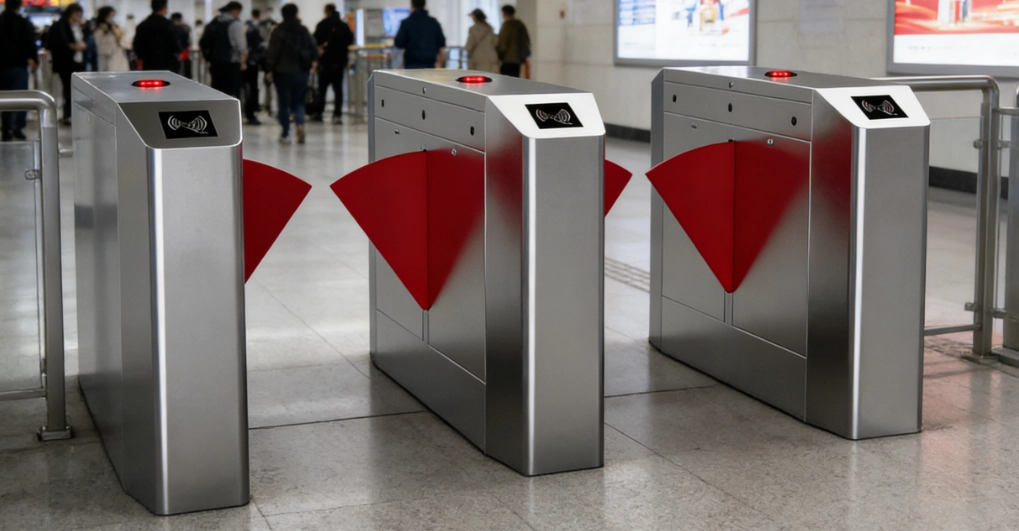
Analyzing the Conflict Between ADA Standards and Limited Floor Space
The essence of this issue centers on calculations. Conventional security barriers prioritize high volume in compact areas, which frequently leads to restricted paths scarcely suitable for individuals with bags. ADA guidelines represent binding obligations that specify unobstructed breadth to support wheelchairs, aids, and mobility devices.
Minimum Width Requirements for Compliance
Regulations typically specify an unobstructed route of no less than 32 inches. When accounting for the barrier’s enclosure, a dedicated ADA channel may demand almost twice the area of a basic three-arm setup. Consequently, this presents significant arrangement difficulties in narrow passages, where space allocation becomes critical for overall functionality.
Impact of Narrow Entryways on Accessibility
An overly constricted passage hinders more than just wheelchair movement. It disrupts the building’s overall circulation. Those carrying parcels or pushing trolleys encounter delays, resulting in congestion that undermines the efficiency of automated access mechanisms.
Safety Risks of Crowded Pedestrian Zones
During crises, a confined entrance creates vulnerabilities. If barriers occupy spaces lacking adequate clearance, violations of evacuation standards may occur alongside ADA infractions. Adequate intervals ensure egress routes remain free, particularly in urgent situations.
Evaluating the Engineering Limitations of Traditional Pedestrian Gates
Conventional barriers depend on substantial drive units and robust steel frames. Although these enhance protection, they often conflict with restricted layouts. Assessing the motion of barriers or arms reveals whether they align with available dimensions.
Mechanical Swing Radius of Standard Turnstiles
Swing mechanisms require operational space. A 900mm arm, essential for ADA breadth, demands equivalent clearance ahead and behind for smooth operation. In tight corridors, this arc may collide with walls or adjacent barriers, complicating installation and daily use.
Incompatibility of Basic Tripod Systems
Basic three-arm units offer durability, yet they inherently fail ADA suitability without modification. Their configuration impedes wheeled passage. Rather than extending such systems, integration with alternative barrier types becomes necessary for compliance.
Structural Constraints in Historic Building Lobbies
Aged edifices lack provisions for current installations. Immovable pillars often dictate irregular voids unsuitable for standard enclosures. As a result, fitting conventional cabinets risks obstructing routes, demanding adaptive engineering approaches.
Exploring Space-Saving Solutions With TigerWong Intelligent Technology
Addressing spatial constraints involves combining compact components with strategic positioning. The objective lies in minimizing unused areas occupied by the device’s frame, thereby preserving space for users. Even minor reductions in enclosure thickness can salvage entire initiatives.
Slim Cabinet Designs for Maximum Efficiency
Selecting units with upright or tapered casings recovers ground area. These configurations accommodate equivalent drive strength while enabling broader channels within identical overall dimensions. Thus, the equipment supports the environment rather than hindering it, optimizing layout efficiency.
Integrated Biometric Readers to Reduce Footprint
Opting for barriers embedding facial or card scanners into the upper panel eliminates standalone supports. This design avoids additional fixtures that would otherwise diminish pathway width. Consequently, integration streamlines the setup and enhances unobstructed flow.
Modular Components for Customizable Installations
Adaptable assemblies permit relocating control units or supplies to alternative locations. Such versatility proves essential when obstacles arise during fitting, allowing precise adjustments. It ensures seamless adaptation to site-specific challenges without major alterations.
Leveraging High-Efficiency Models for Compact High-Traffic Areas
For primary user volumes through regular entries, efficient and compact options excel. Three-arm barriers serve as reliable staples. They process large crowds swiftly, allocating greater area for designated ADA channels.
Versatile Performance of Tripod Turnstile Gate TGW-TT005
The Tripod Turnstile Gate – TGW-TT005 earns its popularity through adaptability. Its modest size suits diverse niches. While managing most pedestrian volume, it liberates surrounding space for expansive ADA swing barriers, facilitating balanced traffic management.
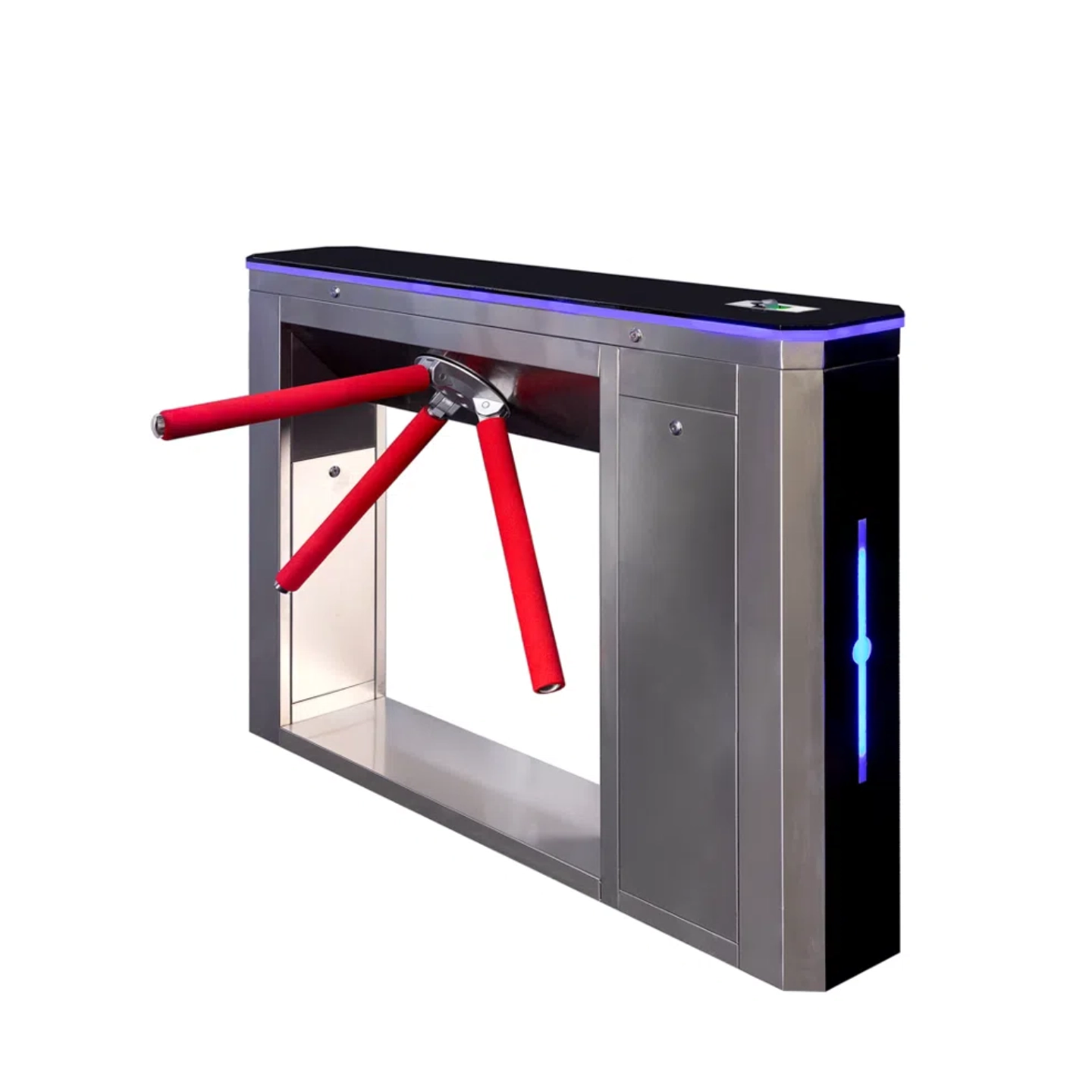
Durability and Compact Build of TGW-TT015
In rigorous settings, the Tripod Turnstile Gate – TGW-TT015 delivers sturdy construction without excessive bulk. Maintenance remains straightforward, and its limited base suits facilities like fitness centers or modest plants. This combination ensures reliability in constrained environments.
Balancing Security and ADA Flow in Small Venues
Excessive barrier arrays prove unnecessary when fewer, well-positioned units suffice. Combining efficient three-arm models with a single broad-access gate forms a blended configuration. It meets legal standards without necessitating comprehensive reception redesigns.
Maximizing Barrier Clearance With Advanced Wing Turnstile Systems
For essential wide passages where arm swing poses issues, flap barriers provide resolution. These panels retract into the enclosure, offering a tidier alternative in confined zones prone to obstructions.
Wide Passage Advantages of Wing Turnstile Gate TGW-WT002
The Wing Turnstile Gate – TGW-WT002 combines elegant design with sufficient breadth for mobility aids. Since flaps fold inward, concerns over forward clearance lessen compared to pivoting arms. This feature enhances usability in space-limited installations.
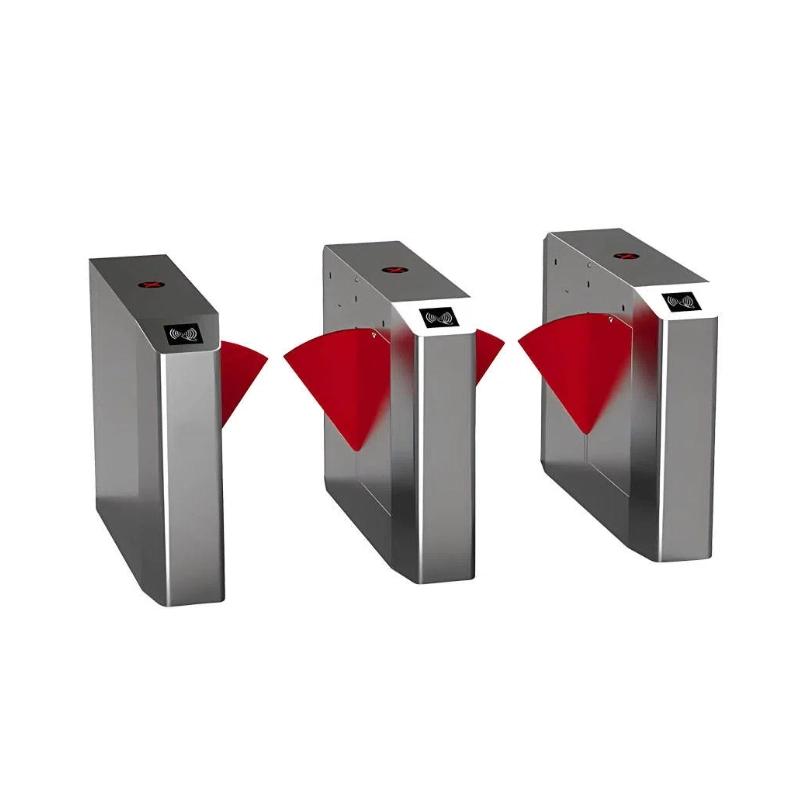
Retractable Mechanism Benefits for Open Spaces
Flap operations occur rapidly. In spatial dilemmas, quick action averts accumulation of users. Moreover, the folding process conveys a sophisticated impression, ideal for upscale corporate settings where visual appeal equals regulatory adherence.
Seamless Integration With Wheelchair Accessible Sensors
Effective barriers employ detection beams to monitor occupancy. In ADA routes, these require lower placements for precise wheelchair recognition. Such arrangements prevent untimely closures, granting users additional time as needed.
Choosing the Right Partner for OEM and Global Support
Acquiring a barrier marks the initial step; adapting it to precise surroundings completes the task. A producer must comprehend regional codes and logistical nuances of worldwide delivery and setup.
Professional Customization Capabilities of TigerWong
Tailoring dominates in confined scenarios. Requests for reduced enclosure heights or specialized mounts find fulfillment through robust OEM frameworks, avoiding outright refusals. This capability addresses unique spatial demands effectively.
Reliability of TGW After-Sales Service and Maintenance
Components eventually require repair. Accessible resources and prompt assistance prevent immobilized barriers from impeding sole ADA routes. Readily available replacements sustain operational continuity.
Global Compliance Expertise in Diverse Industrial Markets
Accessibility norms vary across regions like the Philippines or the United States. Collaborating with international suppliers ensures alignment with elevated universal safety benchmarks. This foresight averts subsequent compliance issues.
Frequently Asked Questions About ADA Gate Installation
Q1: What is the minimum clear width required for an ADA turnstile?
A: You need a minimum of 32 inches (about 813mm) of clear passage. This is measured from the face of the gate to the opposite barrier when the gate is fully open.
Q2: Can I use a tripod turnstile for ADA compliance?
A: Generally, no. Standard tripod gates do not allow enough room for a wheelchair. You should pair your tripod gates with at least one swing gate or wing gate designed for ADA access.
Q3: What happens if I don’t have enough space for a full swing gate?
A: You can look into “slim” models or wing/flap barriers like the TGW-WT002. These often have smaller cabinet depths or different retraction methods that save space compared to traditional swinging arms.
Q4: Do ADA gates require special sensors?
A: Yes, they usually need more infrared sensors placed at different heights to ensure the gate doesn’t close on a wheelchair, a person with a walker, or someone moving at a slower pace.
Q5: How do I handle emergency exits with these gates?
A: Most professional gates are designed to drop their arms or open automatically when power is cut or a fire alarm is triggered, ensuring the ADA path becomes an easy exit route.