
Why Do Long Entry and Exit Queues Happen?
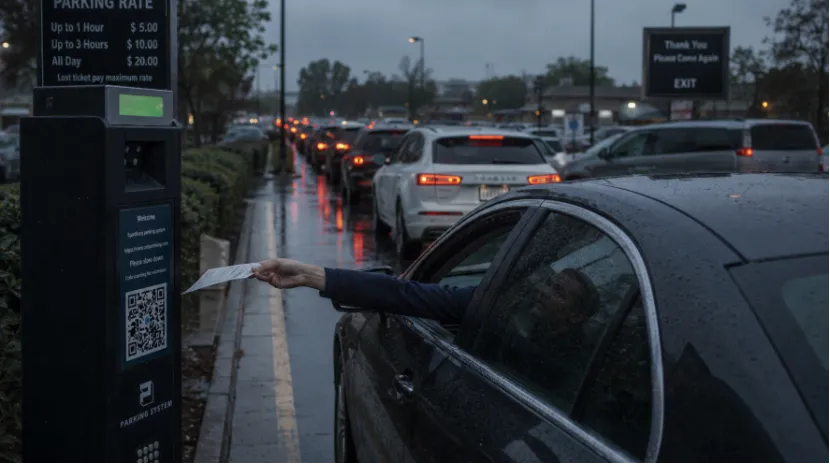
A parking queue rarely starts with one big failure. It usually starts with small delays repeated hundreds of times. One driver stops to find a ticket. Another lowers the window in the rain. A visitor waits while a guard checks a list. During peak-hour parking traffic, these small pauses turn into long entry and exit queues.
For many sites, the real issue is slow parking access control. Manual vehicle verification, paper tickets, access cards, and payment checks all add friction. If one vehicle takes only 20 seconds too long, a busy office building or shopping mall parking solution can feel jammed by 8:30 a.m. That is where an ANPR parking system starts to make sense.
What Is an ANPR Parking System?
An ANPR parking system uses license plate recognition to identify vehicles as they approach an entrance or exit. ANPR means automatic number plate recognition system. In some markets, the same technology is called an ALPR parking system or LPR camera system. The idea is simple: the plate becomes the vehicle’s access credential.
How Does License Plate Recognition Work?
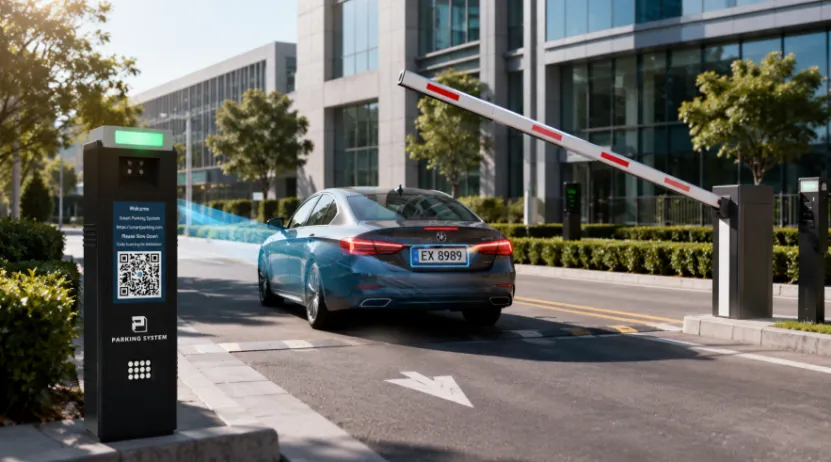
A camera captures the plate image, software reads the characters, and the system checks that plate against a parking database. If the plate is approved, the barrier opens. If the vehicle is not allowed, the system can block entry or ask for manual review. Parking technology guides describe this process as image capture, OCR reading, database validation, barrier control, and entry or exit logging.
This is why a license plate recognition parking system can move cars faster than a ticket-based lane. Drivers do not need to stop, search for a card, or wait for staff. It is not magic. It is just removing the usual little delays.
How Does ANPR Reduce Entry Queues?
Entry queues usually form when every vehicle must prove access one by one. An ANPR parking system changes that pattern. The vehicle approaches, the plate is read, and the system makes the access decision in real time.
Touchless Vehicle Entry Cuts Small Delays
Touchless vehicle entry matters more than many operators expect. In residential parking access control, registered residents can enter without rolling down the window. In an office building parking system, staff vehicles can move through faster during the morning rush. In commercial parking lots, repeat users and monthly parkers do not slow the whole lane.
A good parking access control system with license plate recognition also helps visitors. Their plate can be added before arrival, so the gate recognizes them when they get there. No paper note at the guard booth. No awkward phone call at the barrier. Nice when it works cleanly, especially on a wet Monday morning.
How Does ANPR Reduce Exit Congestion?
Exit congestion can be even more frustrating than entry traffic because drivers are already leaving. They want the process to be quick. If payment validation, lost tickets, or manual checking slows the lane, parking lot congestion spreads back into internal roads.
Ticketless Parking Access Makes Exits Smoother
With ticketless parking access, the system matches the exit plate with the entry record. It can calculate parking time, check payment status, and allow exit if the record is valid. For paid parking, this reduces disputes. For staff or residents, it removes repeated checks. For operators, it creates cleaner records.
Some parking integration guides note that ANPR can remove physical passes, manual verification, and peak-time entry congestion by letting approved plates trigger the gate automatically. They also mention that old card-based methods often create lost-card issues and extra admin work.
Why Does Barrier Gate Integration Matter?
An LPR camera system alone is not enough. If the camera reads the plate but a guard still presses the button, you still have a manual process. Barrier gate integration connects recognition with action.
Automatic Barrier Gate Control Completes the Flow
Automatic barrier gate control lets the system open the lane when the plate is approved. The best setup joins the camera, display, control board, parking software, and barrier into one smooth process. This is where entry and exit automation becomes practical, not just a nice feature on a brochure.
The TigerWong LP610C ANPR parking system is built for this kind of job. The TigerWong LP610C combines HD recognition, LCD display, and smart control in one integrated ANPR parking terminal, described as a “recognition-display-control” solution for modern parking lots, toll stations, and gated communities.
Where Does TigerWong LP610C Fit Best?
TigerWong is a Shenzhen-based provider of intelligent parking management systems and access control solutions. The company focuses on ALPR and ANPR parking systems, parking management systems, pedestrian turnstiles, and face recognition systems.
Founded in 2001, TigerWong has more than 25 years of experience in parking systems, with solutions used across many countries and site types. For operators who care about real traffic flow, not just hardware specs, that background matters.
Product Details That Matter in Real Lanes
The TigerWong LP610C supports a recognition distance of 3 to 10 meters, a recognition rate of at least 98%, TCP/IP and RS485 communication, LCD display, parking software management, and 24-hour license plate recognition with automatic fill light sensing. It can also work with a barrier gate or ticket dispenser to manage vehicle access and temporary vehicle charges.
That makes it suitable for commercial parking lots, residential parking access control, office building parking system upgrades, campus parking access control, hospital parking management, and industrial park parking system projects. The ANPR camera with LCD display shows key information near the lane, while parking barrier gate linkage helps the vehicle move instead of waiting.
What Should You Check Before Installing an ANPR Parking System?
A reliable ANPR parking system needs more than a camera on a pole. You should check lane width, camera angle, lighting, database rules, payment flow, and backup access. Dirty plates, glare, and unusual vehicle angles can still cause issues, so fallback options matter.
Practical Setup Points for Better Results
Place the camera where it can see the plate clearly. Keep the barrier response fast. Keep whitelist and blacklist data clean. Make sure your parking access control system can handle visitors, monthly users, paid vehicles, and blocked plates. If your site has heavy exit traffic after events or office hours, test both directions, not only the entrance.
Conclusion
Long entry and exit queues are not just a driver complaint. They affect revenue, staff workload, security, and the way people feel about your site. An ANPR parking system reduces those delays by turning the license plate into a fast, digital credential.
For parking operators who want automatic parking access control, barrier gate integration, and fewer manual steps, TigerWong LP610C gives a practical route toward automated vehicle access. It reads, displays, checks, and controls. That is how license plate recognition for parking barrier gates turns a slow lane into a smoother one.
FAQ
Q1: How ANPR Parking System Reduces Queues?
A: It reads the license plate automatically, checks access rules, and opens the barrier for approved vehicles. This cuts manual vehicle verification, ticket handling, and card swiping.
Q2: Can an ANPR Parking System Work With Barrier Gates?
A: Yes. An ANPR parking system for barrier gates can send an open signal after the plate is approved, creating automatic barrier gate control.
Q3: Is an ALPR Parking System the Same as an ANPR Parking System?
A: Yes, mostly. ANPR, ALPR, and LPR describe the same license plate recognition technology, though the wording changes by market.
Q4: Is Ticketless Parking Access Better Than Paper Tickets?
A: For busy sites, yes. Ticketless parking access reduces lost tickets, shortens exit checks, and gives operators cleaner entry and exit records.
Q5: Where Can TigerWong LP610C Be Used?
A: TigerWong LP610C can be used in commercial parking lots, residential communities, office buildings, hospitals, schools, campuses, and industrial park entrances.