
When you require dependable access control for your building or venue, deciding between sliding and swing turnstile gates truly impacts security levels, daily flow efficiency, and overall visitor satisfaction. Sliding turnstiles frequently deliver stronger protection thanks to sophisticated detection capabilities, whereas swing turnstiles shine through greater adaptability and broader pathways. As a seasoned expert in access control systems, you will find the collaboration with TigerWong highly valuable. This established company, with 25 years of expertise in smart parking and access control technology and 15 years of focus on revolving door R&D, has served clients in over 150 countries worldwide with its reliable products. Leveraging a professional R&D team and flexible customization services, TigerWong can precisely meet the unique needs of various projects.
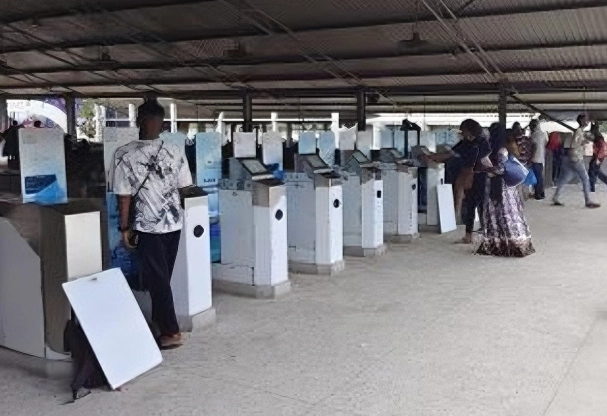
Sliding vs Swing Turnstile Gates
Turnstile gates effectively regulate pedestrian movement while boosting safety in numerous locations. Sliding and swing versions vary considerably in how they function and look, which directly influences how well they fit your particular situation.
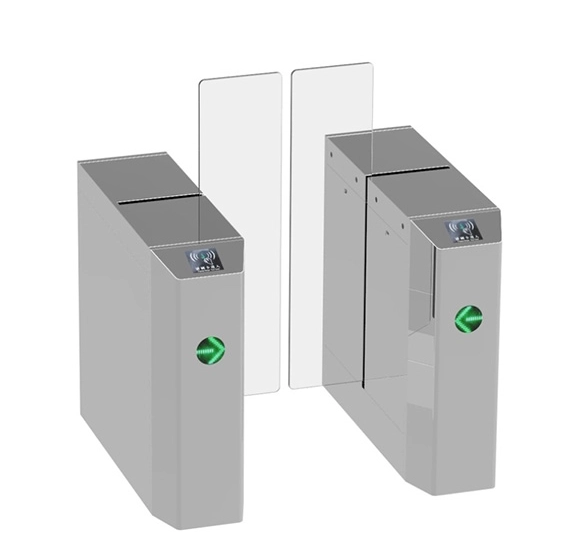
Sliding Turnstile Definition and Mechanism
Sliding turnstiles incorporate horizontal panels that retract smoothly into the main body to create an open lane. This efficient system relies on brushless DC motors, which provide quiet operation and handle substantial daily traffic without issues.
Swing Turnstile Definition and Mechanism
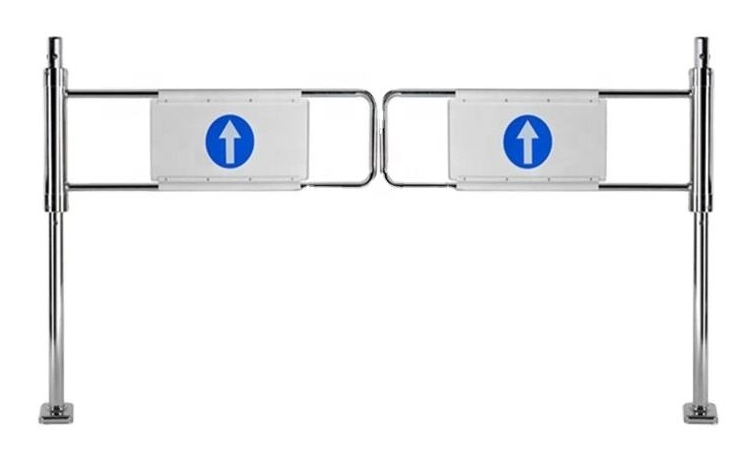
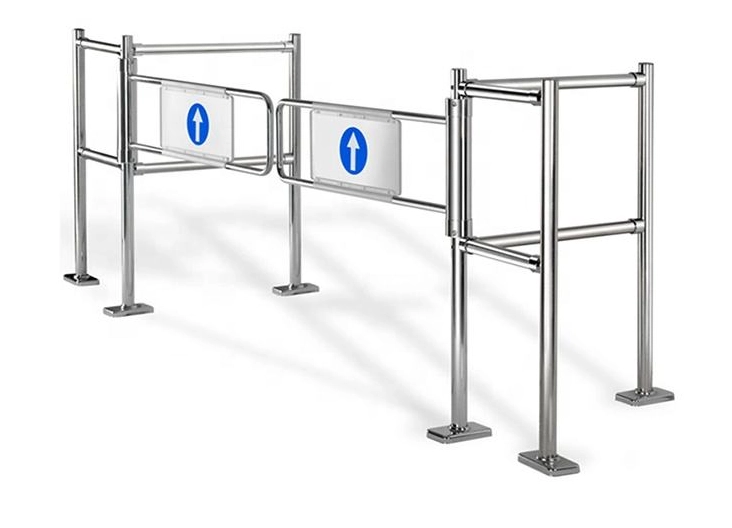
Swing turnstiles utilize rotating arms or gates that pivot open gently, typically powered by brushless motors or simple mechanical setups. Consequently, they enable straightforward manual or automatic entry for carefully managed access points.
Key Differences in Basic Design
Sliding versions feature higher barriers that discourage unauthorized attempts more effectively, while swing variants offer significantly wider openings and less complex builds. Therefore, your final selection hinges largely on expected visitor numbers and the priority you place on protection.
Drive Mechanisms
The driving system plays a crucial role in determining long-term dependability, operational speed, and upkeep requirements. Contemporary turnstiles emphasize robust and energy-efficient motors for consistent performance.
Brushless DC Motors in Sliding Gates
Sliding turnstiles commonly employ brushless DC motors that ensure steady functioning, minimal noise, and impressive durability often surpassing 5 million cycles. Moreover, these motors deliver precise movement control and help conserve energy over time.
Mechanical vs. Motorized Drives in Swing Gates
Swing turnstiles include options ranging from basic mechanical pushes to advanced motorized brushless systems. As a result, motorized models achieve better synchronization and accuracy, whereas mechanical alternatives lower reliance on electricity.
Reliability and Maintenance Comparison
Brushless technology across both categories reduces component wear considerably and supports prolonged operation under tough conditions, including temperatures from -25°C to +60°C. Additionally, routine inspections maintain peak efficiency with little effort.
Structural Design
Overall structure influences visual appeal, installation space, and resistance to daily wear. High-grade stainless steel builds guarantee extended service life in demanding environments.
Tall Retractable Panels in Sliding Turnstiles
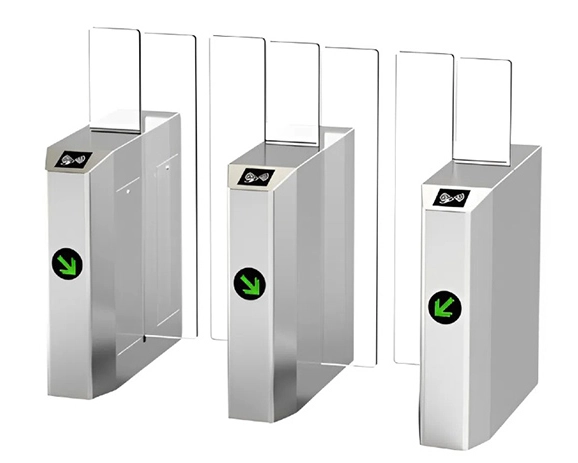
Sliding turnstiles display tall acrylic or tempered glass panels that slide away horizontally, creating a contemporary appearance and a compact layout ideal for busy interior spaces.
Pivoting Arms or Barriers in Swing Turnstiles
Swing turnstiles incorporate swinging barriers crafted from durable stainless steel or tough polycarbonate, thereby allowing adjustable lane widths reaching up to 1200mm to accommodate various needs.
Aesthetic and Space Considerations
Sliding styles present a sleek, modern profile that saves valuable floor area, whereas swing designs integrate naturally into larger entryways. In either case, SS-304 stainless steel construction offers excellent resistance against rust and corrosion.
Security Features
Security stands as the primary worry whenever you choose turnstiles. Strong anti-tailgating measures, reliable anti-pinch safeguards, and seamless alarm connections prove essential.
Advanced Anti-Tailgating in Sliding Turnstiles
Sliding turnstiles make use of several infrared sensor arrays to identify and block tailgating attempts with remarkable accuracy, thus guaranteeing that only properly authorized individuals pass one at a time.
Anti-Pinch and Collision Protection Comparison
Both designs feature mechanical plus infrared anti-pinch safeguards. However, sliding models frequently incorporate triple-layer protection involving circuit controls, which further enhances passenger safety during busy periods.
Integration with Biometrics and Alarms
Turnstiles readily support fingerprint scanners, facial recognition units, QR code readers, and traditional cards. Furthermore, built-in alarms activate instantly for any intrusions, and emergency modes automatically unlock passages to comply with fire regulations.
Application Scenarios
Choose the appropriate turnstile according to your specific setting, expected crowd size, and accessibility priorities.
High-Traffic Indoor Environments for Sliding Gates
Sliding turnstiles perform exceptionally in airports, corporate offices, and transit hubs where they manage rapid flows of 30-40 persons per minute while maintaining strict anti-tailgating controls in crowded indoor areas.
Wide Passage Needs for Swing Turnstiles
Swing turnstiles comfortably handle wheelchairs, large luggage, or even bicycles through generous openings up to 1200mm, making them particularly suitable for medical facilities and busy public transportation centers.
Outdoor and Accessibility Requirements
Both categories manage outdoor installations effectively with waterproof enclosures. Nevertheless, swing models often provide superior barrier-free options across diverse weather conditions and terrains.
TigerWong’s Recommended Solutions
Professional-grade solutions blend premium hardware with tailored adjustments for flawless system incorporation.
Sliding Turnstile for Superior Security
The TGW-PT011 sliding turnstile supplies outstanding anti-tailgating through numerous sensors, comprehensive anti-pinch safeguards, and a dependable brushless motor, perfect for environments demanding top-tier protection.
Versatile Swing Turnstile Options from TigerWong
TigerWong provides various swing models equipped with expansive lanes, advanced anti-collision brushless mechanisms, and full compatibility with biometric tools, thereby delivering flexibility across many different installations.
Customization and Integration Benefits with TigerWong Products
TigerWong extends comprehensive OEM assistance, bespoke software development, and smooth connections to external platforms, allowing you to obtain precisely configured access control systems that align perfectly with your operational goals.
FAQ
Q1: Which turnstile offers higher security against tailgating?
A: Sliding turnstiles generally provide better anti-tailgating through multiple infrared sensors and taller barriers.
Q2: What passage width suits wheelchair access?
A: Swing turnstiles often allow wider passages up to 1200mm, making them more accessible.
Q3: Are sliding turnstiles suitable for outdoor use?
A: Yes, with SS-304 stainless steel and IP65 ratings, they withstand harsh weather from -25°C to +60°C.
Q4: How fast is the throughput for these gates?
A: Both achieve 30-40 people per minute, depending on verification time and model.